








Composite Insulation Paper
-
![Diamond Dotted Paper Insulating Tube]() Diamond Dotted Paper Insulating TubeRigid, oil-permeable transformer DDP paper tubes wound from diamond dotted paper (DDP). Epoxy dot-bonded structure for lead sleeving, winding cores, interlayer barriers and short-circuit...read more
-
![Transformer Oil Duct Spacer Sticks]() Transformer Oil Duct Spacer SticksRigid pressboard oil duct spacer sticks for oil-immersed transformers. Precision-cut thickness, width and length to create stable winding oil ducts. Custom sizes.read more
-
![NHN Insulation Paper for motor]() NHN Insulation Paper for motorProfessional manufacturer of insulation paperread more
Thickness:0.15mm
stretch strength:120N/10mm Width -
![DMD Insulation Paper For Transformer]() DMD Insulation Paper For TransformerDMD Insulation Paper is a flexible composite insulation materialread more
Breakdown voltage: 6-18kv
stretch strength:130 N/10mm -
![Insulation Fish Paper For Motor]() Insulation Fish Paper For MotorThickness range: 0.1mm to 1.5mmread more
Fish Paper is a material made of high-density insulating fiber paper -
![Insulation Oil Duct Strip For Motor]() Insulation Oil Duct Strip For MotorInsulation Oil Duct Strip For Motor is an insulating component used to support the internal oil channel structure of the transformerread more
-
![Insulating Aramid Paper]()
-
![Aramid Paper For Cable]() Aramid Paper For CableAramid paper is mainly made of aramid fiber (Aramid fiber) processed into a paper-like structure through a specific process. The most famous brand is DuPont's Nomex®.read more
-
![Insulated Aramid Paper]() Insulated Aramid PaperLow dielectric loss: Improves device energy efficiencyread more
can adapt to high temperature environments and ensure long-term stable operation of the equipment -
![Aramid Paper For Transformer]()
-
![Aramid Paper for winding]()
-
![Aramid Honeycomb Panels]() Aramid Honeycomb PanelsACT1 commercial grade aramid honeycomb is manufactured from Nomex® paper (or equivalent) and coated with a heat resistant phenolic resin (MIL-R-9299). ACT1 is available as blocks, sheets, or...read more


What is Composite Insulation Paper?
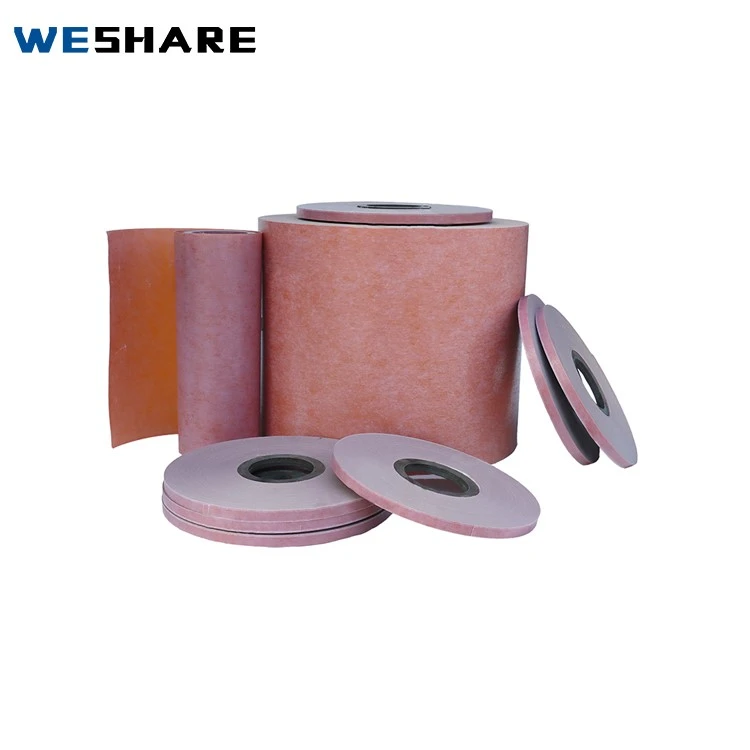
Fiber composite insulation combines the advantages of strength and density with excellent insulating properties. In addition, it provides high resistance to chemicals, heat and fire. Composites are an evolving group of engineering materials with high potential.
How long is the shelf life and service life of Composite Insulation Paper?

Shelf life of Composite Insulation Paper
Insulating cardboard is a special cardboard used in the power industry with excellent insulation performance and mechanical strength. It is made of high-quality insulating paper and epoxy resin glue. However, insulating cardboard is also affected by various factors such as time and environment, and will gradually age and lose its insulation performance.
Therefore, the shelf life of insulating cardboard is generally about 3 years. If the shelf life is exceeded, the insulation performance of the insulating cardboard will gradually decrease, affecting the normal operation of power equipment. Therefore, before using the insulating cardboard, it should be inspected according to the production date and shelf life. If it exceeds the shelf life, it must not be used again.
Service life of Composite Insulation Paper
In addition to the shelf life, the service life of insulating cardboard will also be affected by many factors, such as the use environment, working conditions, etc. Under normal circumstances, the service life of insulating cardboard can reach more than 10 years.However, when using insulating cardboard, the following points need to be followed:


Avoid external damage:
Insulating cardboard is susceptible to external damage. Once damaged, the service life of the insulating cardboard will be significantly shortened, or even unusable. Therefore, during transportation, storage and use, care should be taken to avoid external damage to the insulating cardboard.
Regular inspection
: Regularly inspect the performance and status of the insulating cardboard to ensure that its insulation performance and mechanical strength meet the requirements. And be prepared to replace the insulating cardboard according to changes in service life and use environment.

Characteristics of composite insulation paper
Insulation composite paper has excellent electrical insulation. Its dielectric constant is very low, and its inherent dielectric strength enables it to maintain excellent electrical insulation under high temperature, low temperature and high humidity conditions. The insulation paper prepared with it can withstand a breakdown voltage of up to 40KV/mm, which is a globally recognized insulation material.
Insulation composite paper has an impressive flame retardancy. Usually the oxygen content in the air is 21%, while the limiting oxygen index of aramid 1313 is greater than 29%, which is a flame-retardant fiber, so it will not burn in the air, nor support combustion, and has self-extinguishing properties. This inherent characteristic derived from its own molecular structure makes aramid 1313 flame retardant, so it is known as "fireproof fiber".
Insulation composite paper has long-lasting thermal stability-high temperature resistance. It can be used for a long time at a high temperature of 220℃ without aging. Its electrical and mechanical properties can be maintained for 10 years, and its dimensional stability is excellent. At about 250℃, its thermal shrinkage rate is only 1%; it will not shrink, brittle, soften or melt even if exposed to a high temperature of 300℃ for a short time; it will not start to decompose until it reaches a strong temperature of more than 370℃; it will not start to carbonize until it reaches about 400℃. Such high thermal stability is rare in current organic heat-resistant fibers.
Insulation composite paper has outstanding chemical stability. Its chemical structure is extremely stable, and it can resist corrosion from most high-concentration inorganic acids and other chemicals, and resist hydrolysis and steam corrosion.
Insulation composite paper has excellent mechanical properties. Its flexible polymer material, low stiffness and high elongation characteristics make it have the same spinnability as ordinary fibers, and it can be processed into various fabrics or non-woven fabrics by conventional spinning machines. It is also wear-resistant and tear-resistant, and has a wide range of applications.
Insulation composite paper has super radiation resistance. It has excellent resistance to α, β, x-rays and ultraviolet radiation. After being irradiated with 50Kv x-rays for 100 hours, the fiber strength still remains 73% of the original, while the polyester or nylon has already turned into powder.


Key Points For The Storage Of Composite Insulating Paper


Anti-folding and staining. Try to store it in a special transparent film bag. For damaged products, place it flat in a book and press it with heavy objects. It will be flat after a few days. For uneven paper products, avoid using electric irons to flatten them, and try not to use chemical agents such as potassium permanganate.
Anti-insect. The key to avoiding insect infestation is to keep paper products dry and ventilated. For long-term stored paper products, they should be read regularly, which can not only ventilate them, but also check whether they have changed. For areas with serious rodent infestation, pay attention to prevent rat bites.
Anti-fading. The key to preventing it from fading is to avoid exposure to the sun. It will fade to varying degrees after a long period of storage, which is directly related to the quality of paper and ink. Paper products should not be cleaned with alkaline or acidic liquids, otherwise they will fade.
Fire prevention. It is particularly important to pay attention to fire prevention. Generally speaking, paper products must be kept away from fire and power sources, and should not be placed together with flammable and explosive items. Once a fire occurs, the consequences will be disastrous.
Anti-mildew. The key to preventing mildew is moisture-proof. The suitable temperature for storing paper products is 18C to 20℃, and the suitable humidity is 50% to 60%. Therefore, when cleaning paper products, avoid high temperature or humid weather. Once moldy, wipe it gently with soft paper or cloth. For severely moldy banknotes, soak them in milk and dry them.
Certifications


Our Factory
With a strong focus on export markets, we have successfully captured significant market share in East Asia, North Europe, the Middle East, South America, Egypt, and East Africa. Our dedication to ensuring appropriate product quality while meeting customer needs is the cornerstone of our business philosophy.


Our Advantage
Capital advantage
With a healthy financial position and excellent asset quality, it can attract capital through banks, bonds, equity financing and other forms, and has good resource acquisition advantages.Introduction
01
Scale advantage
The production capacity ranks among the best in the industry, with strong supply guarantee capabilities and high market share.
02
Variety advantage
All leading products are serialized, with complete varieties and specifications, and wide application fields. We can develop special varieties according to market and user needs.
03
Market Advantage
It has an advanced sales team and sales network system in the industry, with excellent dealers and large customer resources. It has established a domestic sales network that focuses on product application and focuses on various professional areas, radiating the national market and covering Europe, America, Asia and Africa. overseas marketing network.
04
Our Partner
The products are exported to East of Asia, North of Europe ,The Mid East, South of American, Egypt and East of Africa,and are matched by more than 600 domestic transformer and transformer manufacturers, and are well received by users at home and abroad.

FAQ
As one of the leading composite insulation paper suppliers in China, we warmly welcome you to wholesale high-grade composite insulation paper made in China here from our factory. All our products are with high quality and competitive price.