





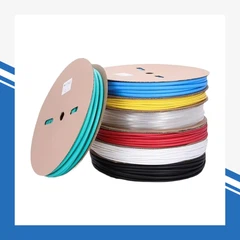


PVC Tube
Your Professional PVC Tube Supplier
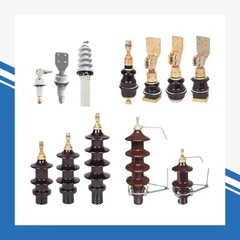
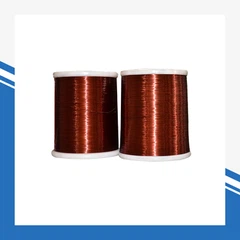
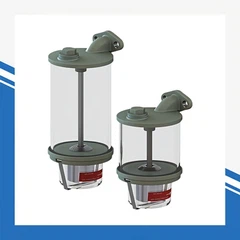
Hangzhou Weshare Import & Export Co.,Ltd. is a leading Chinese manufacturer and exporter of transformer components, electrical insulation materials and consulting company. Weshare founded in 2005 by one specialized sales in transformer accessories. Most of our products are used in oil and dry transformers, electrical motors, generators and electronic products.Our mission is to ensure appropriate product quality while satisfying the needs of our customers is our prime objective and represents the core principle of our business activities.


Why Choose Us
Quality Assurance
Certified by UL, SGS, and ISO9001, Weshare upholds stringent quality standards.
Extensive Experience
Weshare, since 2005, excels in transformer accessories and electrical engineering.
Export markets
With a strong focus on export markets, we have successfully captured significant market share in East Asia, North Europe, the Middle East, South America, Egypt, and East Africa. Our dedication to ensuring appropriate product quality while meeting customer needs is the cornerstone of our business philosophy.
Product Application
Our company boasts a wide array of products used in oil and dry transformers, electrical motors, generators, and electronic devices.
Advantages of PVC Tube
Strong And Light-Weight
PVC's abrasion resistance, lightweight, good mechanical strength and strength are essential technical advantages for its use in building and construction applications.
Easy To Set Up
PVC can be cut, shaped, welded and joined quickly in a variety of designs.
Resilient
PVC is resistant to weathering, rotting, chemical deterioration, shock and abrasion. It is for that reason the favoured choice for a variety of consumers for various long-life and outdoor items. In fact, medium and long-term applications account for some 85 percent of PVC production in the building and construction sector.
Cost-Effective
PVC has been a popular material for construction applications for years due to its physical and technical properties which offer excellent cost-performance benefits. As a material it's very competitive in terms of price, this value is also improved by the properties such as its durability, life-span and low upkeep needs.
Environmental Effect
Exceptional thermal insulation of PVC windows, cladding and roofing helps to considerably enhance the energy effectiveness of structures. PVC piping systems assist prevent leakage and their incredibly smooth surface areas decrease the expense of pumping fluids. PVC products require relatively less energy and resource use throughout production, along with conversion to completed products.
Safe
PVC is a non-toxic inert polymer. It is a socially important resource that has been utilized for more than half a century. It is likewise the world's most researched and thoroughly tested plastic. It fulfils all international standards for safety and health for both the products and applications for which it is utilized.
Product Paramenters
|
Item |
Value |
|
|
Continuous operating temperature(℃) |
-5~105 |
|
|
Tensile strength(MPa) |
≥10.4 |
|
|
Ultimate elongation(%) |
≥100 |
|
|
Aging in circulating air oven |
7days at 136.0±1.0℃ |
|
|
After aging |
(MPa) Tensile strength |
≥7.28 |
|
(%) Ultimate elongation |
≥70 |
|
|
Potential rating(V) |
300V, 600V |
|
|
Volume resistivity)(Ω*cm) |
≥101° |
|
|
Potential rating(V) |
No breakdown |
|
|
Corrosion of bare copper |
No corrosion |
|
|
Heat shock |
No cracking |
|
|
Cold bend |
No cracking |
|
Made To Order For Extruded Pvc Tube
|
Materials |
1), Flexible Tubing: Polyurethane, PVC, LDPE. 2), Semi-Rigid Tubing: PP and HDPE. 3), Rigid Tubing: Polycarbonate, UPVC, ABS, high impact polystyrene HIPS and Acrylic. |
|
Colors |
Transparent, Semi-translucent, Opaque, or Custom Color. |
|
Shapes |
Round, Oval, Square, Rectangular, Triangular. |
|
Sizes |
Custom |
|
Other |
1), Cut to length 2), Logo Printing 3), Hole punching 4), Surface painting |
Production process of PVC Tube
Extrusion Process
The journey begins with the extrusion process. Here, the raw material heats until molten and is then pushed through a die, forming its long, hollow shape. Precision is key. We keep a strict watch on temperatures and speed to maintain quality. High-tech machinery assists in delivering this precision, ensuring every pipe is perfect.
Cooling and Sizing
After extrusion, pipes move to the cooling and sizing phase. Here’s how we ensure everything measures up:
Cooling. A water bath or mist gradually cools the pipes. It is vital to cool them slowly to prevent any warping or bending.
Sizing. While cooling, pipes pass through rings that guarantee they meet exact size standards. We aim for consistency since even small deviations can cause big problems during installation.
Quality Control and Testing
Ensuring the quality of PVC pipes is crucial in the PVC pipe industry. This section outlines standard testing methods and addresses common production challenges.
Testing Methods in PVC Pipe Production
Quality control stands as the backbone of pvc pipe manufacturing process. Manufacturers adopt various testing methods to assure product reliability and safety. One standard approach includes testing for dimensional accuracy, ensuring the pipe meets specified guidelines for size and thickness. Pressure tests check for the pipe’s ability to withstand different pressure levels without cracking.
Application of PVC Tube


Plumbing Sector
PVC pipes are generally used in plumbing applications to transport water, waste, and other fluids in residential, commercial, and industrial buildings. PVC pipes are manufactured and available in various dimensions, lengths, and sizes. Plumbing is the largest industry in PVC applications by quantity and weight mass.
Drainage systems
PVC pipes are also used in drainage systems to carry wastewater, stormwater, and other fluids away from buildings. These pipes are most frequently used in waste management and control. PVC pipes are installed in wastewater transportation, sewers, drains, and vents which are connected to different buildings and equipment.
Electrical conduits
PVC pipes are widely used as electrical conduits to protect electrical wires and cables in buildings and infrastructure projects.
Irrigation systems
PVC pipes are used in irrigation systems to transport water from the source to the crops in agriculture and gardening applications. In fact, agriculture is one of the important sectors and is incomplete without PVC pipes. PVC pipes are very frequently used for all important functions of agriculture from bore-well to water irrigation, sprinklers, and spraying of pesticides and fertilizers, etc.
Ventilation systems
PVC pipes are also used in ventilation systems to circulate air and remove stale air, smoke, and fumes from buildings and other enclosed spaces and places.
Water supply systems
PVC pipes are also used in water supply systems to transport potable water from the source to the consumers in residential, commercial, and industrial buildings.
Chemical Handling
PVC pipes are the best to handle particular types of chemicals, as compared to metal pipes. The lengthy polymeric chains of PVC offer a high material resistance against degradation, chemical attack, and corrosion. The chlorine in PVC makes it fire-resistant and stops the flames to spread.
Gas distribution systems
PVC pipes are also used in gas distribution systems to transport natural gas and other gases from the source to the consumers in residential, commercial, and industrial buildings.
Fire Sprinklers
PVC pipes are generally employed in the fire sprinkler system set up in public places like museums, theatres, libraries hotels, offices, and any other private buildings. The PVC pipes are resistant to corrosion, scale, or any microbiological layer formation making them durable, and low in maintenance as opposed to the traditional iron pipes.
PVC Pipes for Rainwater Management
PVC pipes are used for rainwater harvesting systems. These pipes are important for the maintenance and distribution of rainwater. The rainwater is carried from the rooftop through the PVC pipes down into a storage or harvesting system.
Packing & Shipment
|
Size |
135(L) * 110(W) * 180(H) |
|
Pallet |
Fumigated Solid For Exportong |
|
Packaing Details |
1.The Normal Package Is Carton Box |
FAQ
As one of the leading pvc tube suppliers in China, we warmly welcome you to wholesale high-grade pvc tube made in China here from our factory. All our products are with high quality and competitive price.