







Normal Thickness:5
Tolerance:±1.4

Rigid Laminates
About Weshare
Weshare's core products are laminated insulation materials, molded and pultruded composite materials, transformer accessories, etc. Rigid Laminates insulation materials include Transformer Insulation Laminated Wood, Epoxy Glass Cloth Laminated Sheet, Phenolic Cotton Cloth Laminated Shee, Phenolic Paper Laminated Sheet, and Insulation Molded Rod. Products are widely used in aerospace, military industry, shipbuilding, petrochemical industry, rail transit, electric power, electrical, electronics, medical, machinery and other fields.
Weshare rigid laminates production capacity
150 workers
2000 ㎡ Factory
2 R&D Laboratories
500+ Successful Projects
Weshare rigid laminates markets
OEM Motor
OEM Transformer
Power Generation
Multinational company ABB
-
![Electrical Laminated Wood]()
-
![Fr4 Sheet Insulation]()
-
![G11 Epoxy Glass Laminate]() G11 Epoxy Glass LaminateWe are a professional manufacturer for B2B, please contact us to get free samples !read more
G11 Epoxy Glass LaminateWe are a professional manufacturer for B2B, please contact us to get free samples !read more -
![GPO3 Glass Polyester Laminate]() GPO3 Glass Polyester LaminateGPO3 Glass Polyester Laminate Nominal size: 1000×2000mm; 1010×2020mm; 1250×2500mmread more
GPO3 Glass Polyester LaminateGPO3 Glass Polyester Laminate Nominal size: 1000×2000mm; 1010×2020mm; 1250×2500mmread more
Nominal thickness: 0.8~60mm
Note: Special specifications can be negotiated between the supplier... -
![G10 Epoxy Sheet]() G10 Epoxy SheetDefinition: G10 Epoxy Sheet (G10 FR-4) is a rigid insulating material made of electronic grade alkali-free glass fiber cloth impregnated with epoxy resin and cured by high temperature and high...read more
G10 Epoxy SheetDefinition: G10 Epoxy Sheet (G10 FR-4) is a rigid insulating material made of electronic grade alkali-free glass fiber cloth impregnated with epoxy resin and cured by high temperature and high...read more -
![3025 Phenolic Cotton Cloth sheets]()
-
![Paper Phenolic Sheet]()
-
![Epoxy Glass Cloth Rod]()
-
![High strength insulation rod]()
-
![G10 Epoxy Glass Moulded Rod]()
-
![Insulation Laminated Wood Bolt]() Insulation Laminated Wood BoltManufactured from imported European beech sheets and Russian birch veneers, our laminated wood bolts and nuts feature excellent insulation, bending resistance and tensile strength. Equipped with...read more
Insulation Laminated Wood BoltManufactured from imported European beech sheets and Russian birch veneers, our laminated wood bolts and nuts feature excellent insulation, bending resistance and tensile strength. Equipped with...read more -
![Insulation Laminated Wood Nuts]() Insulation Laminated Wood NutsDescription of Laminated Wood: High-performance Insulation laminated wood fasteners made from European beech/Russian birch, offering superior insulation, tensile strength, and bending resistance...read more
Insulation Laminated Wood NutsDescription of Laminated Wood: High-performance Insulation laminated wood fasteners made from European beech/Russian birch, offering superior insulation, tensile strength, and bending resistance...read more


Weshare rigid laminates advantagea
1.Provide quality assurance documents, including test reports and certification certificates
2.Perform lab testing
Including:
-Thermal cycle test: The rigid laminates is repeatedly cycled between different temperatures to observe whether delamination, deformation or performance degradation occurs.
-Moisture resistance test: Place it in a high-humidity environment to evaluate its degree of moisture absorption and its impact on electrical and mechanical properties.
-Chemical corrosion resistance test: exposed to various chemical reagents to check its ability to resist corrosion.
- Mechanical strength testing: including tensile, bending, impact and other tests to determine its ability to withstand mechanical stress.
-Electrical performance testing: such as insulation resistance, dielectric constant, dielectric loss and other tests, long-term monitoring to evaluate the stability of its electrical performance.
Rigid laminates product

Epoxy Glass Cloth Laminated Sheet
Epoxy Glass Cloth Laminated Sheet offer excellent machinability and low moisture absorption, suitable for corrosive environments and Electro-Mechanical applications which require flame resistance.
You can download data sheets below, which contain the designs, standards and technical specifications of both products in this range.
Should you require something outside of these parameters, please contact our customer service team below.

Phenolic Cotton Cloth Laminated Sheet
Phenolic Cotton Cloth Laminated Sheets is a laminated material made by hot pressing of cotton cloths impregnated with a thermosetting phenol-formaldehyde-based binder.

Phenolic Paper Laminated Plate
With its excellent processability and physical features, phenolic laminated sheets have been broadly used in various fields as insulation and structural materials for electric components, electric machines, and the like. We have been proactively developing special products to suit our customers' needs, which have been gaining popularity among our customers.

Insulation Molded Rod
Epoxy Glass Cloth Laminated Insulation Rod for disconnectors and GIS3725 is mainly used as insulating machine parts of electric equipment, screw and wear resistant component of machinery, etc.
Size of Laminated Rod: diameter 8-200mm, length 1,000mm
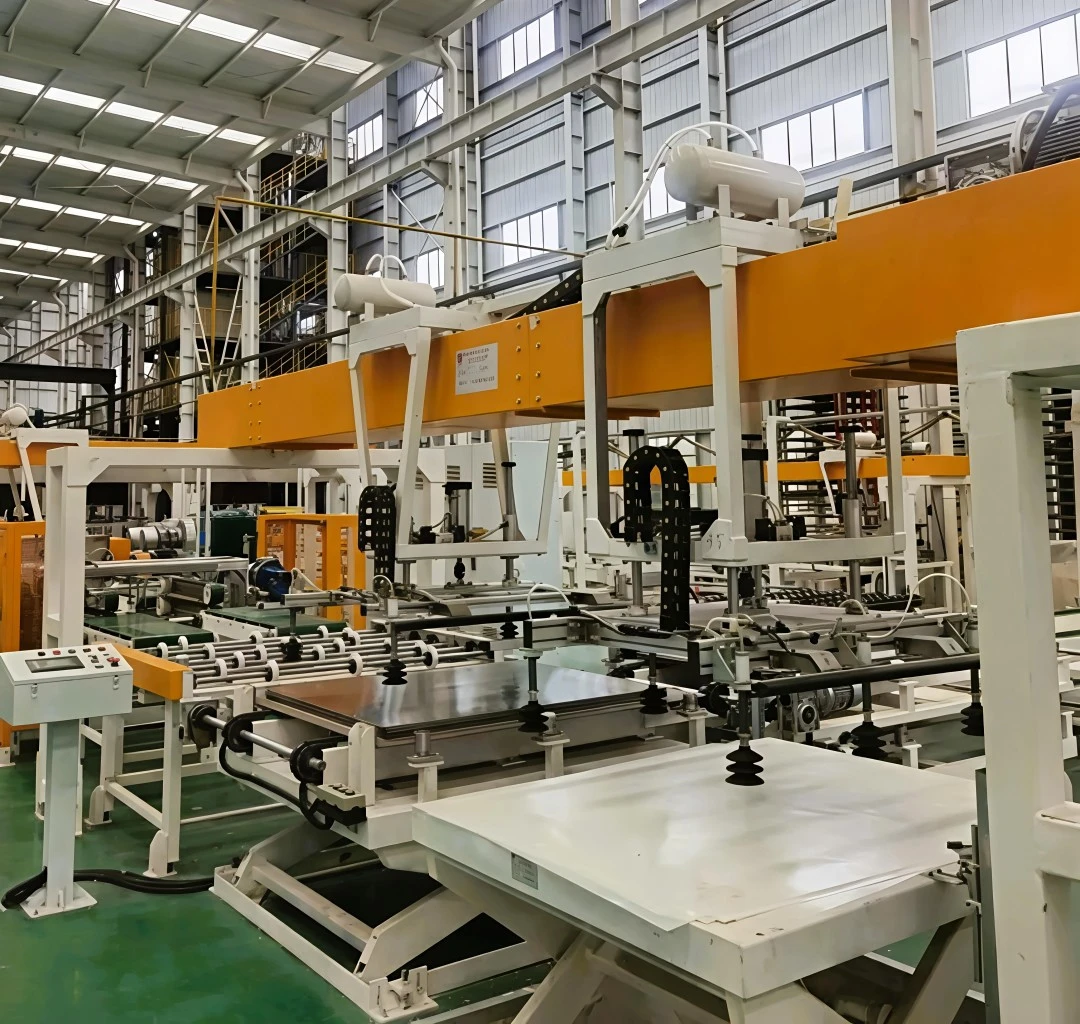
Rigid laminates Production process

Step 1) Substrate or base materials such as paper or glass cloth arrive at the plant in master rolls with a thickness ranging from .003″ to .010″.
Step 2) The base material is passed through a resin bath to impregnate the substrate with a resin such as phenolic, epoxy, melamine, or silicone.
Step 3) After the base material has been impregnated, it is passed through a treating oven to drive off the resin’s solvents and precisely allocate the correct amount of resin on the substrate.
Step 4) After being treated, the composite is now considered in its “B-Stage.” The B-Stage composite is then cut to size and stacked (called Prebuild), depending on the sheet’s thickness. The material is then loaded into the laminating press.
Step 5) The cut-to-size prebuild is placed in the press under heat and pressure, which results in the finished laminate sheets. Typical press loads can hold anywhere from 8″–14″ worth of sheet material and may take up to several hours to fully cure, depending on the grade being produced.
Step 6) After being removed from the press, the sheets are trimmed and sanded to thickness as required.

Rigid Laminated Sheet Application 1: In the Electric Motor Industry


Motor End Plates

Motor Slots

Motor Lead Terminals

Motor Slot Insulation Paper
Rigid Laminated Sheet Application 2: In the Power Distribution Industry


Inverter Frameworks

Prartition Plates

Engineering Plastics

Switch Components

Expoxy Boards

Transformer Bushing Components

Transformer Pads

Insulation Blocks

Insulating Bushings

Insulation Spacers

Copper Busbar Insulation Parts

Insulation Partition Plate
Rigid Laminated Sheet Application 3: In New Energy and Power Distribution Industry

Junction Box Housing

Flexible Solar Panel Backsheet

Electronic Circuit Board

Insulation Parts For Transformer
Rigid laminates difference
How to choose appropriate Rigid Laminates based on application scenarios?

Industrial control equipment
Paying more attention to reliability and durability, laminates with higher strength and heat resistance may be required, such as epoxy glass cloth laminate (FR-4).

Automotive electronics
It needs to be able to withstand harsh working environments, including high temperatures, vibrations and chemicals. Polyphenylene ether (PPE) or ceramic-filled laminates with good high-temperature performance may be selected.

Aerospace field
For applications with extremely high requirements on weight, strength and heat resistance, high-performance aramid fiber-reinforced laminates or polytetrafluoroethylene (PTFE) laminates may be used.

Communication base station
With high requirements on signal transmission quality and stability, laminates with low dielectric constant and dielectric loss may be selected, such as some high-performance materials from Rogers.
What is the difference between G-10 and FR4?

FR-4 and G-10 are the most versatile all-around of the laminate grades and are made by impregnating an epoxy resin binder into continuous glass woven fabric. G10/FR4 has extremely high mechanical strength, good dielectric loss properties, and good electric strength properties, both wet and dry.
G10/FR4 are widely used in the electronics field – primarily because water absorption is virtually nil, rendering it an excellent insulator.
The difference between G10 and FR4 is that FR4 is a fire-retardant grade of G10.
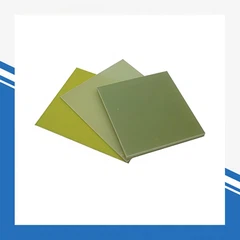
Color: yellowish to light green

FAQ
Q: What is epoxy glass laminate?
A: Epoxy Glass Cloth Laminated rod are an insulating structural material used for the production of slide bearings, gears, and other components. Being a good isolator, it is also used in the production of electrical appliances and components.
Q: What is laminating epoxy used for?
A: This process is commonly used for applications such as boat hulls, automotive bodies, and other industrial products that require a strong bond between various materials. Epoxy laminating resins come with a Part A side which is the epoxy resin and a Part B side which is the hardener.
Q: What is epoxy glass used for?
A: One of the large application area for epoxy is electrical and electronics. Epoxy's electrical insulation capability in combination with low moisture effect makes it suitable for the manufacture of circuit boards that are found in most devices, such as TVs, computers, cameras, etc.
Q: What is phenolic cotton fabric laminate sheet used for?
A: The textolite or phenolic cotton cloth sheets are used as insulating material for work in transformer oil and in the air at a normal relative humidity of the environment and at 50 Hz of frequency. Long-term allowable working temperature: -65°C to +105°С.
Q: What is laminated cotton fabric used for?
A: The most obvious use of vinyl laminated fabric, or maybe even any fabric, is in clothing. The first encounter most of us have with vinyl laminated fabric is via our childhood raincoats. In fact, lots of products for children are laminated, for their increased durability, and the ease with which they can be cleaned.
Q: What is backer rod log insulation?
A: Backer Rod is the product you need prior to chinking or caulking your log home. It not only acts as insulation, but repels moisture, too. Backer rod also serves as a bond-breaker between two logs and provides a structure against which you can apply chinking and caulk more uniformly in order to achieve an ideal joint.
As one of the leading rigid laminates suppliers in China, we warmly welcome you to wholesale high-grade rigid laminates made in China here from our factory. All our products are with high quality and competitive price.