








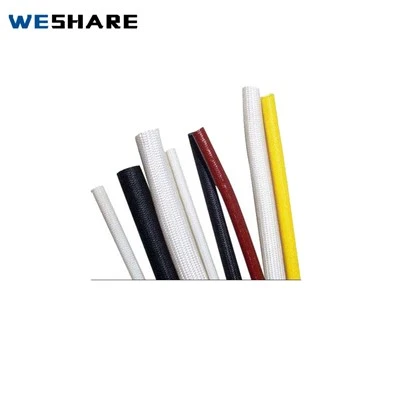
Fiberglass Sleeving
Your Professional Fiberglass Sleeving Supplier
Hangzhou Weshare Import & Export Co.,Ltd. is a leading Chinese manufacturer and exporter of transformer components, electrical insulation materials and consulting company. Weshare founded in 2005 by one specialized sales in transformer accessories. Most of our products are used in oil and dry transformers, electrical motors, generators and electronic products.Our mission is to ensure appropriate product quality while satisfying the needs of our customers is our prime objective and represents the core principle of our business activities.
-
![Acrylic Fiberglass Sleeving]()
-
![High Temperature Fiberglass Sleeving]()
-
![Silicone Rubber Coated Fiberglass Sleeving]()
-
![Heat Resistant Fiberglass Sleeve]()
-
![Insulation Fiberglass Silicone Sleeve]()
-
![Fiberglass Pipe Sleeve]() Fiberglass Pipe SleeveFiberglass Pipe Sleeve is made of alkali-free glass fiber braided layer as the base material and covered with high-temperature vulcanized silicone rubber. It is used to protect wires and cables in...read more
-
![High Temperature Wire Protection Sleeve]()
-
![Acrylic Coated Fiberglass Sleeving]()
-
![Fiberglass Fire Sleeve]()
-
![Heat Treated Fiberglass Sleeving]() Heat Treated Fiberglass SleevingHeat Treated Fiberglass Sleeving is made of alkali-free glass fiber braided layer as the base material and covered with high-temperature vulcanized silicone rubber. It is used to protect wires and...read more
-
![Fibreglass Cable Sleeve]()
-
![Fiberglass High Temperature Sleeving]()




Why Choose Us
Quality Assurance
Certified by UL, SGS, and ISO9001, Weshare upholds stringent quality standards.
Extensive Experience
Weshare, since 2005, excels in transformer accessories and electrical engineering.
Export markets
With a strong focus on export markets, we have successfully captured significant market share in East Asia, North Europe, the Middle East, South America, Egypt, and East Africa. Our dedication to ensuring appropriate product quality while meeting customer needs is the cornerstone of our business philosophy.
Product Application
Our company boasts a wide array of products used in oil and dry transformers, electrical motors, generators, and electronic devices.
Advantages of Fiberglass Sleeving
High temperature resistance
Fiberglass sleeving can withstand high temperatures, making it ideal for use in high-heat environments.


Electrical insulation
Fiberglass sleeving provides excellent electrical insulation, protecting wires and cables from electrical current and preventing electrical interference.
Chemical resistance
Fiberglass sleeving is highly resistant to chemicals, making it ideal for use in harsh chemical environments.


Durability
Fiberglass sleeving is highly durable and can withstand abrasion, bending, and fraying, providing long-lasting protection for wires and cables.
Flexibility
Fiberglass sleeving is flexible and can conform to the shape of wires and cables, making it easy to install and providing a snug fit.


Cost-effective
Fiberglass sleeving is a cost-effective solution for wire and cable protection, providing excellent performance at a relatively low cost.
Product Paramenters
|
Items |
Technical Parameters |
Reference Standard |
|
Appearance |
No glue leakage, cracking, etc. |
GB/T 7113.1-2014 |
|
Coating hydrolysis |
No coating displacement, adhesion, etc. |
GB/T 7113.2 |
|
Cold bending test |
-40°C, 4h, No cracks, coating peeling and delamination. |
IEC60684 |
|
Temperature |
-40°C ~ 200°C |
UL1441 |
|
Flame retardant rating |
HB |
UL94 |
|
Breakdown voltage |
Reference standard |
GB/T 1408-2016 |
|
Heat Resistance |
250°C±5, 24h, No droplets, no flow marks, no cracking. |
JB/T 7093 2015 |
Types of Fiberglass Sleeving
Fiberglass electrical insulation tubing
This tubing is manufactured from glass fiber yarn and is designed to provide electrical insulation in high-temperature conditions. It is commonly used in industrial, automotive, and aerospace applications where Dielectric properties and Chemical resistance are essential.
E-Glass fiberglass tubing
E-Glass fiberglass tubing is made from electrical-grade glass fibers. It is characterized by its good electrical insulation properties. They have excellent mechanical strength and are heat-resistant up to 300°C. They are also chemical and moisture resistant. All these make them ideal for use in electrical insulation, particularly in motors and transformers.
S-2 glass fiberglass tubing
S-2 tubing is made from S-2 glass fibers with enhanced mechanical and dielectric properties. Their temperature and corrosion resistance make them ideal for critical aerospace and defense applications where failure risks cannot be tolerated.
Heat-shrinkable fiberglass sleeve
This is a fiberglass sleeve that can shrink in response to heat. It provides a tight, insulating, and protective fit over wires, cables, and components. This functionality makes it ideal for situations where a tighter fit is required for effective insulation, such as on irregular shapes or in spaces with limited access.

The fiberglass casing should not be stacked directly on the ground, on the steel frame or on the cement floor. The brackets generally used to place steel pipes are not very suitable for fiberglass sleeves.
Use support bars between the bottom layers and layers to prevent damage and movement of the glass fiber sleeve. For fiberglass heat sleeve with a length of 9.14m, at least 4 support bars should be used. The support bars should not be placed in the transition area of the pipe or In the thickened area, the spacing of the support bars should not exceed 1.8m, and should be arranged vertically with the pipe body. At the same time, the thickness of each layer should be uniformed. The tubes used for the support bars should be softer than the tubes. near both ends of the fiberglass sleeve.
The fiberglass sleeve should not be stacked too high to ensure the safety of the pipe and facilitate inspection and loading and unloading.
The layers should be staggered to prevent the pipe joint from bearing too much weight.
Maintain a Fiberglass Sleeving
Inspect Regularly
It is essential to inspect the fiberglass heat shield sleeve regularly for any signs of damage, wear and tear, fraying, or loss of material properties. Inspect the sleeve from end to end and look out for any discoloration, tears, or small cracks that may lead to failures.
Clean Thoroughly
Regular cleaning is necessary to maintain the functionality and hygiene of a fiberglass heat shield sleeve. Use a mild soap, warm water, and a soft cloth or brush to clean the sleeve. Avoid using any harsh chemicals, abrasive materials or high-pressure water jets, as they can damage the sleeve surface.
Replace Damaged Sleeves
After inspecting the sleeve, if you find a damaged, worn or torn area, it is important to replace it immediately. Damaged sleeves can reduce the effectiveness of protection and potentially increase the risk of hazards to personnel and equipment.
Application of Fiberglass Sleeving
Electrical and electronic industry
Used for insulating wires and cables in equipment like transformers, motors, and generators.
Automotive industry
Protects wires and cables in engine compartments, fuel systems, and braking systems.
Aerospace industry
Safeguards wires and cables in aircraft engines, avionics, and other critical systems.
FAQ
As one of the leading fiberglass sleeving suppliers in China, we warmly welcome you to wholesale high-grade fiberglass sleeving made in China here from our factory. All our products are with high quality and competitive price.
insulation storage sleeve, insulation buyer sleeve, wire insulation sleeve