


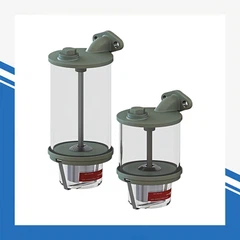






model:U70BL
Size:146*255*320
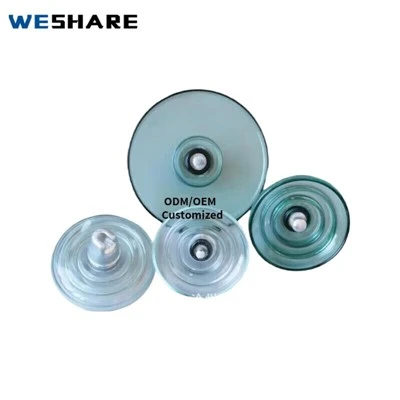
Glass Insulator
Your Professional Glass Insulator Supplier
Hangzhou Weshare Import & Export Co.,Ltd. is a leading Chinese manufacturer and exporter of transformer components, electrical insulation materials and consulting company. Weshare founded in 2005 by one specialized sales in transformer accessories. Most of our products are used in oil and dry transformers, electrical motors, generators and electronic products.Our mission is to ensure appropriate product quality while satisfying the needs of our customers is our prime objective and represents the core principle of our business activities.



Why Choose Us
Quality Assurance
Certified by UL, SGS, and ISO9001, Weshare upholds stringent quality standards.
Extensive Experience
Weshare, since 2005, excels in transformer accessories and electrical engineering.
Export markets
With a strong focus on export markets, we have successfully captured significant market share in East Asia, North Europe, the Middle East, South America, Egypt, and East Africa. Our dedication to ensuring appropriate product quality while meeting customer needs is the cornerstone of our business philosophy.
Product Application
Our company boasts a wide array of products used in oil and dry transformers, electrical motors, generators, and electronic devices.

Advantages of Glass Insulator
High mechanical strength
The surface of the glass insulator has high mechanical strength and is not prone to cracks, so it has high durability.
Stable electrical performance
The electrical strength of the glass remains basically unchanged during the entire operation, and the aging process is much slower than that of porcelain insulators.
Self-breaking characteristics
Glass insulators have the characteristics of zero-value self-breaking. When the insulation performance decreases, the insulators will break by themselves, which is convenient for operation and maintenance personnel to find and replace in time.
Strong anti-pollution flashover ability
The surface of glass insulators usually adopts a special coating to reduce the adhesion of dust, dirt and moisture, thereby improving the anti-pollution flashover ability.
Easy to maintain
Due to the self-breaking characteristics of glass insulators and easy detection, operation and maintenance personnel can find and deal with insulation problems in time, reducing maintenance costs.
Product Paramenters
|
Model |
Size |
Model |
Size |
|
U70BL |
146*255*320 |
U210B-2 |
170*280*450 |
|
U70BLP-1 |
146*255*400 |
U210BP-2 |
170*320*550 |
|
U70BP/146D |
146*300*450 |
U210BP/170D |
170*300*450 |
|
U100BL |
146*255*320 |
U210BP/170D |
170*300*450 |
|
U100BLP-1 |
146*255*400 |
U210BP/170M |
170*420*380 |
|
U100BLP-2 |
146*280*450 |
U240B-2 |
170*280*450 |
|
U100BP/146D |
146*300*450 |
U240BP/170D |
170*300*450 |
|
U100BP/146M |
146*380*365 |
U300B |
195*320*485 |
|
U120B |
146*255*320 |
U300BP-1 |
195*320*550 |
|
U120BP-1 |
146*255*400 |
U300BP-3 |
195*380*635 |
|
U120BP/146D |
146*280*450 |
U300BP2/195M |
195*455*450 |
|
U160BM |
155*280*400 |
U300BP/195D |
195*330*485 |
|
U160BP |
155*280*450 |
U300BP/195T |
195*400*635 |
|
U160BMP-2 |
155*320*550 |
U420B |
205*360*550 |
|
U160BP/146M |
146*420*380 |
U550B |
240*380*600 |
|
U160BP/155D |
155*300*450 |
U550BP/240T |
240*400*635 |
|
U210B-1 |
170*280*400 |
U70C, U70CN |
210*200*220 |
Types of Glass Insulator
Borosilicate glass: Borosilicate glass has less alkali components harmful to electrical properties, and is easy to melt and process. It has good mechanical strength, rapid cooling and rapid heat resistance, and excellent insulation properties.
Alkali-free glass: Aerodynamic Glass Insulator used for insulation coating such as power supply line is glass containing a large amount of alkali, and has poor chemical stability and insulation properties. Therefore, it is necessary to use alkali-free glass as a raw material.
Quartz glass: Quartz glass is made by heating and melting the powder of silica sand and crystal at about 1800 ° C. It is almost completely alkali-free, has high electrical resistivity, low dielectric loss and excellent insulation performance.
Soda lime glass: Soda lime glass is low in price, low in softening temperature, easy to form and process, but due to many alkali components, it is not suitable as electrical insulation. However, in recent years, dielectric properties have been improved by the addition of a butyl BaO component, and in some countries where excellent insulators are not available, it has been used as an insulator material for power distribution and transmission.
Lead glass: Lead glass is a kind of glass containing PbO. It has low softening temperature, easy processing and good insulation performance. It is mainly used as glass for vacuum tube.

Glass Insulator Assembly
01/
Component supply: In this first step, the necessary components for the glass insulator are procured and verified, which generally include the dielectric, cap, pin and split pin.
02/
Cement Dosing: Cement is carefully dosed to ensure a proper assembly. It acts as a bonding agent that will hold the insulator parts together. We use 100% alumina cement, which is immune to cement growth expansion phenomena.
03/
Assembly Machines: The insulator parts are assembled in specific machines that apply the cement homogeneously and ensure a solid bond. This involves attaching the cap and pin to the of the dielectric.
04/
Cement Curingt: After assembly, the insulators are placed in a curing water tank where the cement hardens, and the stability of the bonds is ensured. Curing time and conditions are critical to the final strength of the insulator.
05/
Routine Mechanical Testing (to 100% of Production): Each assembled insulator undergoes routine mechanical testing and visual inspection, which ensures its quality and strength. This is done to ensure that each insulator meets design specifications and is safe for use in electrical applications.
06/
Packaging: Once the insulators have passed the quality tests, they are suitably packaged for distribution and delivery. Packaging must protect the insulators from damage during transport and storage, and often includes safety measures to prevent breakage of the glass.
Production Process of Glass Insulators




Batching Process
Batching refers to the uniform mixing of different raw materials according to a specific ratio. Currently, forced vertical-axis mixers are commonly used for this process. The key requirement is achieving homogeneous blending of all components.
Melting & Fining Process
Melting and clarification: Melting refers to the formation of a uniform glass liquid by heating the ingredients at high temperatures, while clarification refers to the exhaust treatment of the liquid formed by melting the raw materials.
Press forming
Pressing: After melting and clarification, the glass liquid enters the pressing process through the feeding system, that is, the glass is hydraulically made into glass insulation parts, usually achieved through a fully automatic hydraulic forming machine. The pressing shape is controlled by the glass mold, and the amount of glass liquid used to press one insulator is also controlled to ensure the consistency of the insulator product.
Tempering
The glass component subsequently undergoes tempering treatment, which involves controlled cooling to induce permanent compressive stress on the surface. Key equipment used in this stage includes homogenization furnaces and tempering machines.
Thermal Shock Testing
The tempered glass component is subjected to thermal shock testing using specialized nickel sulfide treatment furnaces and elimination processes. The homogenization treatment and effectiveness of nickel sulfide removal directly impact a critical operational metric of glass insulators—the spontaneous breakage rate.
Cementing Assembly
A cementing assembly machine equipped with steel pin positioning assistance is used to assemble the insulator's dielectric component, steel pin, and cap. This step requires strict attention to maintaining coaxial alignment among the steel pin, dielectric component, and cap, as poor coaxiality can also lead to elevated spontaneous breakage rates.
Inspection
Conduct a 50% tensile load test on the glass insulators that have been glued together, check the height of the insulator structure, etc., to ensure that the insulators meet the standard requirements.
FAQ
As one of the leading glass insulator suppliers in China, we warmly welcome you to wholesale high-grade glass insulator made in China here from our factory. All our products are with high quality and competitive price.