


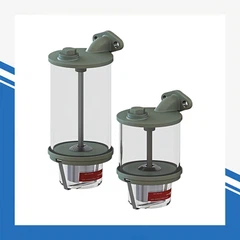






Common Faults & Troubleshooting of Transformer Moisture Absorbers
1. Silica Gel Changes Color Too Quickly / Turns Pink Frequently
Symptom: The blue silica gel turns pink much faster than expected, indicating continuous moisture absorption.
Possible Causes:
Air leaks at the flange connection or housing seal, allowing unfiltered humid air to enter.
The oil cup (for oil cup type) is dry, damaged, or the oil level is too low, failing to trap moisture.
The transformer operates in an extremely humid environment, requiring a larger-capacity absorber.
The silica gel itself is of poor quality or has absorbed moisture during storage.
Solutions:
Check all connections for air leaks; tighten bolts evenly and replace damaged gaskets.
Refill or replace the oil in the oil cup with clean transformer oil to the specified level.
Regenerate or replace the silica gel immediately.
Consider upgrading to a larger-capacity or explosion-proof absorber for humid conditions.
2. Silica Gel Remains Blue (No Color Change) for a Long Time
Symptom: The silica gel does not change color, even after months of operation.
Possible Causes:
The breather pipe or absorber is blocked, preventing air flow.
The silica gel is completely deactivated (due to overheating during regeneration or poor quality).
The absorber is installed incorrectly or is completely isolated from the transformer conservator.
Solutions:
Check and clear any blockages in the breather pipe and absorber.
Replace the silica gel with new or properly regenerated desiccant.
Verify the absorber is installed correctly and the air path is open.
3. Oil Leakage from the Oil Cup / Absorber Housing
Symptom: Transformer oil leaks from the bottom oil cup or the flange connection.
Possible Causes:
Overfilling the oil cup with oil.
Aged or damaged sealing gaskets or O-rings.
Unevenly tightened flange bolts, causing poor sealing.
Cracked or damaged housing due to impact or aging.
Solutions:
Drain excess oil from the oil cup to the recommended level.
Replace all aged or damaged gaskets and seals.
Tighten flange bolts evenly in a crisscross pattern.
Replace the entire absorber if the housing is cracked.
4. Air Blockage / Poor Ventilation
Symptom: The transformer conservator is under abnormal pressure, or the breather does not work.
Possible Causes:
The silica gel is compacted or caked, blocking the air flow path.
Debris, oil sludge, or foreign objects block the breather pipe or the absorber inlet/outlet.
The oil cup is overfilled, submerging the air passage.
Solutions:
Remove and refill the silica gel, ensuring it is loose and evenly distributed.
Clean the breather pipe and absorber thoroughly to remove blockages.
Adjust the oil level in the oil cup to the correct height.
5. Frost or Condensation Inside the Absorber
Symptom: Water droplets or frost appear inside the absorber housing, even with new silica gel.
Possible Causes:
The absorber housing has a crack or poor seal, allowing humid air to enter.
The silica gel is saturated and no longer absorbing moisture.
Extreme temperature differences between day and night cause condensation inside the housing.
Solutions:
Inspect the housing for cracks and replace it if damaged.
Check and replace saturated silica gel.
Re-seal all connections to prevent moisture ingress.
6. Corrosion or Rust on the Absorber Housing
Symptom: Rust spots or corrosion appear on the metal housing, especially at the bottom or flange.
Possible Causes:
The protective paint or coating is damaged, exposing the metal.
The absorber is installed in a humid or corrosive environment (e.g., coastal areas).
Leaked oil or water has accumulated at the bottom, causing rust.
Solutions:
Clean the corroded area and apply anti-corrosion paint.
Install a protective cover or consider a stainless steel absorber for harsh environments.
Address the root cause of leaks and keep the housing dry.
What are the criteria for judging whether silica gel fails?
Color change standardBlue indicator silica gel turns completely pink or reddish, which means it has absorbed enough moisture and lost drying capacity.
Caking and agglomeration standardThe silica gel particles stick together, become lumpy or harden, and cannot keep loose granular state.
Poor air drying effectThe transformer frequently produces condensation, and the internal insulation moisture increases obviously, proving the silica gel has failed.
Long-term no color changeSilica gel keeps blue all the time without any color change, indicating it is invalid and loses moisture absorption function.
Dust and dirt accumulationThe surface of silica gel is covered with dust, dirt or oil pollution, resulting in blocked air passage and failure of normal moisture absorption.