

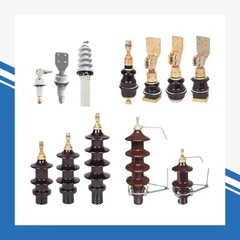
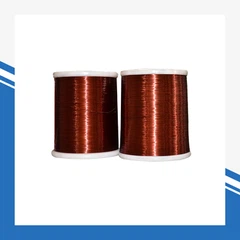

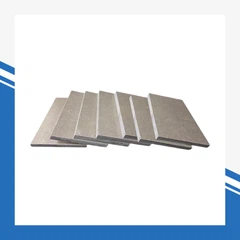
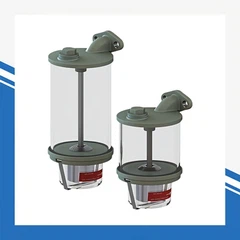




Insulation material is one of the most important materials in transformers, and its performance and quality directly affect the reliability of transformer operation and the service life of transformers. In recent years, new insulation materials have been constantly used in transformer products.
With the rapid development of science and technology, the application of electrical equipment such as motors and transformers is becoming increasingly widespread. The reliability and service life of transformer operation largely depend on the insulation materials used. Insulation materials are increasingly valued by personnel engaged in transformer design and manufacturing.
In the past two decades, new products, technologies, and theories in the field of transformer insulation materials have continuously emerged and developed, making transformer insulation materials and their applications a very important discipline.
Insulation materials, also known as dielectrics, are materials with high electrical resistivity and low conductivity. Insulation materials can be used to isolate conductors with charge or different potentials, allowing current to flow in a certain direction. In transformer products, insulation materials also play a role in heat dissipation, cooling, support, fixation, arc extinguishing, improving potential gradient, moisture resistance, mold resistance, and protecting conductors.
Insulation materials are classified by voltage level: generally divided into Y (90 ℃), A (105), E (120 ℃), B (130 ℃), F (155 ℃), H (180 ℃), and C (greater than 180 ℃).
The heat resistance level of transformer insulation material refers to the maximum temperature that the insulation material is allowed to withstand in the transformer. If insulation materials are used correctly, a lifespan of 20 years can be guaranteed. Otherwise, the service life will be reduced according to the 8 ℃ law (for every 8 ℃ increase in A-grade insulation temperature, the service life will be reduced by half, for B-grade insulation it is 10 ℃, and for H-grade it is 12 ℃. This law is known as the 8 ℃ law of thermal aging). The heat resistance of insulation materials composed of polymers is half lower than that of non electromechanical media. The performance of insulation materials is closely related to their molecular composition and structure.
There are many types of insulation materials for transformers, which can generally be divided into gas insulation materials, liquid insulation materials, and solid insulation materials according to their forms.
The four basic parameters of the electrical performance of transformer insulation materials.
The four basic parameters of the electrical performance of transformer insulation materials include insulation resistance, dielectric coefficient, dielectric loss factor, and insulation strength.
insulation resistance
The concept of insulation resistance refers to the resistance of an insulation material that, under the action of direct current voltage, has been applied for a long time and causes the charging current and absorption current on the line to disappear. The resistance value when only leakage current passes is generally defined as the resistance value measured after adding voltage for one minute, which is the insulation resistance value. For high voltage and large capacity transformers, it is specified to apply voltage for 10 minutes when measuring insulation resistance.