







Insulation material is one of the most important materials in transformers, and its performance and quality directly affect the reliability of transformer operation and the service life of transformers. In recent years, new insulation materials have been constantly used in transformer products. With the rapid development of science and technology, the application of electrical equipment such as motors and transformers is becoming increasingly widespread. The reliability and service life of transformer operation largely depend on the insulation materials used. Insulation materials are increasingly valued by personnel engaged in transformer design and manufacturing. In the past two decades, new products, technologies, and theories in the field of transformer insulation materials have continuously emerged and developed, making transformer insulation materials and their applications a very important discipline.
Insulation materials, also known as dielectrics, are materials with high electrical resistivity and low conductivity. Insulation materials can be used to isolate conductors with charge or different potentials, allowing current to flow in a certain direction. In transformer products, insulation materials also play a role in heat dissipation, cooling, support, fixation, arc extinguishing, improving potential gradient, moisture resistance, mold resistance, and protecting conductors. Insulation materials are classified by voltage level: generally divided into Y (90 ℃), A (105), E (120 ℃), B (130 ℃), F (155 ℃), H (180 ℃), and C (greater than 180 ℃). The heat resistance level of transformer insulation material refers to the maximum temperature that the insulation material is allowed to withstand in the transformer. If insulation materials are used correctly, a lifespan of 20 years can be guaranteed. Otherwise, the service life will be reduced according to the 8 ℃ law (for every 8 ℃ increase in A-grade insulation temperature, the service life will be reduced by half, for B-grade insulation it is 10 ℃, and for H-grade it is 12 ℃. This law is known as the 8 ℃ law of thermal aging). The heat resistance of insulation materials composed of polymers is half lower than that of non electromechanical media.
The performance of insulation materials is closely related to their molecular composition and structure. There are many types of insulation materials for transformers, which can generally be divided into gas insulation materials, liquid insulation materials, and solid insulation materials according to their forms.
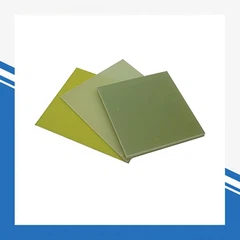
Solid insulation materials: The solid insulation materials used in transformers refer to insulation materials that are either solid in their own form or have undergone chemical reactions or physical changes to become solid. There are various types of solid insulation materials for transformers, such as insulation paper, insulation cardboard, Nomex paper, adhesive paper, electrical laminated wood, epoxy glass cloth board, low dielectric loss laminated board, insulation paint, insulation adhesive, cotton cloth tape, compression tape, mesh non woven polyester tape, and so on.
1. Insulation paper: The insulation paper referred to here refers to pure sulfate wood pulp paper, while other insulation papers include synthetic fiber paper (such as NOMEX paper), nitrile added insulation paper (such as Denison paper), and so on.
2. Insulated wrinkled paper: made by wrinkling insulation paper used by electricians. There are wrinkles along its lateral direction, which are pulled apart when stretched. Due to different wrinkling processing procedures, wrinkled paper with different elongation can be made. The thickness of insulation paper is generally 0.05mm~0.12mm, with an elongation range of 5%~200%. Insulation wrinkled paper is commonly used for winding insulation of oil immersed transformers, such as winding outlets,
3. Denison paper: Insulation paper is changed to nitrile paper, and during the manufacturing process, nitrile amine, ethylene cyanide, etc. are added to the pulp. Produced by Denison Company in the United States, the characteristic of this paper is that after wrinkling, it is calendered and has a good mechanical cyanide content and appropriate elongation. It is an ideal material for insulation of large transformer winding turns. Using it to wrap transposed wires can ensure tightness without swelling.
4 Nomex paper is a heat-resistant synthetic fiber paper produced by DuPont in the United States. Nomex is the trade name for this fiber paper. The main component of Nomex is aromatic polyamide, which has good thermal aging properties. It can be used for a long time at 220 ℃ and belongs to Class C insulation material.
5. Adhesive tape: It can be divided into three types: single-sided adhesive tape, double-sided adhesive tape, and diamond grid adhesive tape. The adhesive paper type is made by coating 0.07mm winding paper with phenolic resin or epoxy resin and baking and drying.
6 Metallized paper: used for ground and electrostatic screens. The base paper is 0.2mm thick insulation paper, and the aluminum foil thickness is 0.02mm for insulation wrapping of the leads and insulation screen.
7. Insulating cardboard: made from kraft wood pulp paper. It is used for oil gap pads, partitions, cardboard tubes, corrugated paper, iron yoke insulation, clamp insulation, and end insulation winding pressure plates of pancake windings.
8 Insulation drums: Insulation drums used in transformers include phenolic paper drums, epoxy glass cloth drums, fiberglass drums, and cardboard drums.
9. Corrugated cardboard: In the oil plate gap structure composed of multi-layer paper tubes in high-voltage transformers, corrugated cardboard can be used instead of support bars to form oil gaps. This insulation structure can save insulation materials while ensuring insulation performance.
10. Electrical laminated products: Insulation materials with layered structures made from paper, cloth, and wooden veneers as substrates, coated with different adhesives, and hot pressed or rolled.
11 Nomex cardboard: a type of cardboard made from synthetic materials based on aromatic amide fibers.
12 pull rods: Glass wire pull rods are often used for inter stage bars, air gap braces, screws, and screws in the iron core columns of dry-type transformers.
13 Electrical thin molds and electrical composite materials: They have excellent dielectric properties and belong to the category of thin insulation materials. Electrical films include polypropylene films, polyester films, and polyimide films. Composite materials are composite products made by bonding one or both sides of a thin film with fiber materials.
14 Glass coated cloth: Glass coated cloth is made by immersing alkali free glass cloth used by electricians in insulating paint and baking it. Used for dry-type transformers.
Insulation materials for transformer binding: The insulation materials used for transformer binding include cotton cloth tape, compression tape, semi dry thin wire tape, mesh semi dry weft free tape, glass cloth tape, and polyester rope.