







Transformer Moisture Absorbers: Differences, Functions, Pros & Cons
There are three main types of transformer moisture absorbers: Common Type, Oil Cup Type, and Explosion-Proof Type. Each is designed for different operating environments and offers unique advantages and disadvantages.


1. Common Type Moisture Absorber
Core Function
Basic moisture absorption for air entering the transformer conservator. The silica gel inside adsorbs moisture, keeping incoming air dry.
Pros
Simple & Low-Cost: Compact structure with fewer parts, easy to install and maintain.
Lightweight: Suitable for small to medium distribution transformers.
Low Maintenance: No oil cup to service; only silica gel replacement is needed.
Cons
No Dust Filtration: Lacks an oil cup, so dust and fine particles can enter the transformer with the air.
Not Ideal for Dusty/Humid Environments: Prone to clogging and faster silica gel saturation in high-dust or high-humidity locations.
Best For
Indoor substations, low-humidity environments, and small distribution transformers where basic moisture control is sufficient.
2. Oil Cup Type Moisture Absorber
Core Function
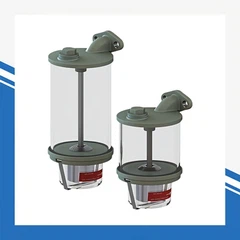
Combines moisture absorption with an oil cup at the bottom to filter dust and large moisture droplets before air passes through the silica gel.
Pros
Dual Protection: The oil cup traps dust and debris, preventing contamination of both the silica gel and transformer oil.
Longer Silica Gel Life: Pre-filtration by the oil cup reduces the amount of moisture and dirt reaching the silica gel, extending its service life.
Cost-Effective for Outdoor Use: Provides better protection than the common type without the high cost of explosion-proof models.
Cons
Additional Maintenance: The oil in the cup needs regular replacement (every 3–6 months) to maintain filtration efficiency.
Risk of Oil Leakage: Overfilling or improper sealing can cause oil spills.
Best For
Outdoor substations, dusty or coastal environments, and medium-to-large power transformers where both moisture and dust control are required.
3. Explosion-Proof Type Moisture Absorber
Core Function
Built with a reinforced, explosion-proof housing to meet safety standards for hazardous environments. Includes multiple desiccant chambers and enhanced sealing.
Pros
High Safety: The explosion-proof design prevents ignition of flammable gases, making it suitable for high-risk locations.
Superior Sealing: Tight seals and robust construction minimize air leaks and moisture ingress.
Enhanced Protection: Often includes multiple silica gel layers and oil cups for maximum moisture and dust filtration.
Cons
Higher Cost: Reinforced materials and complex construction increase the price significantly.
Bulky & Heavy: Larger housing makes installation and maintenance more complex.
Specialized Maintenance: Requires certified technicians for disassembly and repairs in hazardous areas.
Best For
Hazardous locations (e.g., oil refineries, chemical plants), substations in explosion-prone zones, and large power transformers in high-risk industrial environments.
Quick Comparison Table
| Feature | Common Type | Oil Cup Type | Explosion-Proof Type |
|---|---|---|---|
| Primary Use | Basic moisture removal | Moisture + dust filtration | Hazardous environments |
| Cost | Low | Medium | High |
| Maintenance | Low (only silica gel) | Medium (silica gel + oil cup) | High (certified personnel) |
| Dust Filtration | None | Excellent | Excellent |
| Safety Rating | Standard | Standard | Explosion-proof |
| Best Environment | Indoor, low-humidity | Outdoor, dusty | Hazardous/explosive |