








Transformer Pressure Relief Valve: Full Industry Guide
Introduction
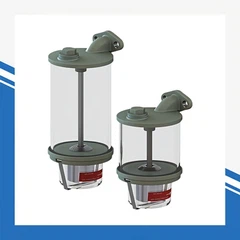
The YSF6, YSF8, YSF9 Series Pressure Relief Valves are critical safety components for oil-immersed power transformers, power capacitors, and on-load tap changers. They protect the transformer tank from deformation or rupture by rapidly releasing excess internal pressure during faults, preventing catastrophic equipment failure and environmental contamination.

1. Purpose & Working Principle
Core Function
Pressure relief valves are designed to protect the transformer tank from damage caused by sudden pressure spikes. When an internal fault (e.g., winding overheating, arcing) occurs, transformer oil vaporizes, causing rapid pressure buildup inside the tank.
Working Principle
Rapid Pressure Release: The valve opens within 2 milliseconds when the internal pressure reaches the set threshold (0.025MPa, 0.035MPa, or 0.055MPa).
Pressure Relief: Excess pressure is vented to the atmosphere, preventing tank deformation or rupture.
Automatic Reset: The valve closes once the pressure drops to a safe level, preventing air and moisture from entering the tank and contaminating the insulating oil.
Key Safety Benefit
By isolating the tank from the atmosphere after operation, the valve maintains the oil's insulation properties and prevents internal corrosion, extending the transformer's service life.
2. Model Code Explanation
The model naming convention provides key specifications at a glance:
YSF – Pressure Relief Valve
First digit – Design sequence
Second digit – Orifice diameter
D – Fixed directional guide
K – With single electrical signal switch
SK – With dual electrical signal switches
J – With mechanical signal contact
B – With locking device
Environmental suffixes:
TA: Dry tropical region
TH: Humid tropical region
T: Dry & humid tropical region
3. Core Specifications & Installation Dimensions
Operating Conditions
Pressure Range: 0.025MPa, 0.035MPa, or 0.055MPa (customizable)
Ambient Temperature: -35°C ~ 55°C
Relative Humidity: ≤ 90% at 25°C
Signal Contact Rating: AC 220V 5A / DC 110V 0.3A
Key Dimensions (mm)
| Series | Bore Hole | Thread | Fuel Injection Diameter | Height | Max Outer Diameter |
|---|---|---|---|---|---|
| YSF9-25 | Φ42 | M38×2 | 18 | 60 | Φ55 |
| YSF9-35 | Φ55 / Φ93 | M48×3 / M80×3 | 25 / 50 | 90 / 100 | Φ75 / Φ105 |
| YSF8-35 | Φ40 / Φ67 | M33×2 / M60×2 | 25 / 50 | 78 / 150 | Φ68 / Φ105 |
4. Contact Configurations & Wiring
The valves are available with multiple electrical signal contact configurations for remote monitoring:
Normally Open (2 wires): Black line (common), Yellow line (signal)
Dual Normally Open (4 wires): Two independent signal circuits
Single-Pole Double-Throw (3 wires): Black (common), Yellow (NO), Green (NC)
Double-Pole Double-Throw (6 wires): Dual independent SPDT circuits
Wiring Notes:
Terminals 2/5 = Common point
Terminals 1/4 = Normally closed (fault state)
Terminals 3/6 = Normally open (normal state)
5. Installation & Usage Guidelines
Installation Steps
Mounting Location: Install the valve on the transformer tank cover or side wall.
Flange Base: Flange-connected valves require a matching flange base.
Threaded Installation: Drill the specified hole size in the tank cover and install with proper sealing.
Safety Cap Removal: Remove the safety cap before commissioning (it is only for protection during transportation).
Critical Installation Notes
Ensure the valve is installed vertically to guarantee proper operation.
Tighten all bolts evenly to prevent leaks.
Connect the signal wires according to the provided wiring diagram for remote alarm functionality.
6. Common Faults & Troubleshooting
1. Valve Fails to Open During Overpressure
Causes: Blocked vent, stuck valve disc, or incorrect pressure setting.
Solutions: Inspect and clear the vent path; check for mechanical binding; verify the pressure setting matches the transformer requirements.
2. Continuous Oil Leakage
Causes: Damaged sealing gasket, uneven bolt tightening, or warped flange.
Solutions: Replace the gasket; tighten bolts evenly in a crisscross pattern; repair or replace warped components.
3. No Signal Output
Causes: Loose wiring connections, faulty micro-switch, or incorrect wiring.
Solutions: Check and tighten terminals; test switch continuity with a multimeter; verify wiring matches the diagram.
4. Valve Remains Open After Pressure Relief
Causes: Debris stuck in the valve seat, weak return spring, or misaligned guide mechanism.
Solutions: Clean the valve seat; replace the spring; adjust the guide mechanism.
7. Key Advantages of YSF Series Valves
✅ Ultra-Fast Response: Opens within 2ms to prevent tank rupture.✅ Hermetic Sealing: Automatically resets to prevent air/moisture ingress.✅ Remote Monitoring: Optional electrical signal contacts for fault alarms.✅ Harsh Environment Resistant: Tropicalized versions available for high humidity/temperature conditions.✅ Flexible Installation: Flange or threaded options for different tank designs.
8. FAQ
Q: What is the purpose of a pressure relief valve on a transformer?
A: It protects the transformer tank from bursting by releasing excess pressure caused by internal faults, preventing catastrophic failure and oil spills.
Q: How does the valve work after releasing pressure?
A: The valve automatically closes once the pressure drops to normal, creating a hermetic seal to keep air and moisture out of the tank.
Q: What pressure settings are available?
A: Standard settings are 0.025MPa, 0.035MPa, and 0.055MPa. Custom settings are available upon request.
Q: How do I know if the valve has operated?
A: Models with electrical signal switches will trigger a remote alarm when the valve opens. Visual inspection