






Mica Products: Essential Materials for Advanced Manufacturing & Modern Technology
Mica products are integral components in advanced manufacturing and technology sectors. As a naturally occurring mineral, mica exhibits exceptional electrical insulation, thermal stability, and chemical corrosion resistance. Industries rely on mica's superior performance in optical instruments and electronic applications, with single-crystal mica sheets and high-grade mica wafers dominating the market. In recent years, demand for mica products has surged, driven primarily by growth in electronics and automotive industries. Its versatile applications in capacitors, insulators, and specialty coatings highlight its multifunctional nature and growing importance in modern production.
Key Summary
Mica is a highly versatile mineral widely used across industries due to its outstanding electrical insulation, thermal stability, and chemical resistance.
Natural mica (muscovite and phlogopite) is essential in electronics, automotive, cosmetics, and other fields thanks to its unique properties.
Synthetic mica offers exceptional purity and thermal resistance, making it ideal for precision electronics and high-performance applications.
Mica is available in various forms including sheets, flakes, and powders, each tailored to specific industrial requirements.
Excellent heat resistance allows mica to perform reliably in high-temperature environments such as furnaces and kilns.
In the automotive industry, mica is a critical material for heat shields, gaskets, and battery insulation, enhancing safety and performance.
Mica plays a vital role in cosmetics, providing shimmer, improving texture, and being safe for skin contact.
Demand for mica is rising rapidly in green energy technologies, including solar panels, wind turbines, and battery systems.

Types of Mica Products
Natural Mica
Natural mica is indispensable across numerous industries. Commercially valuable types include muscovite and phlogopite. These minerals form layered lamellar structures processed into various products for electrical, thermal, and cosmetic applications.
Muscovite
Also known as white mica or ruby mica, muscovite appears colorless, silvery, or light gray. It offers excellent electrical insulation and withstands temperatures up to 550°C (1022°F).Widely used in capacitors, insulators, and cosmetics, its high dielectric strength makes it ideal for high-voltage electrical insulation. Its smooth surface and transparency also enhance luster in cosmetic formulations.
Phlogopite
Often called amber mica or green mica, phlogopite ranges from yellowish-brown to green. It withstands higher temperatures than muscovite, up to 850°C (1562°F).Manufacturers use phlogopite for thermal insulation and gaskets in high-temperature environments. Its flexibility and durability suit demanding automotive and aerospace applications.
Synthetic Mica
Synthetic mica, commonly referred to as fluorophlogopite, is lab-grown for superior purity and stability compared to natural mica. It is white or transparent and withstands extreme temperatures up to 1100°C (2012°F).Engineers select synthetic mica for precision electronic devices and applications requiring ultra-high dielectric strength. Its uniform structure ensures reliable performance in microchips and advanced circuit boards.
| Feature | Muscovite | Phlogopite | Synthetic Mica (Fluorophlogopite) |
|---|---|---|---|
| Common Name | White / Ruby Mica | Amber / Green Mica | Lab-Grown Mica |
| Color | Colorless, silver, light gray | Yellowish-brown, green | White, transparent |
| Max Temperature | ~550°C (1022°F) | ~850°C (1562°F) | ~1100°C (2012°F) |
| Dielectric Strength | Excellent | Very Good | Superior |
| Best For | High-voltage insulation, capacitors | High-temp insulation, gaskets | Extreme-temperature & precision electronics |
Calcined Mica
Calcined mica is produced by heating natural mica at high temperatures to remove moisture and organic impurities, improving thermal stability and chemical resistance.It is used in fire-resistant materials, mineral fillers, and furnace insulation. Its enhanced durability meets the demands of construction and industrial applications under harsh conditions.


Common Forms of Mica Products
Mica is manufactured in multiple forms, each engineered for specific industrial and commercial uses.
Mica Sheets
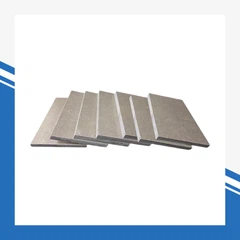
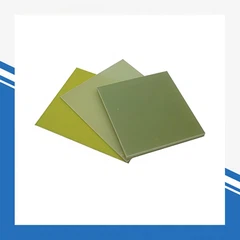
Flat, flexible sheets offering excellent electrical and thermal insulation, available in various thicknesses and sizes.Used as insulating barriers in transformers, capacitors, and heating elements. In construction, they serve as thermal insulation for furnaces and kilns.Sheets can be custom-cut, punched, or laminated to meet specialized requirements.
Mica Flakes
Produced by cleaving and grinding natural or synthetic mica. These reflective, heat-resistant particles enhance durability and visual effects in paints and coatings.Used in automotive metallic paints, plastics, and rubber to boost strength, flexibility, and appearance.
Mica Powder
Finely ground mica with a smooth texture and large specific surface area.Cosmetic manufacturers use it for shimmer and a silky finish. It also acts as a functional filler in plastics, adhesives, and sealants, improving processability, heat resistance, and chemical stability.Non-toxic and safe for personal care and food packaging applications.
Discs, Gaskets & Spacers
Stamped or cut from high-quality mica sheets, these precision components provide stable insulation in harsh environments.Used in semiconductors, microchips, sensors, and electronic assemblies to isolate components and prevent short circuits.They withstand high temperatures and maintain dimensional stability under pressure, supporting critical systems in aerospace, automotive, and industrial machinery.
| Form | Key Properties | Typical Applications |
|---|---|---|
| Sheets | Flexible, insulating, durable | Electrical insulation, furnace liners |
| Flakes | Reflective, heat-resistant | Paints, coatings, plastics |
| Powder | Fine, smooth, non-toxic | Cosmetics, adhesives, sealants |
| Discs / Gaskets | Precise, stable, insulating | Electronics, sensors, washers |
Key Properties of Mica Products
Electrical Insulation
Mica is one of the most reliable electrical insulation materials in modern industry. Its high dielectric strength effectively prevents arcing and protects sensitive components, even at temperatures exceeding 1000°C.Non-flammable and chemically inert, mica offers exceptional breakdown resistance, outperforming materials like G11 in heat resistance and lower thermal conductivity.Widely used in capacitors, PCBs, and transformers to ensure safe, efficient operation.
Thermal Resistance
Mica products maintain insulation performance under extreme temperatures.
| Product Type | Maximum Temperature |
|---|---|
| Mica Gaskets | 1800°F |
| Muscovite | 500°C |
| Phlogopite | >1000°C |
These properties make mica ideal for furnaces, high-temperature gaskets, and heating element insulation.
Chemical Stability
Mica is highly chemically inert and does not react with most acids or alkalis.This stability allows it to maintain structure and performance in corrosive environments, used in chemical equipment, protective coatings, and industrial machinery insulation.
Flexibility & Durability
Mica's layered structure allows bending without breaking, making it suitable for applications requiring toughness and adaptability.It resists cracking, tearing, and abrasion even under repeated stress or harsh conditions.In automotive and aerospace systems, mica components maintain integrity under high temperatures and mechanical loads, extending service life and reducing maintenance costs.

Applications of Mica in Electronics
Insulators & Circuit Boards
Mica is extensively used as an insulation material in printed circuit boards, isolating conductive components to prevent short circuits and electrical failures.Its flexibility allows custom shaping for modern electronics manufacturing.
Capacitors & Dielectrics
Mica serves as the primary dielectric layer in capacitors, delivering stable performance with low energy loss.
| Property | Description |
|---|---|
| Dielectric Constant | Muscovite: 5.4–8.7; Synthetic: 6.0–7.0 |
| Dielectric Strength | Over 200V per mil of thickness |
| Dissipation Factor | Q > 1000 at 1 MHz, low loss |
| Temperature Stability | TC: +50 to -200 ppm/°C |
| Parasitic Inductance | Extremely low |
Mica capacitors are preferred for high-frequency and high-voltage applications in power supplies and signal processing.
Semiconductors & Microchips
Mica supports critical processes in semiconductor manufacturing, providing electrical insulation, thermal stability, and ultra-high purity for cleanroom environments.Its nanoscale structural stability enables precision design for modern microchips, used in wafer processing, plasma etching, and dielectric layers.
Applications in the Automotive Industry
Heat Shields & Gaskets
Mica is essential for heat shields and gaskets, providing thermal protection in modern vehicles.It forms fire barriers in battery cells to prevent thermal runaway and withstands extreme exhaust temperatures.
EV Battery Insulation
Mica plays a vital role in electric vehicle battery safety and efficiency.
High heat resistance maintains insulation integrity
Prevents heat propagation within battery packs
Resists corrosion from automotive fluids
Waterproof and stable in humid environments
Flexible sheets conform to complex battery geometries
Sensor Protection
Mica shields sensitive sensors from heat, electromagnetic interference, and harsh conditions in engine compartments, braking systems, and battery management units, ensuring accurate performance.

Applications in Cosmetics & Decorative Products
Shimmer & Luster in Makeup
Mica is a core ingredient in powders, eyeshadows, blushes, and highlighters, providing natural radiance and smooth application.Available in various particle sizes to control shimmer intensity, it is non-toxic, safe for sensitive skin, and stabilizes pigments for long-lasting color.
Paints & Coatings
Mica flakes enhance durability, barrier performance, and visual effects in coatings.
Forms overlapping layers to block moisture and chemicals
Improves thermal resistance
Reflects UV radiation to preserve color
Creates metallic or pearlescent finishes
Decorative Textiles & Rubber
Mica adds shimmer and durability to textiles and enhances strength, heat resistance, and aesthetics in rubber products such as mats and seals.
Industrial & Construction Applications
Furnace & Kiln Insulation
Mica provides critical thermal insulation in high-temperature industrial environments, used in furnace liners, band heaters, and high-temperature gaskets to reduce energy loss and extend equipment life.
Mineral Filler in Plastics & Adhesives
Mica improves modulus, dimensional stability, impact strength, and heat resistance in plastics.It enhances viscosity, bond strength, and chemical resistance in adhesives, absorbing up to 80% of UV radiation to prevent polymer degradation.
Roofing Materials & Welding Electrodes
Mica reinforces roofing products for weather resistance and stability. In welding electrodes, it prevents moisture absorption and reduces spattering for safer, more efficient performance.
Green Energy & Emerging Applications
Mica supports the global transition to renewable energy, offering reliable performance under high temperatures, electrical stress, and harsh environments.
| Application Area | Mica Products Used | Benefits |
|---|---|---|
| Solar Panels | Sheets, thin films | UV resistance, electrical insulation |
| Wind Turbines | Insulation boards | Thermal stability, moisture protection |
| Battery Storage | Separators, gaskets | Short-circuit prevention, thermal control |
| Hydrogen Fuel Cells | Films, gaskets | Chemical resistance, electrical safety |
Mica is also gaining use in hydrogen fuel cells and next-generation power electronics.

FAQ
What is mica and why is it used industrially?
Mica is a group of silicate minerals valued for exceptional electrical insulation, thermal stability, and chemical inertness. It is essential in electronics, automotive, cosmetics, and construction for reliable performance in demanding conditions.
How is synthetic mica different from natural mica?
Synthetic (fluorophlogopite) mica is lab-grown for higher purity, consistent quality, and greater thermal resistance than natural mica, making it ideal for precision electronics.
Is mica safe in cosmetics?
Yes, cosmetic-grade mica is safe when properly purified and regulated. Reputable brands source responsibly to ensure purity and avoid contaminants.
Can mica withstand high temperatures?
Yes. Phlogopite resists up to 850°C, and synthetic mica up to 1100°C, making it ideal for gaskets, insulation, furnaces, and EV components.
What forms does mica come in?
Mica is available as sheets, flakes, powder, discs, gaskets, and spacers, each designed for specific industrial uses.
How does mica support green energy?
Mica insulates and protects components in solar panels, wind turbines, and battery systems, enhancing efficiency, safety, and service life.
What challenges affect mica sourcing?
Challenges include raw material costs and environmental concerns. Responsible suppliers focus on sustainable mining and ethical sourcing.