






Rigid Mica Sheets vs. Flexible Mica Sheets – A Complete Selection Guide
You may be asking how rigid mica sheets differ from flexible mica sheets when choosing insulation materials. Many projects require both thermal and electrical insulation, but not all materials suit every task. Some jobs demand stiff, rigid plates, while others need highly flexible materials.
Choosing the right mica product directly affects safety, equipment performance, and service life. Understanding these differences helps you select the best option for your needs.
Key Summary
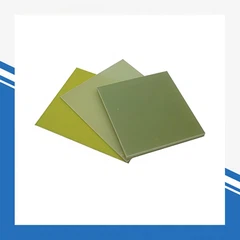
Rigid mica sheets offer exceptional insulation, rigidity, and stability, making them ideal for high-voltage applications.
Flexible mica sheets are highly bendable and conform easily to narrow or irregular spaces, perfect for wrapping pipes and uneven surfaces.
Choose based on operating temperature, required mechanical strength, and installation method.
Always inspect quality and specifications before purchasing to ensure safety and performance.
Thickness matters: thicker sheets provide stronger insulation and rigidity; thinner ones are more flexible.

Rigid Mica Sheets – Overview
Structure & Composition
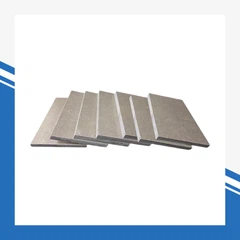
Rigid mica sheets are manufactured by laminating thin layers of mica bonded with high-strength adhesives such as epoxy or silicone resin. This structure creates a firm, dimensionally stable panel that resists bending under pressure.
Typical composition:
| Component | Percentage |
|---|---|
| Mica | 90% |
| Silicone resin | 10% |
Mica provides heat resistance and high strength, while silicone resin binds layers for superior toughness.
Key Properties & Advantages
Outstanding electrical insulation with dielectric strength of 50–150 kV/mm, some grades up to 2000 kV/mm.
Maintains shape and rigidity even at high temperatures.
Excellent mechanical stability under thermal stress.
Widely used in motors, transformers, and heating equipment.
Compared with other materials:
| Material | Mechanical Stability at High Temp | Notes |
|---|---|---|
| Rigid Mica Sheets | Excellent | Retains structure, no deformation |
| Kaolin-filled Rubber | Poor | Stretches or tears over time |
Flexible Mica Sheets – Overview
Structure & Flexibility
Flexible mica sheets are made from thin mica paper bonded with soft adhesives, allowing bending and folding without breaking. They conform to curved or irregular surfaces where rigid panels cannot fit.
Comparison of Key Attributes
| Property | Rigid Mica Sheets | Flexible Mica Sheets |
|---|---|---|
| Mechanical Strength | High, withstands heavy stress | Lower, designed for flexibility |
| Dimensional Stability | Excellent under temperature changes | Lower, adapts to surfaces |
| Density | Higher (compressed layers) | Thinner, lower density |
| Conformability | Rigid, not for irregular shapes | Highly flexible, fits curves |
| Installation | Requires precision machining | Easy to install in tight spaces |
Electrical & Thermal Performance
Available thickness: 0.10 mm – 2 mmCommon grades:
MF SSP (Phlogopite)
MF SSM (Muscovite)
Suitable for medium to high temperatures. Thicker sheets provide better heat insulation.
Muscovite: strong heat resistance
Phlogopite: performs at higher temperatures

Main Differences Between Rigid & Flexible Mica Sheets
Mechanical Strength & Flexibility
| Property | Rigid Mica Sheets | Flexible Mica Sheets |
|---|---|---|
| Mechanical Strength | High, load-bearing | Lower, not for heavy loads |
| Stability | Stable under heat & pressure | May deform under heavy stress |
| Density | Higher | Lighter, thinner layers |
| Typical Applications | Structural support, fixtures | Vibration, thermal cycling, curved surfaces |
Tensile strength of rigid phlogopite sheets: up to 230 N/mm²
Insulation & Temperature Resistance
| Property | Rigid Mica Sheets | Flexible Mica Sheets |
|---|---|---|
| Thermal loss at 500°C | ≤ 1.00% | ≤ 0.60% |
| Bending strength | ≥ 18 kgf/mm² | ≥ 16 kgf/mm² |
| Dielectric strength | >20 kV/mm | >18 kV/mm |
| Insulation resistance | 200–600 MΩ | 100–600 MΩ |
| Continuous temp | 500°C | Up to 800°C |
Temperature grades by mica type:
| Mica Type | Continuous Use | Intermittent Use |
|---|---|---|
| Muscovite | Up to 500°C | Up to 800°C |
| Phlogopite | Up to 700°C | Up to 1000°C |
Thickness & Application Impact
Rigid mica sheets: 0.2 mm – 50 mm
Flexible mica sheets: 0.10 mm – 2 mm
| Thickness Category | Features | Typical Applications |
|---|---|---|
| Thin (0.05–0.5 mm) | High flexibility | Cable insulation, wrapping |
| Medium (0.5–1.5 mm) | Balanced rigidity & flexibility | General purpose |
| Thick (1.5 mm+) | High heat resistance, low flexibility | High-temperature zones, electrical insulation |
Applications
Rigid Mica Sheets
Used where strong insulation and structural stability are required:
Power electronics (transistors, capacitors)
Furnaces and kilns
Rotating electrical machines
High-voltage equipment
Chemical processing equipment
Flexible Mica Sheets
Ideal for curved or moving parts:
Flexible heating elements
Ovens and microwave ovens
Microwave waveguide covers
Wire and pipe wrapping
Thermal liners
Typical Usage Comparison
| Application | Rigid Mica Sheets | Flexible Mica Sheets |
|---|---|---|
| Electrical Insulation | ✅ | ✅ |
| High-Temperature Furnaces | ✅ | |
| Microwave Oven Covers | ✅ | |
| Flexible Heating Elements | ✅ | |
| Chemical Resistance | ✅ | |
| Wire / Pipe Wrapping | ✅ |
How to Choose the Right Mica Sheet
Key Factors to Consider
Comply with IEC 60252, UL 1449
Meet RoHS and REACH standards
Hold ISO 9001:2015 & ISO 14001 certifications
UL 94 V-0 flammability rating
Dielectric strength ≥ 10 kV/mm
Temperature resistance ≥ 500°C
Suitable thickness and mechanical strength
Practical Selection Guide
List project requirements: max temperature, voltage, stress.
Match with mica specifications.
Choose thickness based on heat and strength needs.
Verify supplier quality, delivery, and certifications.
Example Technical Data
| Property | Value |
|---|---|
| Max operating temp | 700°C |
| Peak temp | 1000°C |
| Density | 2200 kg/m³ |
| Thermal conductivity | 0.30 W/m·K at 23°C |
| Compressive strength | 300 kJ/m² at 20°C |
| Bending strength | 120 MPa |
| Tensile strength | 110 MPa |
FAQ
How is mica insulation different from others?
Mica withstands extreme temperatures and offers superior insulation without degrading from heat, chemicals, or electricity.
Can flexible mica sheets be used in high temperatures?
Yes. Flexible mica sheets resist up to 1000°C and are widely used in ovens, furnaces, and heating components.
How to choose between rigid and flexible mica sheets?
Choose rigid sheets for strong insulation and structural support.Choose flexible sheets for curved surfaces, wrapping, or confined spaces.
What are the pros and cons of flexible mica sheets?
Pros: bendable, easy to install, good heat resistance.Cons: lower mechanical strength, not for load-bearing use.
Why does mica have excellent chemical stability and dielectric properties?
Mica's stable layered crystal structure resists chemical attack and effectively blocks electricity and heat.