






3204 vs 3240 Epoxy Board: Differences & Selection
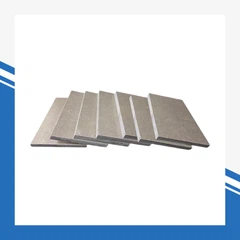
Epoxy glass cloth laminates are widely used in electrical and electronic insulation. In the market, both 3204 and 3240 grades are mentioned, but they differ greatly in standard compliance, material quality, performance consistency and price. Weshare clarifies their differences and selection principles as follows.
1. Basic Definition & Standard
3240 Epoxy Board
Official national standard grade (GB/T 1303).
Corresponds to IEC EPGC201, recognized worldwide.
Made of alkali‑free electrical glass cloth + standard epoxy resin, hot‑pressed.
Temperature class: B-class (155°C).
Flame retardancy: UL94 HB (general purpose).
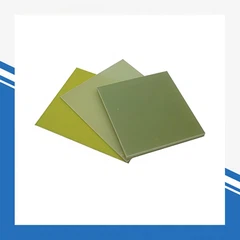
Color: yellow (standard).
3204 Epoxy Board
Not a national standard model; it is a market common / factory self‑compiled grade.
Essentially an economy version of 3240, using lower‑cost glass cloth and resin.
No unified IEC or GB standard; quality varies by manufacturer.
Temperature class: ≈130–150°C, unstable.
Flame retardancy: HB, often with poorer self‑extinguishing performance.

2. Core Performance Differences
| Item | 3240 (Standard) | 3204 (Economy) |
|---|---|---|
| Standard | GB/T 1303, IEC EPGC201 | Non‑standard, factory‑defined |
| Glass Cloth | High‑purity alkali‑free E‑glass | Ordinary or mixed‑grade glass cloth |
| Resin System | Standard bisphenol‑A epoxy | Lower‑grade epoxy / phenolic blend |
| Tg (Glass Transition) | ≥130°C | 110–130°C (unstable) |
| Bending Strength | 380–650 MPa | 250–350 MPa (lower) |
| Dielectric Strength | ≥16 kV/mm | 10–14 kV/mm (weaker) |
| Moisture Resistance | Good, stable after water absorption | Poor, easy to absorb moisture |
| Dimensional Stability | High, tight thickness tolerance | Poor, easy to warp |
| Price | Medium, standard cost | Lower (10–30% cheaper) |
| Quality Consistency | Stable batch‑to‑batch | Large variation between batches |
3. Typical Applications
3240 Epoxy Board
General electrical insulation: transformers, low‑voltage motors, switchgears.
Mechanical insulation parts, fixtures, insulating blocks.
Applications requiring stable electrical & mechanical performance.
Used in transformer oil and moderate humidity environments.
3204 Epoxy Board
Low‑cost, non‑critical insulation parts.
Simple mechanical supports, spacers, non‑voltage‑bearing plates.
Cost‑sensitive projects with no strict reliability requirements.
Dry, indoor, low‑voltage environments only.
4. How to Choose: 3204 or 3240?
Choose 3240 if:
You need GB/IEC standard compliance and stable quality.
Working temperature 130–155°C, medium/high voltage.
Applications in transformers, motors, switch cabinets.
Long‑term reliability and safety are required.
Choose 3204 only if:
Budget is very tight and performance requirements are low.
Used for non‑insulating structural fillers, simple spacers.
Dry, indoor, low‑voltage, non‑critical applications.
5. Conclusion
3240 = National standard, stable quality, reliable insulation, medium cost.
3204 = Non‑standard, economy grade, lower performance, cheaper price.
For most industrial and electrical applications, 3240 is the safe and preferred choice; 3204 is only suitable for low‑demand, cost‑only scenarios.
Weshare Tip: Always confirm whether the material meets GB/T 1303 and IEC standards before purchasing. Weshare supplies genuine 3240 epoxy boards with stable quality and full test reports.