






Epoxy Laminated Board: Composition, Process & Classification
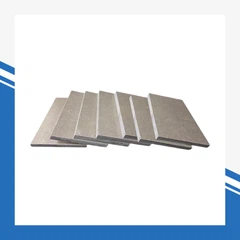
Epoxy laminated board (epoxy glass cloth laminate) is a core insulating material widely used in electrical, electronic and industrial fields. Its performance and applications are determined by raw materials, manufacturing processes and product specifications. Based on the classification framework, Weshare provides a comprehensive introduction.
1. Raw Materials (Main Components)
The board is a composite material made from two key base materials, with auxiliary components added for customization:
| Category | Details |
|---|---|
| Main Resin | Epoxy resin (base matrix material) |
| Base Fabric | Glass fiber cloth (reinforcing carrier) |
| Auxiliaries | - Curing agents- Modifiers (flame retardants, etc.)- Fillers- Diluents- Color pigments and other additives |
The combination of epoxy resin and glass fiber cloth gives the material excellent electrical insulation and mechanical strength, while additives adjust flame retardancy, color, temperature resistance and other properties.

2. Production Process
The manufacturing process directly determines the uniformity and performance stability of the board. The main steps are as follows:
Resin Preparation (Mixing)The epoxy resin is mixed with curing agents, modifiers and other additives to form a uniform resin system.
Impregnation (Coating)The glass fiber cloth is passed through the prepared resin solution to ensure full and even impregnation.
Slicing (Prepreg Cutting)The impregnated cloth (prepreg) is cut into standard semi-cured sheets (PP sheets).
Lay-up (Stacking)Multiple layers of prepreg are stacked according to the required thickness and specifications.
Hot Press CuringThe stacked prepregs are cured under high temperature and high pressure in a hot press to form a solid laminated board.
Edge Trimming & FinishingThe formed board is trimmed, sized and inspected to meet final specifications.
3. Product Classification
Epoxy boards are categorized by different dimensions to meet diverse application requirements.
3.1 By Thickness
| Category | Thickness Range | Typical Applications |
|---|---|---|
| Ultra-thin | 0.1–0.3 mm | Precision electronics, thin insulation layers |
| Thin | 0.4–2.0 mm | PCB substrates, electronic components |
| Medium/Thick | 3.0–50 mm | Structural insulation, transformer parts |
| Extra-thick | 50–200 mm | Heavy-duty equipment, special molds |
3.2 By Standard Size
Standard sizes: 40"×48", 1020×1220 mm
Small sizes: 36"×48", 920×1220 mm
Large sizes: 48"×96", 1220×2440 mm
Custom sizes: Available within the limits of material specifications and hot press capabilities.
3.3 By Color
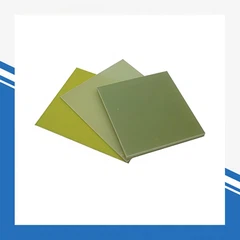
Water green (typical for FR-4)
Yellow (typical for 3240)
Black
Custom colored options
3.4 By Flame Retardancy
Flame-retardant grades: e.g., UL94 V-0 (FR-4)
Non-flame-retardant grades: e.g., standard 3240 (HB rating)
3.5 By Halogen Content
Halogen-containing grades
Halogen-free grades: RoHS-compliant, low environmental impact
3.6 By Temperature Resistance (Tg Value)
| Grade | Tg Range | Features |
|---|---|---|
| Standard Tg | 130–150 °C | General-purpose applications |
| Mid-range Tg | 150–170 °C | Enhanced thermal stability |
| High Tg | 170–210 °C | For high-temperature and harsh environments |
3.7 By Primary Application
Insulation use: Insulating gaskets, barriers, etc.
Equipment use: Polishing fixtures, jigs, structural supports
Decorative use: Furniture surface covering, decorative panels
Construction use: Foundation insulation, structural barriers
Customized applications: Tailored for specific industrial scenarios
Weshare Tip: Understanding the classification of epoxy boards is the first step to making the right selection. Weshare offers a full range of epoxy boards with different thicknesses, sizes, colors and properties, along with customized processing services (cutting, stamping, CNC machining) to meet your project needs.