







Product Description
Heat Shrink Neoprene Tube
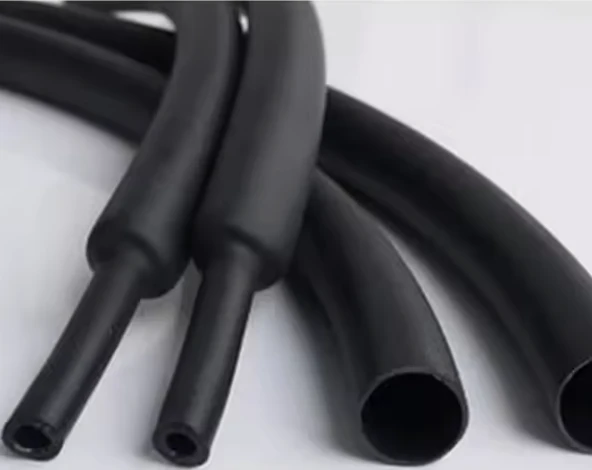
This heat shrink neoprene tube is made of cross-linked chlorinated polyolefin and is built for one of the hardest environments a sleeve can meet: continuous exposure to fuels, oils and solvents. It is resistant to most fluids and solvents, including aviation and ground-vehicle fuels, lubricating oil and hydraulic fluids, and - critically - it holds that resistance at elevated temperatures, where ordinary tubing softens and swells. Performance meets the requirements of SAE-AMS-DTL-23053/1, the specification behind most military grade heat shrink tubing.
Because it stays flexible at low temperature (no cracking after 4 hours at −70 °C) and shrugs off abrasion and physical abuse, it is widely used for insulation, strain relief and abrasion protection on cable harnesses and wire bundles in the military and aerospace sectors. For a neoprene heat shrink tube for cable harnesses or a solvent resistant heat shrink tubing for wire bundles, the tube gives both the electrical insulation and the mechanical protection a routed harness needs.
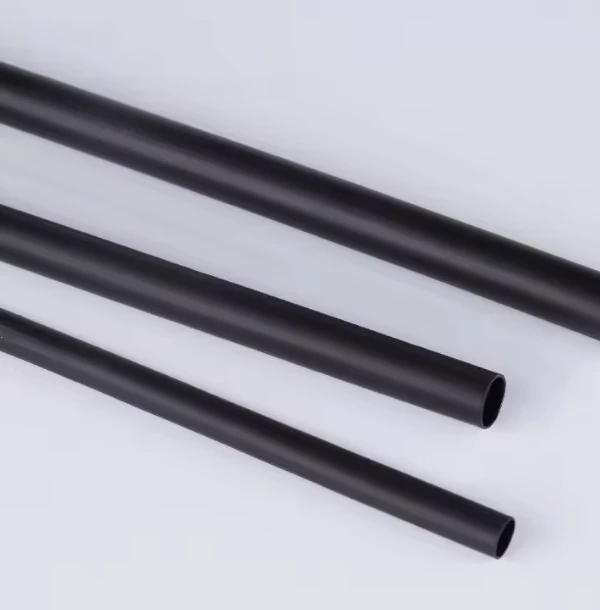
It shrinks at a low 90 °C and is fully recovered by 130 °C, so it can be installed on heat-sensitive harness assemblies without over-driving the temperature. It is RoHS compliant and supplied in black as standard.
Key points
Cross-linked chlorinated polyolefin (neoprene-type) - fluid- and solvent-resistant by construction.
Resists aviation and ground-vehicle fuels, lubricating oil and hydraulic fluids - including at elevated temperatures.
Meets SAE-AMS-DTL-23053/1 - the military/aerospace performance specification.
Low-temperature flexibility - no cracking at −70 °C, 4 h.
Abrasion resistant - protects harnesses while providing flexibility and strain relief.
Flame retardant - self-extinguishing in 15 seconds (3 inches), ASTM D 2671 Procedure A: Pass.
Fungus resistant - no growth, ASTM G 21.
Low shrink temperature - starts at 90 °C, fully recovered at 130 °C.
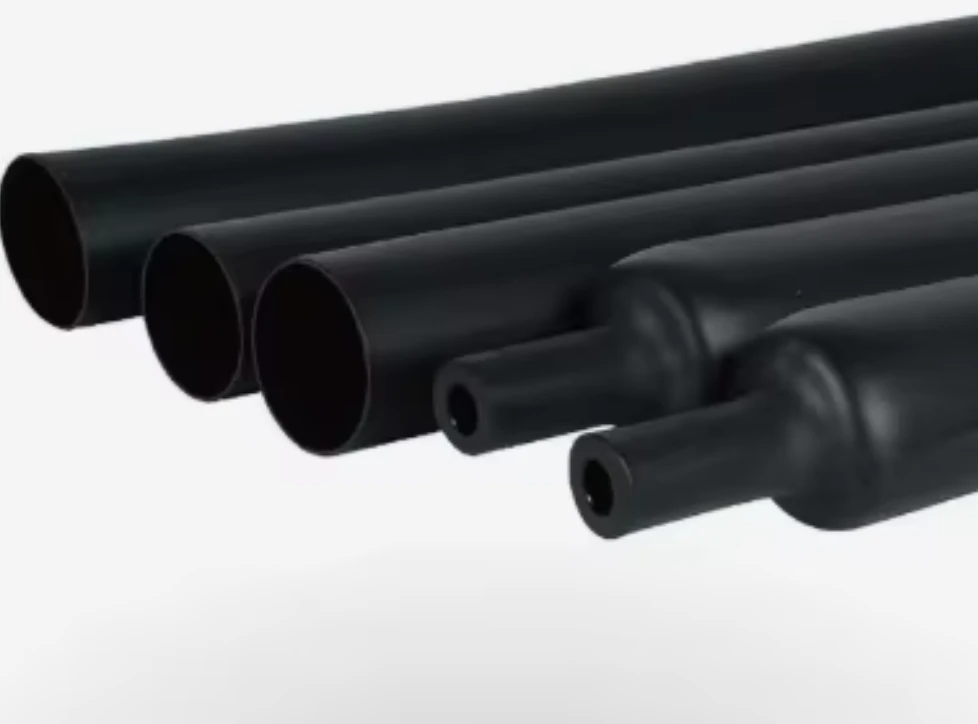
12 sizes from 3.2 mm to 44.5 mm supplied ID, RoHS compliant, black.
Key points
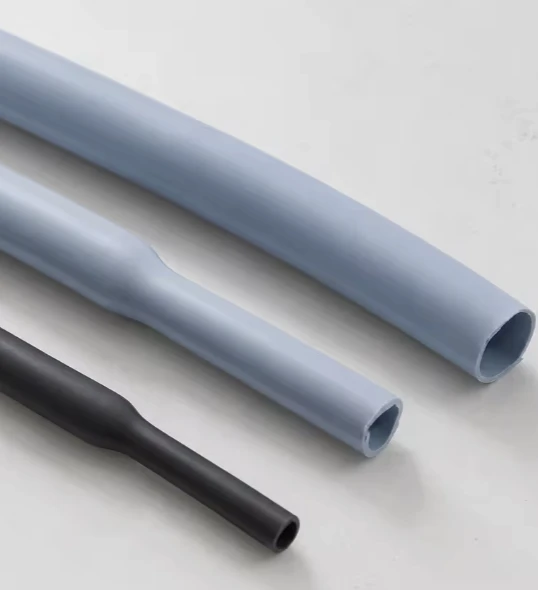
Silicone rubber, not polyolefin - the differentiator that drives heat resistance, cold resistance and flexibility.
Superior heat and cold resistance - keeps flexibility where ordinary polyolefin would stiffen.
Superior flexibility - conforms to tight bends and irregular shapes in harness and sheathing work.
Electrical insulation - ≥20 kV/mm dielectric strength, ≥1×10¹¹ Ω·cm volume resistivity.
Tough under handling - tear strength ≥20 kN/m, elongation at break ≥450%.
Three uses from one part - insulation, protection and sheathing.
Standard colours black and grey; other colours available upon request.
Silicone vs polyolefin (one-paragraph comparison, link out): cross-linked polyolefin heat shrink (WRSHG) is the general-purpose, cost-effective choice for sealing and protection at normal cable-service temperatures; silicone rubber (this page) is chosen when the temperature band is wider, when flexibility is critical, or when the sleeve is being used as a sheathing layer that must not stiffen. For a full side-by-side, see the heat shrink tube family comparison.
Applications
Military and aerospace cable harnesses - insulation, strain relief and abrasion protection on wire bundles.
Fuel-exposed assemblies - aviation and ground-vehicle fuel systems.
Hydraulic and lubricating-oil zones - sleeves that must not swell in service fluid.
Solvent-exposed wiring - where solvents are present at elevated temperature.
Harness strain relief - at connector backs and bend points where the bundle flexes.
Abrasion protection - over wire bundles routed against structure or through grommets.
Low-temperature installations - cold-soaked equipment requiring flexibility to −70 °C.
Technical data
| Property | Test method | Standard value |
|---|---|---|
| Tensile strength | ASTM D 412 | ≥10.3 MPa |
| Elongation at break | ASTM D 412 | ≥225% |
| Tensile strength at 200% elongation | ASTM D 412 | ≤10.3 MPa |
| Tensile strength after ageing (120 °C, 168 h) | SAE-AMS-DTL-23053 | ≥8.3 MPa |
| Elongation at break after ageing (120 °C, 168 h) | SAE-AMS-DTL-23053 | ≥175% |
| Dielectric strength | ASTM D 2671 | ≥11.8 kV/mm |
| Volume resistivity | ASTM D 876 | ≥1×10¹⁰ Ω·cm |
| Flammability (self-extinguishing, 15 s, 3 in) | ASTM D 2671, Procedure A | Pass |
| Fungus resistance | ASTM G 21 | No growth |
| Low-temperature flexibility | −70 °C, 4 h | No cracking |
Selection table
| Product No. | As supplied - ID min (mm) | Imperial (in) | Recovered - ID max (mm) | Recovered - wall (mm) |
|---|---|---|---|---|
| WRSLD-3.2/1.5 | ≥3.2 | 1/8 | ≤1.5 | 0.7 ±0.2 |
| WRSLD-4.8/2.5 | ≥4.8 | 3/16 | ≤2.5 | 0.8 ±0.2 |
| WRSLD-6.4/3.4 | ≥6.4 | 1/4 | ≤3.4 | 0.9 ±0.2 |
| WRSLD-9.5/5.4 | ≥9.5 | 3/8 | ≤5.4 | 1.0 ±0.2 |
| WRSLD-12.7/7.1 | ≥12.7 | 1/2 | ≤7.1 | 1.2 ±0.3 |
| WRSLD-16/8.7 | ≥16 | 5/8 | ≤8.7 | 1.3 ±0.3 |
| WRSLD-19.1/10.5 | ≥19.1 | 3/4 | ≤10.5 | 1.4 ±0.3 |
| WRSLD-22.2/12.5 | ≥22.2 | 7/8 | ≤12.5 | 1.7 ±0.3 |
| WRSLD-25.4/14.5 | ≥25.4 | 1 | ≤14.5 | 1.8 ±0.3 |
| WRSLD-31.8/18.0 | ≥31.8 | 1-1/4 | ≤18.0 | 2.2 ±0.3 |
| WRSLD-38.1/21.5 | ≥38.1 | 1-1/2 | ≤21.5 | 2.4 ±0.3 |
| WRSLD-44.5/24 | ≥44.5 | 1-3/4 | ≤24.0 | 2.4 ±0.3 |
Internal linking
| Anchor text here | Target page |
|---|---|
| oil resistant tube for PILC power cables | Heat Shrink Oil-resistant Tube (WRSGY) |
| silicone rubber tube for high temperature | Heat Shrink Silicone Rubber Tube (WRSGG) |
| general-purpose polyolefin protective tube | Heat Shrink Protective Tube (WRSHG) |
| heat shrink tube family comparison | Heat Shrink Tube Family Comparison |
| complete heat shrink cable termination kit | Heat Shrink Termination for Cables |
Product display
Certificate

FAQ
1. What is a heat shrink neoprene tube made of? Cross-linked chlorinated polyolefin - a neoprene-type compound that resists fuels, solvents and hydraulic fluids.
2. What fluids does it resist? Aviation and ground-vehicle fuels, lubricating oil and hydraulic fluids, and most solvents - including at elevated temperatures.
3. Does it meet a military specification? Yes - performance meets SAE-AMS-DTL-23053/1.
4. What is the shrink temperature? Shrinking starts at 90 °C and the tube is fully recovered at 130 °C.
5. Does it survive cold? It shows no cracking after 4 hours at −70 °C.
6. Is it flame retardant? Yes - self-extinguishing in 15 seconds over 3 inches (ASTM D 2671, Procedure A: Pass).
Hot Tags: heat shrink neoprene tube, China heat shrink neoprene tube suppliers