







Product Description
Heat Shrink Busbar Tube
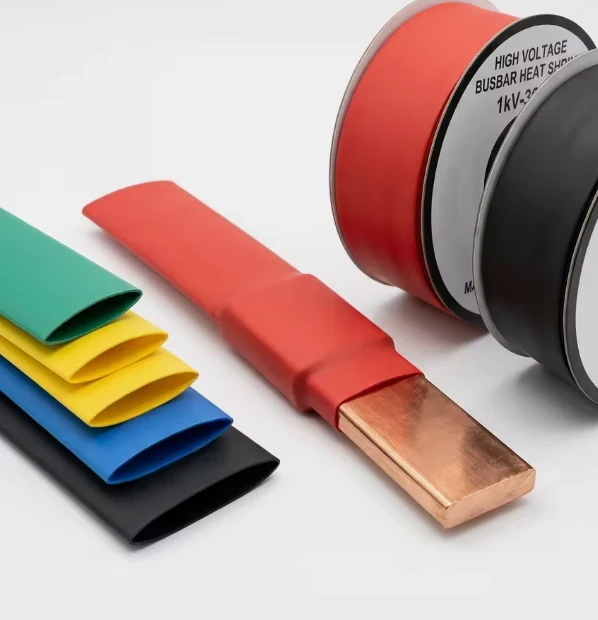
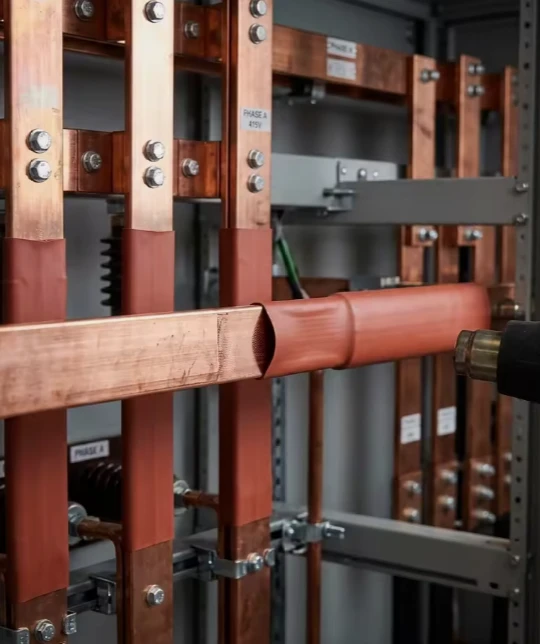
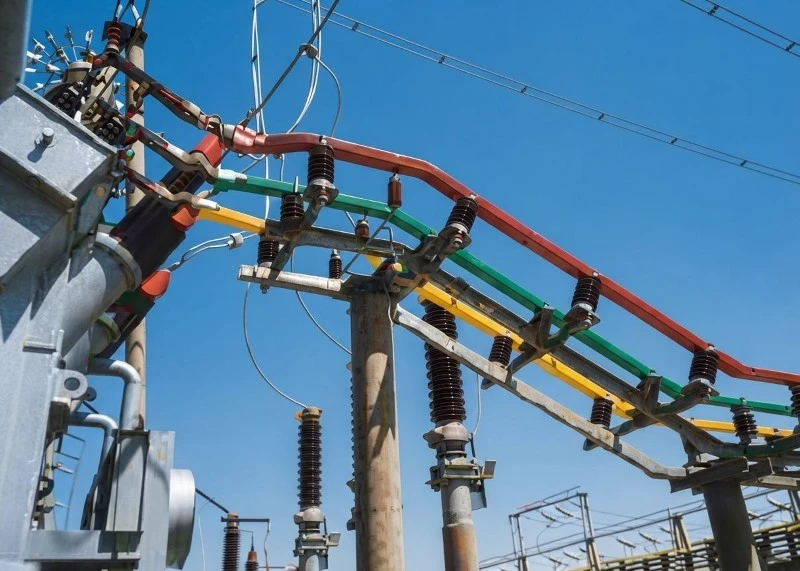
This heat shrink busbar tube is manufactured from cross-linked polyolefin and is used to offer insulation protection for busbar in switchgear and substation. Instead of insulating a cable core, it wraps the busbar itself - giving a continuous, tightly shrunk insulating layer over flat and formed busbar, and this is what makes a heat shrink busbar tube for switchgear and substation different from any ordinary cable sleeve.
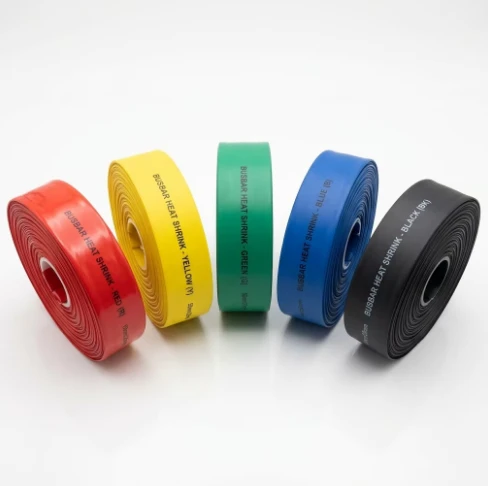
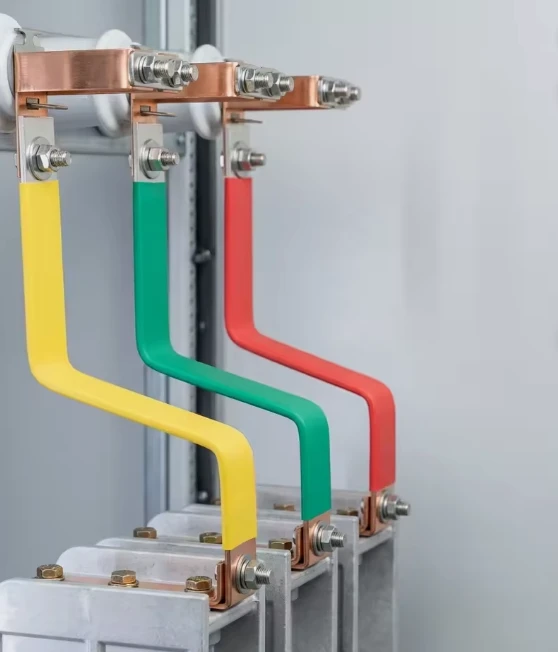
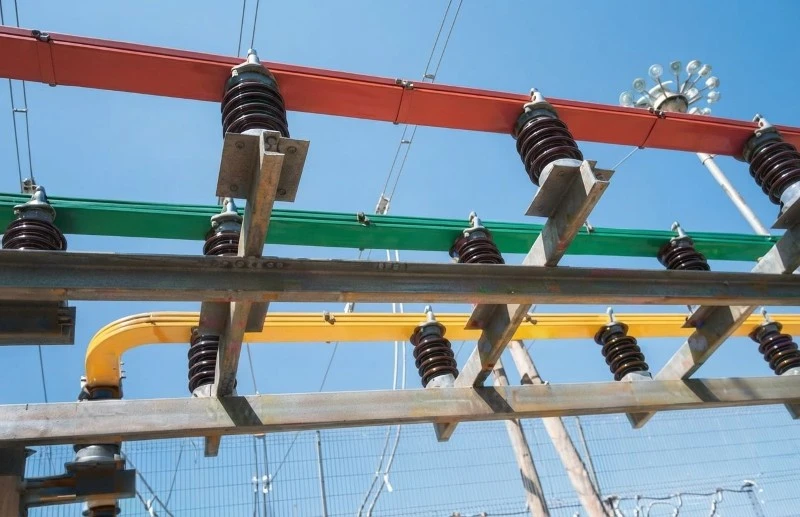
The tube solves three problems that switchgear designers meet every day. It protects against short circuit and electrical leakage caused by small animals - the classic failure mode where a rodent or insect bridges live parts inside an enclosure. It reduces busbar clearance requirements, so phase-to-phase and phase-to-earth spacing can be tightened and the switchgear or busbar compartment made more compact. And with five standard colours - yellow, red, green, blue and black - it provides phase identification heat shrink busbar tube marking (A/B/C/N/PE) at the same time as insulation.
Electrically it is offered in two classes. For 10 kV busbar applications the tube withstands 42 kV power-frequency and 75 kV impulse; for 35 kV busbar it withstands 95 kV power-frequency and 185 kV impulse, with dielectric strength ≥25 kV/mm and volume resistivity ≥1×10¹³ Ω·cm. It shrinks from a low 70 °C and is fully recovered by 130 °C, it is RoHS compliant, and it does not crack under heat shock (160 °C, 4 h).
Key points
For busbar, not cable - insulation protection for busbar in switchgear and substation.
Protects against short circuit and leakage caused by small animals - a real switchgear failure mode.
Reduces busbar clearance requirements - allows a more compact enclosure design.
Two voltage classes - 10 kV and 35 kV busbar insulation with full withstand and impulse ratings.
Five phase colours - yellow, red, green, blue, black, for phase identification.
Low shrink temperature - starts at 70 °C, fully recovered at 130 °C.
Flame retardant - oxygen index ≥30% (IEC 4589).
RoHS compliant, heat-shock resistant (160 °C, 4 h, no crack).
Key points
Cross-linked chlorinated polyolefin (neoprene-type) - fluid- and solvent-resistant by construction.
Resists aviation and ground-vehicle fuels, lubricating oil and hydraulic fluids - including at elevated temperatures.
Meets SAE-AMS-DTL-23053/1 - the military/aerospace performance specification.
Low-temperature flexibility - no cracking at −70 °C, 4 h.
Abrasion resistant - protects harnesses while providing flexibility and strain relief.
Flame retardant - self-extinguishing in 15 seconds (3 inches), ASTM D 2671 Procedure A: Pass.
Fungus resistant - no growth, ASTM G 21.
Low shrink temperature - starts at 90 °C, fully recovered at 130 °C.
12 sizes from 3.2 mm to 44.5 mm supplied ID, RoHS compliant, black.
Key points
Silicone rubber, not polyolefin - the differentiator that drives heat resistance, cold resistance and flexibility.
Superior heat and cold resistance - keeps flexibility where ordinary polyolefin would stiffen.
Superior flexibility - conforms to tight bends and irregular shapes in harness and sheathing work.
Electrical insulation - ≥20 kV/mm dielectric strength, ≥1×10¹¹ Ω·cm volume resistivity.
Tough under handling - tear strength ≥20 kN/m, elongation at break ≥450%.
Three uses from one part - insulation, protection and sheathing.
Standard colours black and grey; other colours available upon request.
Applications
Switchgear busbar - phase and neutral bus insulation inside panels and cubicles.
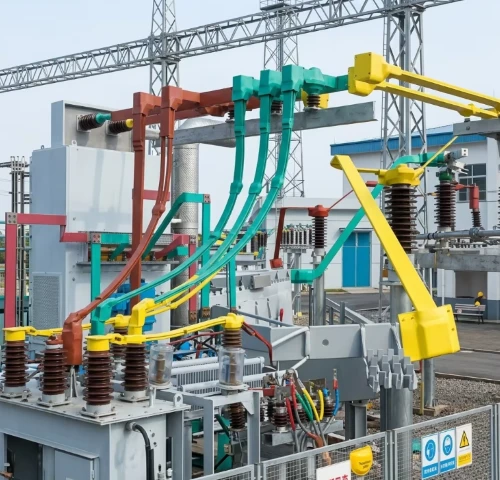
Substation busbar - insulated bus runs and connections.
Compact enclosures - where reduced clearance allows a smaller design.
Animal-prone installations - protection against short circuit and leakage caused by small animals.
Phase identification - colour-coded insulation by phase.
Retrofit insulation - adding insulation to existing bare busbar.
product key technologies
| Property | Test method | Standard value |
|---|---|---|
| Heat shock | 160 °C, 4 h | No crack |
| Tensile strength | ASTM D-638 | ≥8 MPa |
| Elongation at break | ASTM D-638 | ≥300% |
| Tensile strength variation after heat ageing (130 °C × 168 h) | ASTM D-5510 | ≤±20% |
| Elongation at break variation after heat ageing (130 °C × 168 h) | ASTM D-5510 | ≤±20% |
| Flammability (oxygen index) | IEC 4589 | ≥30% |
| Hardness | ISO 868 | ≤90 Shore A |
Electrical property
| Item | Test method | 10 kV | 35 kV |
|---|---|---|---|
| Volume resistivity | IEC 60093 | ≥1×10¹³ Ω·cm | ≥1×10¹³ Ω·cm |
| Dielectric strength | IEC 60243 | ≥25 kV/mm | ≥25 kV/mm |
| Power-frequency voltage withstand | DL/T 1059 | 42 kV | 95 kV |
| Impulse voltage | DL/T 1059 | 75 kV | 185 kV |
Internal linking
| Anchor text here | Target page |
|---|---|
| cross-linked polyolefin protective tube | Heat Shrink Protective Tube (WRSHG) |
| anti-tracking insulation tube | Heat Shrink Anti-tracking Insulation Tube (WRSJG) |
| heat shrink tube family comparison | Heat Shrink Tube Family Comparison |
| complete heat shrink cable termination kit | Heat Shrink Termination for Cables |
Product display
Certificate

FAQ
1. What is a heat shrink busbar tube used for? Insulation protection for busbar in switchgear and substation.
2. How does it protect against animals? By covering live busbar so a small animal or insect cannot bridge conducting parts and cause short circuit or leakage.
3. Does it reduce busbar clearance? Yes - the insulating layer allows reduced phase-to-phase and phase-to-earth clearance, enabling more compact switchgear.
4. What voltage classes are available? 10 kV (42 kV withstand, 75 kV impulse) and 35 kV (95 kV withstand, 185 kV impulse).
5. What colours are available? Yellow, red, green, blue and black.
6. What is the shrink temperature? Shrinking starts at 70 °C; the tube is fully recovered at 130 °C.
Hot Tags: heat shrink busbar tube for switchgear & substation insulation, China heat shrink busbar tube for switchgear & substation insulation suppliers