







Product Description
Heat Shrink Anti-tracking Rain Shed
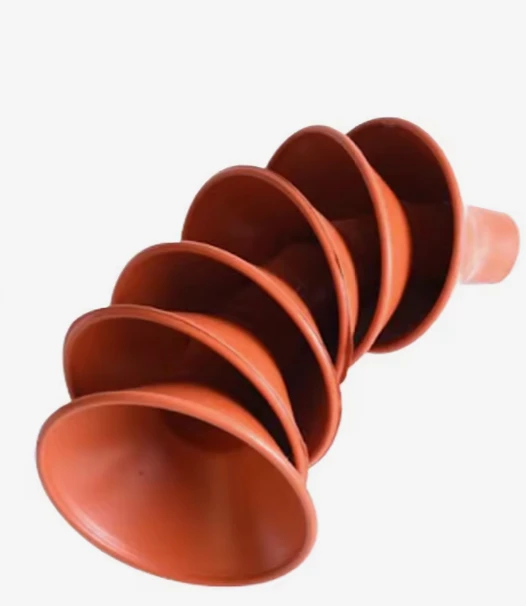
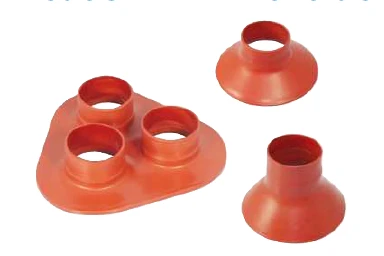
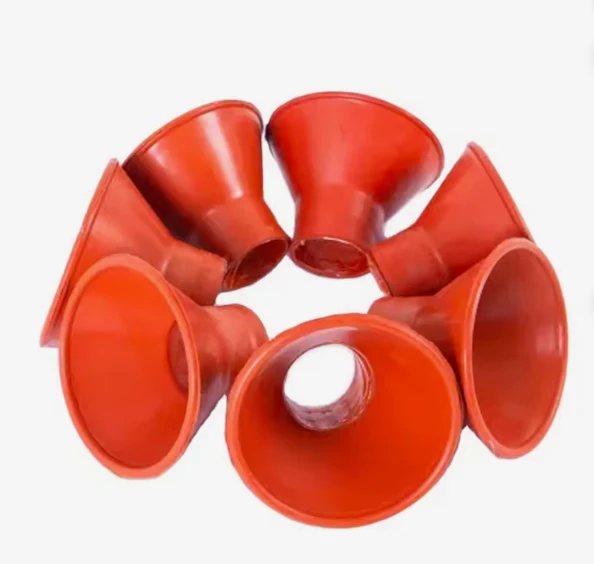
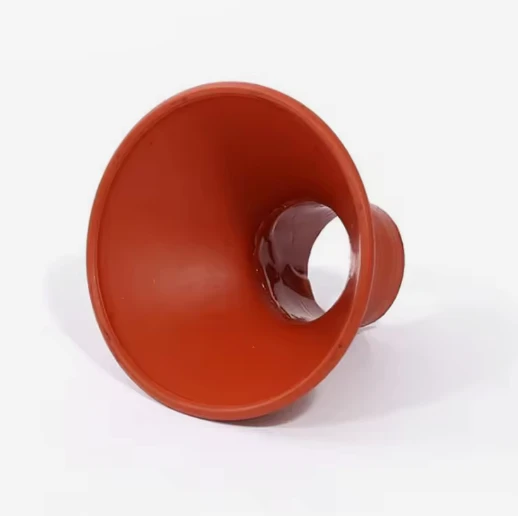
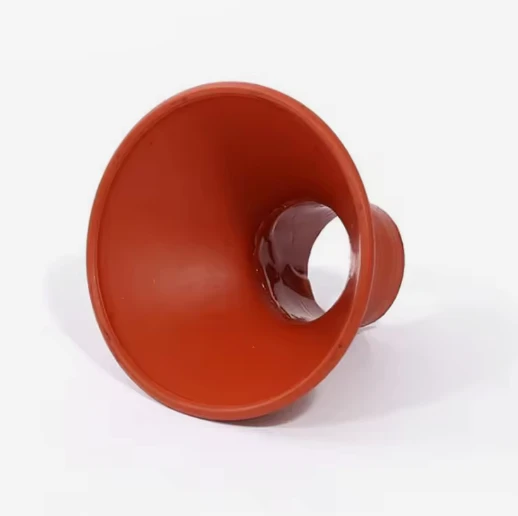
The heat shrink anti-tracking rain shed is a moulded polyolefin shed - a flared skirt on a shrinkable collar - that is applied over an outdoor cable termination to increase its creepage (leakage) distance and shed rainwater away from the surface. It is coated with an anti-tracking adhesive and made from the same tracking-resistant compound as our anti-tracking tubing, giving it high creep and tracking resistance for polluted, wet and outdoor service.
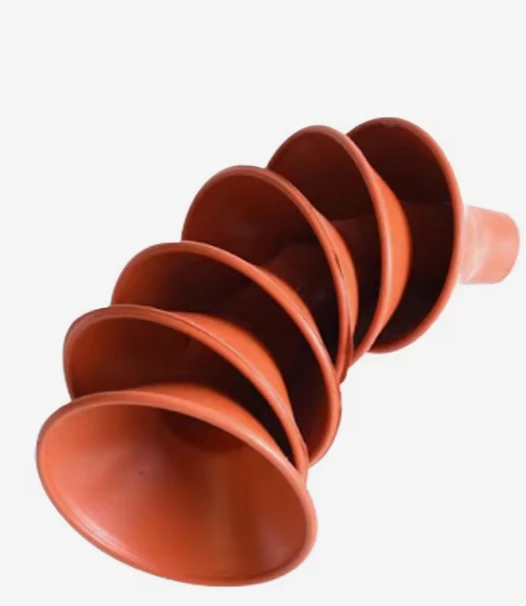
Where an anti-tracking tube insulates a termination, the rain shed changes its shape - creating a series of umbrella-like steps that lengthen the path a leakage current must travel and break any continuous film of rainwater into short, harmless sections. That is the difference between a surface that simply resists carbonisation and a termination that is designed not to flash over in the rain.
Supplied as 1-core and 3-core sheds - the 3-core type carries three collars on a shared skirt for three-core cable terminations - it meets a range of configuration requirements. Shrinking begins at 90 °C and the shed is fully recovered at 130 °C.
At a glance
Form: moulded shed / rain skirt on a shrinkable collar - a shaped component
Material: polyolefin, coated with anti-tracking adhesive
Function: increase creepage distance + shed water on outdoor terminations
Property: high creep resistance and anti-tracking - IEC 60587, 1A 3.5
Configurations: 1-core and 3-core sheds
Sizes: 8 standard specs (ID 35–70 mm as supplied)
Shrink temperature: starts at 90 °C, fully recovered at 130 °C
Why creepage distance decides whether an outdoor termination survives
On an outdoor termination, rain wets the surface and pollution leaves a conductive layer. Two things then happen at once:
A continuous water film forms. Rain flowing down the surface links the live end to earth, and if that path is short, the leakage current rises sharply.
The surface dries unevenly. Current dries the film into "dry bands" and concentrates the voltage across them - the mechanism that leads to surface tracking and flashover.
Creepage distance - the length of the path across the insulator surface - is the key design figure that controls both. The longer the path, the lower the leakage current, and the harder it is for a continuous film or a dry band to bridge it.
A rain shed attacks the problem geometrically:
Each shed adds an umbrella step, adding length along the surface - raising the creepage distance without making the termination longer overall.
The flared skirt throws water off the surface and breaks the film into short sections, so no continuous conductive path can form.
The anti-tracking compound (same IEC 60587 rating as our anti-tracking tube) resists carbonisation if a dry band does occur.
Sheds are specified by pollution / creepage requirement: the dirtier and wetter the site, the more sheds are stacked along the termination.
Key features & benefits
Raises creepage distance - each shed lengthens the surface leakage path without increasing the height of the termination.
Sheds water, breaks the film - the flared skirt diverts rain and interrupts continuous water films that would otherwise bridge to earth.
Anti-tracking compound, adhesive coated - high creep and tracking resistance; tested to IEC 60587 (1A 3.5).
High creep resistance - resists surface carbonisation under sustained electric stress.
Excellent dielectric performance - dielectric strength ≥ 20 kV/mm; volume resistivity ≥ 1×10¹⁴ Ω·cm; dielectric constant ≤ 5.
1-core and 3-core types - including a 3-core shed with three collars on a shared skirt for three-core cable.
Shaped to requirement - moulded components to meet a range of termination configurations.
Stable in service - heat ageing (130 °C × 168 h) change ≤ ± 30 %; heat shock 160 °C / 4 h, no cracking; brittle temperature −40 °C.
Low water absorption - ≤ 0.1 % (23 °C, 24 h), for humid and outdoor service.
Controlled recovery - begins at 90 °C, fully recovered at 130 °C.
Applications
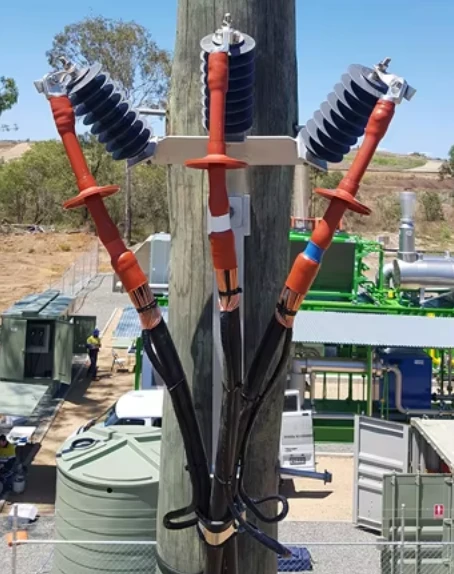
Outdoor MV cable terminations - increasing creepage distance on overhead-line and substation terminations
Polluted / coastal sites - sites with salt, dust or industrial pollution where creepage is critical
Rain-exposed terminations - breaking up surface water films to prevent rain flashover
3-core cable terminations - the 3-core shed seals and sheds over three cores at once
Upgrading existing terminations - adding sheds to raise the creepage class of an installed termination
Utility, railway and EPC outdoor installations - outdoor distribution and substation accessories
Key features & benefits
Seals the cable end, not just the surface - the closed cap plus hot-melt adhesive forms a watertight, void-free seal over the conductor end.
Protects against oxidation, ozone, UV and moisture - keeps stored and in-transit cable ends sound.
Adhesive lined - hot-melt adhesive in flat or spiral form, to suit different cable ends and your tooling.
Variant options - flame-retardant caps for indoor / tray installation, and valved caps for pressure testing or dry-gas sealing.
Wide size coverage - 16 standard specs from WRSFM-12 (cable OD ~12 mm) to WRSFM-250 (~245 mm), covering LV power and telecom cable ends.
Tough polymer - tensile strength ≥ 12 MPa, elongation at break ≥ 300 %.
Dielectric strength ≥ 15 kV/mm; volume resistivity ≥ 1×10¹² Ω·cm.
All-conditions stability - brittle temperature −40 °C; heat shock 160 °C / 4 h, no cracking; water absorption ≤ 0.1 %.
Controlled recovery - begins at 90 °C, fully recovered at 130 °C - standard hot-air working temperature.
How the rain shed differs from the rest of the heat-shrink range
| Product | Form | Core purpose | Key property |
|---|---|---|---|
| WRSSQ - Anti-tracking Rain Shed (this page) | Moulded shed / skirt (1-core, 3-core) | Increase creepage distance + shed water on outdoor terminations | IEC 60587 1A 3.5; adhesive coated |
| WRSJG - Anti-Tracking Insulation Tube | Straight tube | Insulate a termination / busbar and resist tracking | IEC 60587 1A 3.5; dielectric ≥ 20 kV/mm |
| WRSHG - Protective Tube | Straight tube | Protect, seal and armour a run | ≥ 15 kV/mm; adhesive-lined both ends |
| WDWT - Semi-conductive Dual Layer Tube | Straight tube | Rebuild insulation + screen across a joint | Dual layer; semi-conductive outer |
| WRSYL - Stress Control Tube | Straight tube | Grade the electric field at a screen cut-back | Semi-conductive ≥ 1×10¹⁰ Ω·cm |
| WRSZT - Breakout | Branching boot | Seal + strain-relieve a cable crutch | 2/3/4/5-finger moulded boot |
| WRSFM - Cable End Cap | Closed end cap | Seal a cable end in storage / transit | Closed dome; adhesive lined |
Technical specifications
All dimensions in mm. D = inner diameter, T = wall thickness. As-supplied D tolerance ± 5, T ± 20 %; recovered T ± 10 %.
| Spec. | As supplied ID (D) | As supplied wall (T) | Recovered ID (D) max | Recovered wall (T) |
|---|---|---|---|---|
| WRSSQ-35/17 | 35 | 1.9 | 17 | 2.7 |
| WRSSQ-40/24 | 40 | 1.9 | 24 | 2.7 |
| WRSSQ-50/24 | 50 | 1.9 | 24 | 2.7 |
| WRSSQ-60/32 | 60 | 2.4 | 32 | 4.0 |
| WRSSQ-70/32 | 70 | 2.4 | 32 | 4.0 |
Selection table - 3-core rain shed
| Spec. | As supplied ID (D) | As supplied wall (T) | Recovered ID (D) max | Recovered wall (T) |
|---|---|---|---|---|
| WRSSQ-35/16 | 35 | 1.1 | 16 | 2.7 |
| WRSSQ-45/22 | 45 | 1.1 | 22 | 3.0 |
| WRSSQ-50/22 | 50 | 1.1 | 22 | 3.0 |
Technical data
| Property | Test method | Standard value |
|---|---|---|
| Tensile strength | ASTM D-638 | ≥ 8 MPa |
| Elongation at break | ASTM D-638 | ≥ 300 % |
| Tensile strength variation after heat ageing (130 °C × 168 h) | ASTM D-5510 | ≤ ± 30 % |
| Elongation at break variation after heat ageing (130 °C × 168 h) | ASTM D-5510 | ≤ ± 30 % |
| Volume resistivity | IEC 60093 | ≥ 1×10¹⁴ Ω·cm |
| Dielectric strength | IEC 60243 | ≥ 20 kV/mm |
| Tracking strength | IEC 60587 | 1A 3.5 |
| Dielectric constant | IEC 60250 | ≤ 5 |
| Heat shock | 160 °C, 4 h | No crack |
| Water absorption (23 ± 2) °C, 24 h | ISO 62 | ≤ 0.1 % |
| Hardness (Shore A) | ISO 868 | ≥ 80 |
| Brittle temperature | ISO 974 | −40 °C |
Installation guidance
Clean and degrease the termination surface at each shed position; remove sharp edges and burrs.
Slide each shed onto the insulation at its planned position along the creepage path (position sheds so the skirts face downward / outward to throw water clear).
Apply heat evenly with a hot-air gun, starting at the 90 °C shrink-onset point, working around the collar.
Continue until the shed is fully recovered at 130 °C - the collar should grip the surface with the adhesive sealing, and the skirt should hold its flared shape.
Fit the remaining sheds in the same way, keeping the spacing set by the required creepage distance.
Inspect for voids or lift-off at the collar, allow to cool, then complete the termination.
Product display
Certificate

FAQ
Q: What is a heat shrink anti-tracking rain shed used for?
A: It is fitted over an outdoor cable termination to increase the creepage (leakage) distance and shed rainwater away from the surface, raising the termination's resistance to rain and pollution flashover.
Q: How is it different from an anti-tracking heat shrink tube?
A: The anti-tracking tube is a straight sleeve that insulates a termination and resists surface tracking. The rain shed is a moulded shaped component that adds creepage distance and water shedding. They are used together: the tube provides the surface, the sheds provide the geometry.
Q: What does "increasing creepage distance" mean?
A: It lengthens the path that leakage current must travel across the insulator surface. A longer path means lower leakage current and less chance of a water film or dry band bridging to earth - the key design figure for outdoor, polluted terminations.
Q: What is the tracking rating?
A: IEC 60587, 1A 3.5 - the same anti-tracking class as our anti-tracking tubing.
Q: Do you make 3-core rain sheds?
A: Yes - the 3-core shed carries three collars on a shared skirt for three-core cable terminations, in sizes WRSSQ-35/16, -45/22 and -50/22.
Q: How many sheds do I need?
A: It depends on the creepage distance required for your site's pollution and voltage class. Send us the site conditions and we will recommend the shed count and spacing.
Q: What is the shrink temperature?
A: Shrinking starts at 90 °C and the shed is fully recovered at 130 °C.
Q: Is it adhesive coated?
A: Yes - the shed is coated with an anti-tracking adhesive, which seals the collar to the surface during recovery.
Hot Tags: heat shrink anti-tracking rain shed, China heat shrink anti-tracking rain shed suppliers