







Product Description
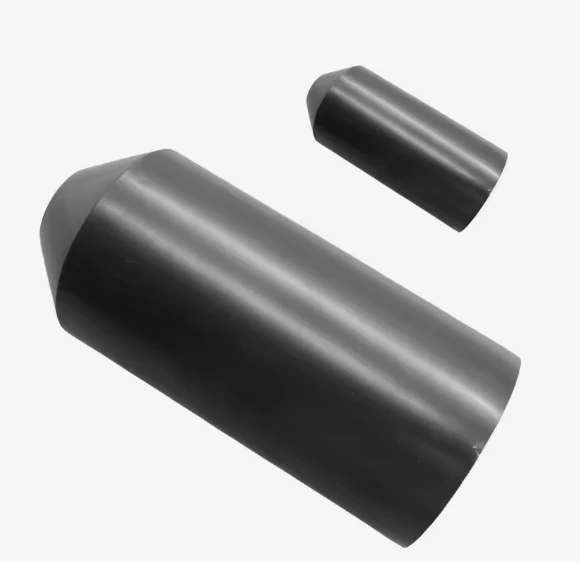
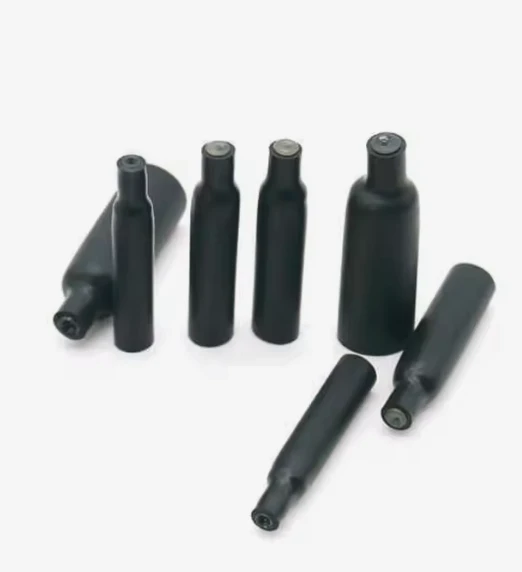
Heat Shrink Cable End Cap
A heat shrink cable end cap seals the exposed end of a power or telecommunication cable so that nothing gets in while the cable is stored, transported or waiting to be terminated. Made from polyolefin and lined with hot-melt adhesive, it is slid over the cable end and shrunk down, forming a tight, watertight cap that protects the conductor and insulation from oxidation, ozone, UV and moisture throughout the supply chain.
This is a high-turnover consumable, not an electrical-function component: buyers specify it by cable outside diameter and buy it by the carton, month after month. The section below is written for exactly that - how to size it, which variant to specify, what can be customised, and what documentation comes with the goods.
At a glance
Form: closed-end cap (dead end) - seals the end of a cable, not a through-run
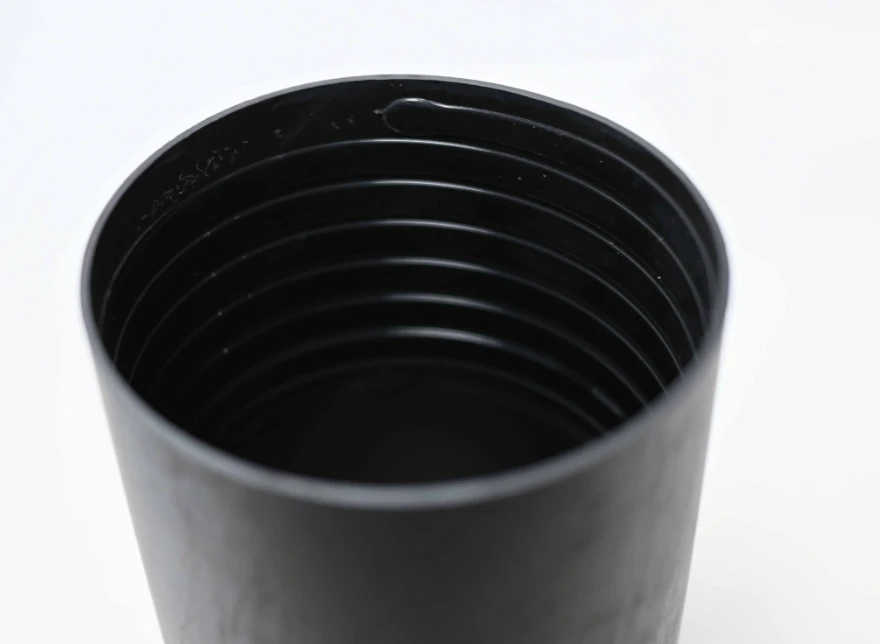
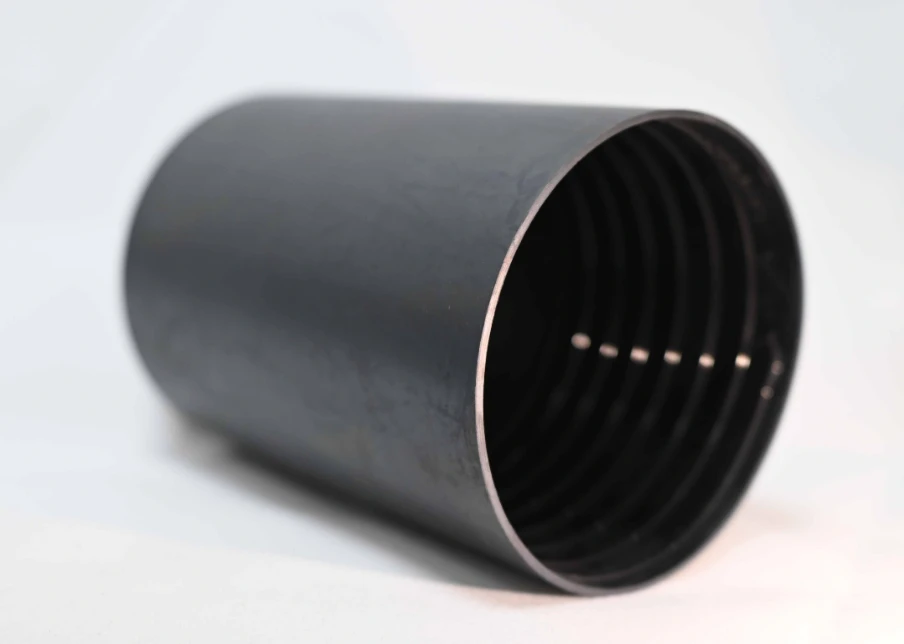
Material: polyolefin, hot-melt adhesive lined (flat or spiral adhesive)
Function: seal & insulate cable ends in storage, transit and installation
Protects against: oxidation, ozone, UV, moisture
Options: flame-retardant cap; with valve (on request)
Sizes: 16 standard specs, cable OD ~12–245 mm (as supplied)
Shrink temperature: starts at 90 °C, fully recovered at 130 °C
Why cap the cable end
An uncapped cable end is the cheapest failure point on site. Once the sheath is cut, the end is open to the air: the conductor oxidises, the insulation absorbs moisture, UV and ozone attack the exposed polymer, and in telecom cable, water migrates along the core - a defect that is often only found after the cable has been pulled in.
For a cable manufacturer, stockist or contractor, the end cap is the standard, low-cost control for that risk:
At the factory / warehouse - caps seal the ends of cut lengths and drum tails before they go into stock.
In transit and on site - caps keep moisture and contamination out of cable ends until the joint or termination is made.
Before energising - a valved cap lets the cable end be pressure-tested / kept under a dry-gas seal where a pressurised system is used.
Because it is consumed on every cut length and every drum, procurement treats the end cap as a repeat stock item: the buying decisions are about size coverage, variant options, pack format and reliable supply - which is what the rest of this page sets out.
Applications
Power cable ends - sealing LV cable ends during storage, transit and installation
Telecommunication cable ends - sealing cable ends where moisture migration must be stopped (valved caps for pressure systems)
Cable manufacturers & stockists - capping cut lengths and drum tails in the factory and warehouse
Utilities & EPC contractors - protecting cable ends on site until termination
Panel and sub-station work - capping spare cores and future-use cables
Export / long-transit shipments - UV and moisture protection for cable ends in storage yards and containers
Key features & benefits
Seals the cable end, not just the surface - the closed cap plus hot-melt adhesive forms a watertight, void-free seal over the conductor end.
Protects against oxidation, ozone, UV and moisture - keeps stored and in-transit cable ends sound.
Adhesive lined - hot-melt adhesive in flat or spiral form, to suit different cable ends and your tooling.
Variant options - flame-retardant caps for indoor / tray installation, and valved caps for pressure testing or dry-gas sealing.
Wide size coverage - 16 standard specs from WRSFM-12 (cable OD ~12 mm) to WRSFM-250 (~245 mm), covering LV power and telecom cable ends.
Tough polymer - tensile strength ≥ 12 MPa, elongation at break ≥ 300 %.
Dielectric strength ≥ 15 kV/mm; volume resistivity ≥ 1×10¹² Ω·cm.
All-conditions stability - brittle temperature −40 °C; heat shock 160 °C / 4 h, no cracking; water absorption ≤ 0.1 %.
Controlled recovery - begins at 90 °C, fully recovered at 130 °C - standard hot-air working temperature.
Key features & benefits
Seals the cable end, not just the surface - the closed cap plus hot-melt adhesive forms a watertight, void-free seal over the conductor end.
Protects against oxidation, ozone, UV and moisture - keeps stored and in-transit cable ends sound.
Adhesive lined - hot-melt adhesive in flat or spiral form, to suit different cable ends and your tooling.
Variant options - flame-retardant caps for indoor / tray installation, and valved caps for pressure testing or dry-gas sealing.
Wide size coverage - 16 standard specs from WRSFM-12 (cable OD ~12 mm) to WRSFM-250 (~245 mm), covering LV power and telecom cable ends.
Tough polymer - tensile strength ≥ 12 MPa, elongation at break ≥ 300 %.
Dielectric strength ≥ 15 kV/mm; volume resistivity ≥ 1×10¹² Ω·cm.
All-conditions stability - brittle temperature −40 °C; heat shock 160 °C / 4 h, no cracking; water absorption ≤ 0.1 %.
Controlled recovery - begins at 90 °C, fully recovered at 130 °C - standard hot-air working temperature.
How the end cap differs from the rest of the heat-shrink range
| Product | Form | Where it goes | Core purpose |
|---|---|---|---|
| WRSFM - Heat Shrink Cable End Cap | Closed-end cap (dome) | The end of a cable | Seal an open cable end in storage / transit / installation |
| WRSZT - Heat Shrink Breakout | Branching boot (2/3/4/5 fingers) | Cable crutch | Seal + strain-relieve a branch |
| WRSHG - Protective Tube | Straight tube | Over a joint / run | Protect & seal a cylindrical run |
| WRSJG - Anti-Tracking Tube | Straight tube | MV terminations / busbars | Anti-tracking / flashover |
| WDWT - Semi-conductive Dual Layer Tube | Straight tube | MV joint body | Insulation + screen rebuild |
| WRSYL - Stress Control Tube | Straight tube | Screen cut-back | Field grading |
Procurement & sourcing guide
What to send us for a quote
Cable outside diameter (the sheath OD the cap must slide over) - this sets the cap size.
Core count / cable type - power or telecom cable (with valve is usually a telecom / pressurised-cable requirement).
Quantity - pieces or cartons, and whether it is a one-off or a repeat order.
Variant - standard, flame-retardant, or valved; adhesive form flat or spiral.
Packaging / labelling - plain pack, or your own bag / carton / logo (OEM).
Destination & Incoterms - for freight and lead-time planning.
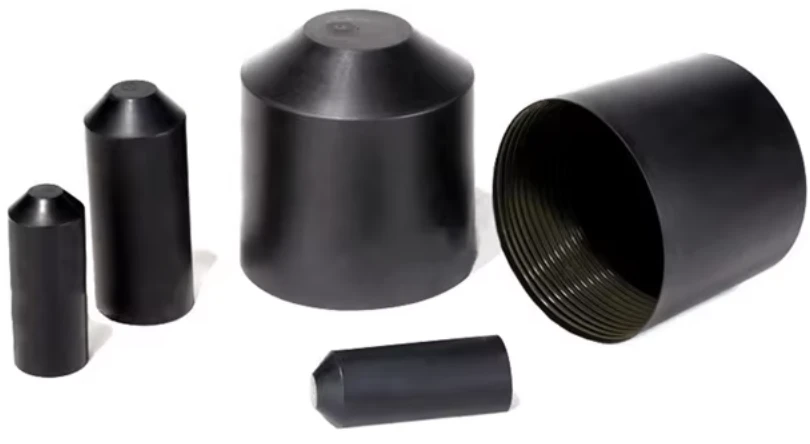
Size selection at a glance
As-supplied ID (D min) must be larger than the cable OD so the cap slides on (e.g. a 20 mm-sheath cable → WRSFM-25, D min 25 mm).
Recovered ID (D max) must be smaller than the cable OD so the cap grips tightly (WRSFM-25 recovers to 11 mm).
Height (L) must be long enough to cover the exposed end plus an adhesive margin - heights run from 45 mm (WRSFM-12) to 270 mm (WRSFM-160 and above).
Documentation & quality
Technical data sheet (TDS) supplied per size.
Test data per the technical table below (tensile, dielectric, heat ageing).
Commercial terms
MOQ -1000meters
Packaging - as per customer's request
Lead time -15days after receive the payment
Sample policy - free sample
Technical specifications
Selection table - standard sizes
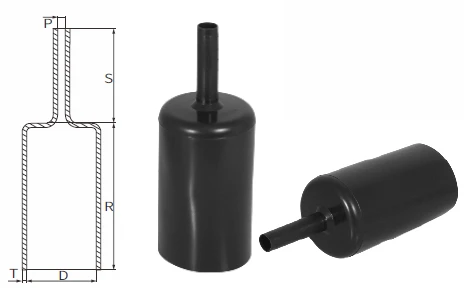
All dimensions in mm. D = inner diameter, T = wall thickness, L = height. As-supplied wall tolerance ± 20 %, height ± 5, recovered wall ± 10 %.
| Spec. | As supplied ID (D) min | As supplied wall (T) | Height (L) | Recovered ID (D) max | Recovered wall (T) |
|---|---|---|---|---|---|
| WRSFM-12 | 12 | 1.0 | 45 | 5 | 2.5 |
| WRSFM-16 | 16 | 1.0 | 70 | 8.5 | 2.5 |
| WRSFM-20 | 20 | 1.0 | 70 | 8.5 | 2.5 |
| WRSFM-25 | 25 | 1.0 | 80 | 11 | 2.5 |
| WRSFM-30 | 30 | 1.3 | 95 | 16 | 2.8 |
| WRSFM-35 | 35 | 1.0 | 95 | 18 | 2.6 |
| WRSFM-40 | 40 | 1.1 | 95 | 18 | 2.6 |
| WRSFM-55 | 55 | 1.0 | 125 | 26 | 2.7 |
| WRSFM-75 | 75 | 1.3 | 145 | 31 | 3.2 |
| WRSFM-100 | 97 | 1.3 | 140 | 40 | 5.2 |
| WRSFM-120 | 117 | 1.3 | 155 | 57 | 4.0 |
| WRSFM-140 | 140 | 1.3 | 185 | 63 | 4.0 |
| WRSFM-160 | 158 | 2.1 | 270 | 95 | 4.0 |
| WRSFM-180 | 180 | 2.1 | 270 | 95 | 4.0 |
| WRSFM-200 | 200 | 1.5 | 270 | 95 | 4.0 |
| WRSFM-250 | 245 | 1.5 | 270 | 95 | 4.0 |
Remark: the hot-melt adhesive comes in two forms - flat adhesive and spiral adhesive - to meet different customer needs.
Technical data
| Property | Test method | Standard value |
|---|---|---|
| Tensile strength | ASTM D-638 | ≥ 12 MPa |
| Elongation at break | ASTM D-638 | ≥ 300 % |
| Volume resistivity | IEC 60093 | ≥ 1×10¹² Ω·cm |
| Dielectric strength | IEC 60243 | ≥ 15 kV/mm |
| Brittle temperature | ISO 974 | −40 °C |
| Heat shock | 160 °C, 4 h | No crack |
| Water absorption (23 ± 2) °C, 24 h | ISO 62 | ≤ 0.1 % |
| Hardness (Shore A) | ISO 868 | ≥ 80 |
Product display
Certificate

FAQ
Q: What is a heat shrink cable end cap used for? A: Sealing the end of a power or telecommunication cable during storage, transport and installation - protecting the conductor and insulation from oxidation, ozone, UV and moisture until the cable is terminated.
Q: How do I choose the right size? A: Match the cable outside diameter: the as-supplied ID must be larger than the cable OD (so it slides on) and the recovered ID smaller than the cable OD (so it grips). Then check the height (L) covers the exposed end plus an adhesive margin.
Q: What is the difference between flat adhesive and spiral adhesive? A: They are two forms of the same hot-melt adhesive - flat adhesive and spiral adhesive - offered so you can match the cap to your cable ends and installation method. Tell us your preferred form when you order.
Q: Can I get a flame-retardant or valved cap? A: Yes - flame-retardant end caps are available upon customer request, and caps with a valve are available if required.
Q: Can you make non-standard sizes or private-label packs? A: Non-standard diameters can be tooled on request, and OEM / private-label packaging is possible.
Q: What is the shrink temperature? A: Shrinking starts at 90 °C and the cap is fully recovered at 130 °C.
Hot Tags: heat shrink cable end cap, China heat shrink cable end cap suppliers