

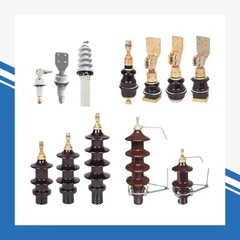






Porcelain insulators remain one of the most widely used insulation solutions in modern power equipment-especially in transformers, switchgear, substations, and overhead distribution systems. Even with the emergence of polymer and composite insulators, porcelain continues to dominate many medium- and high-voltage applications.
So, what makes porcelain such a reliable choice? Below is a comprehensive look at the technical reasons.

1. Excellent Dielectric Strength and Electrical Reliability
Porcelain provides high dielectric strength, stable insulation performance, and a low dielectric loss factor.
These electrical characteristics ensure:
Stable insulation even under continuous high voltage
Strong resistance to electrical breakdown
Consistent performance regardless of load fluctuations
This makes porcelain insulators especially suitable for transformers, tap changers, bushings, and switchgear where continuous insulation reliability is critical.
2. Outstanding Mechanical Strength
Porcelain has a high compressive strength and excellent rigidity, which allows it to handle:
Mechanical vibrations from transformer operation
Thermal expansion and contraction
External forces such as wind, ice load, and mechanical shock
For switchgear and transformer bushings, this structural stability is essential for long service life.

3. Superior Weather, Aging, and Pollution Resistance
Porcelain is naturally resistant to:
UV radiation
Moisture and humidity
Temperature cycling
Pollution and chemical contaminants
The glazed surface of porcelain prevents water absorption and makes the insulator easier to clean.
In coastal, industrial, or high-pollution environments, porcelain performs reliably and maintains its insulating properties for decades.
4. High Thermal Stability and Fire Resistance
Power equipment-especially transformers-generates significant heat. Porcelain is non-flammable, heat-resistant, and thermally stable, ensuring safe operation even under:
High operating temperatures
Short-circuit conditions
Overloads
This is a major reason porcelain is used inside switchgear and on transformer bushings where thermal safety is crucial.
5. Long Service Life and Low Maintenance
Porcelain insulators are known for their 40–50+ years of service life in outdoor installations.
Benefits include:
Minimal maintenance requirements
Stable long-term performance
Very low failure rate
For utilities and transformer manufacturers, this translates into lower operating costs and improved system reliability.
6. Proven Material, Mature Manufacturing Technology
Porcelain insulators have been used for more than a century. Their production processes-such as glazing, kiln firing, and mechanical testing-are mature and standardized.
This means:
Highly predictable quality
Stable supply chain
Lower replacement risks
Well-understood performance across voltage levels
For critical power equipment, predictable performance is crucial.
7. Compatibility with Transformer and Switchgear Designs
Porcelain insulators integrate seamlessly with:
Transformer bushings
LV/HV terminals
Switchgear internal barriers
Grounding systems
Protection and control devices
Their structural rigidity ensures secure mounting and consistent clearances, which is essential for safe equipment design.
Conclusion
Porcelain insulators continue to be widely used in transformers and switchgear because of their:
Excellent electrical insulation
Strong mechanical strength
High thermal and environmental stability
Long service life
Proven manufacturing reliability