






Key Points
Fire-resistant materials help protect people and property by slowing the rapid spread of fire. Understanding the difference between fire-resistant and fire-retardant materials is critical for safety. Choosing the right fire-resistant materials can save lives and prevent damage during fires. Fire-resistant materials must follow strict safety standards to perform effectively. Regular inspection and maintenance help keep them safe over the long term. Fire-resistant materials can reduce smoke and toxic gas emissions during fires, improving safety. Different applications require specialized fire protection, such as in buildings or safety clothing. Investing in high-quality fire-resistant materials helps save on repair costs and insurance expenses later.
Definition of Fire-Resistant Materials
What Are Fire-Resistant Materials?
Fire-resistant materials can withstand flames and high temperatures without decomposing or deforming. They act as a shield, blocking fire spread and injury. These materials are essential for protecting buildings, equipment, and people. They are used in insulation, coatings, and barriers to block heat and flame. Even in intense fires, fire-resistant materials remain effective, making them vital for safety across many industries.

Fire-Resistant vs. Fire-Retardant
Some people think fire-resistant and fire-retardant mean the same thing, but they are different. Fire-resistant materials are designed to remain structurally strong in fire without cracking or deforming. Fire-retardant materials only resist fire for a set period. Codes and safety standards define these differences clearly.
| Aspect | Fire-Resistant Materials | Fire-Retardant Materials |
|---|---|---|
| Definition | Materials that withstand fire while maintaining integrity | Materials that resist fire for a specified time |
| Focus | Prevent fire damage | Control fire and preserve structural integrity |
| Testing Standards | No specific time limit; designed to be impermeable | Rated for set durations (e.g., 1 hour, 2 hours) |
| Applications | Coatings, insulation, barriers | Structural components such as walls, floors, doors |
| Function Retention | Maintain function under fire exposure | Allow evacuation and firefighting operations |
Note: No material is truly completely fireproof. All fire-resistant materials will fail if exposed to fire for too long. The term "fire-resistant" is often more accurate. These materials slow fire spread but may still burn eventually.
Importance of Safety
Understanding the difference between fire-resistant and fire-retardant is critical. Fire-resistant materials help stop fire destruction and save lives. Building codes often require fire-resistant products. Local rules specify their use in stairwells, hallways, and fire doors. In large buildings, lobbies and stairwells must use fire-resistant materials to block fire spread.
| Aspect | Details |
|---|---|
| Flame Spread Rating | Selecting materials by flame spread class is critical for safety and compliance. |
| Evacuation Impact | Slower flame spread gives people more time to escape safely. |
| Insurance Impact | Using incorrect materials may result in denied insurance claims after a fire. |
| Code Compliance Consequences | Non-compliance may lead to failed permits or major modifications. |
| Example of Non-Compliance | Using Class C materials in a Class A corridor may block approval. |
Building codes generally require fire-resistant materials.Fire-resistant materials help protect critical areas and equipment.Choosing the right materials keeps people safe and ensures legal compliance.Fire-resistant materials make buildings and workplaces safer by slowing flames and reducing smoke, allowing more evacuation time. Selecting proper fire-resistant products is not only a safety measure but also a legal requirement in many applications. Correct use supports insurance coverage and building approval.
Key Properties of Fire-Resistant Materials
Fire Resistance
Fire resistance is the most important property of fireproofing. It shows how well a material stops fire spread and maintains its shape during a fire. Fire protection systems require high fire resistance to safeguard buildings, equipment, and people.
High-Temperature Resistance
Fire-resistant materials must withstand extreme heat without losing strength or shape. Industry standards set clear temperature limits for fire protection systems.
| Classification | Temperature (°F) | Temperature (°C) | Duration |
|---|---|---|---|
| Class 125 | 125 | 52 | 2 hours |
| Class 150 | 150 | 65.5 | 2 hours |
| Class 350 | 350 | 176.7 | 4 hours |
Fire-resistant materials must meet these standards to be safe. For example, fire barriers in data centers must keep temperatures below 350°F for four hours to protect critical equipment.
Protection Duration
How long a material resists fire is as important as the temperature it can withstand. Fire protection systems are rated based on how long they remain strong in fire. Standard tests measure this performance.
| Standard | Description |
|---|---|
| ASTM E119 | Tests fire resistance of building components in controlled fires. |
| BS 476 | Evaluates how easily building materials ignite and burn. |
These tests show how long fire-resistant materials can block fire, helping builders and engineers select the right system.
Tip: Fire performance depends on many factors, including modulus of elasticity, insulation thickness, and interfacial fracture energy. Thicker insulation and higher modulus usually improve fire resistance.
Thermal Stability
Thermal stability means fire-resistant materials remain strong under prolonged heating. Stable materials do not crack, melt, or lose protection in fire. Systems with high thermal stability maintain shape and function even after extended fire exposure.
Experts test thermal stability using:
Mass loss with increasing heat or time
Glass transition temperature (Tg)
Activation energy of thermal breakdown
Residual mass after combustion
High thermal stability materials release less heat and maintain protective barriers longer. Cone calorimetry measures heat release rate and total heat release, both critical for fire resistance.
Non-Combustibility
Non-combustibility means a material does not ignite or support flame spread. Fire protection systems use non-combustible materials to block fire and protect buildings. Safety tests enforce strict rules.
| Test Type | Requirements |
|---|---|
| Non-Combustibility Test | Temperature rise ≤ 30°CMass loss ≤ 50%No sustained flaming |
| Total Heat of Combustion | Total heat potential < 2.0 MJ·kg⁻¹ |
Materials passing these tests achieve Class A1 or A2 under EN 13501-1. A1 materials are fully non-combustible. A2 materials have minimal combustible content. These materials are used in walls, floors, and ceilings to stop fire spread.
Durability
Durability measures how long fire protection remains effective. Fire resistance must last for years without losing strength or performance. Builders choose durable materials to improve long-term safety and reduce maintenance costs.
Longer-lasting fire resistance lowers building maintenance costs.
Fire-resistant drywall and insulation can block flames for hours.
Properly fire-protected steel can withstand up to 1000°C for two hours, preventing collapse.
Durable fire-resistant materials withstand harsh conditions including water, chemicals, and thermal cycling, making them ideal for factories, tunnels, and high-rises.
Low Smoke and Toxic Gas Emission
Low smoke and toxic gas emission are critical in fire safety. Some materials produce heavy smoke and harmful gases that impair visibility and breathing. Fire-resistant materials with low emissions keep escape routes clear and protect people.
| Toxic Gas | Emission (ppm) 25 kW/m² (no pilot flame) | Emission (ppm) 25 kW/m² (with pilot flame) | Emission (ppm) 50 kW/m² (no pilot flame) |
|---|---|---|---|
| CO | 232 | 293 | 1444 |
| HBr | 0 | 0 | 0 |
| HCl | 0 | 0 | 0 |
| HCN | 0 | 0 | 0 |
| HF | 0 | 0 | 0 |
| SO₂ | 0 | 0 | 0 |
| NO | 0 | 0 | 0 |
| NO₂ | 0 | 0 | 0 |
High-quality fire-resistant materials produce minimal smoke and toxic gases. Carbon monoxide is the main emission, but at much lower levels than ordinary building materials. Toxic gases such as HCl or HCN are generally absent. This makes fire-resistant materials safer and supports building code compliance.
Schools, hospitals, and public spaces especially require low-smoke, low-toxicity materials to aid evacuation and firefighting.
Types of Fire-Resistant Materials
Inorganic Fire-Resistant Materials
Concrete, Brick, Stone
Inorganic materials are fundamental to fire safety. Concrete, brick, and stone form strong heat and flame barriers. They do not burn or melt in fire. Builders use them in walls, floors, and ceilings to create safe zones.
These materials perform well in fire tests:
Heat transfer resistance
Hot gas penetration resistance
Load-bearing capacity
Hose stream resistance
Concrete and brick walls can resist fire for hours. Stone is strong and non-toxic. These features make inorganic materials ideal for long-term fire safety.
Metal-Based Fire Protection
Steel, Aluminum
Steel and aluminum are non-combustible and support heavy loads during fire. They are used in beams, columns, and building frames.
| Material | Fire Rating | Duration |
|---|---|---|
| Steel | Fire-resistant | 1–4 hours |
| Aluminum | Fire-resistant | 1–4 hours |
Engineers often add fire boards or wrapping to metal components to extend performance and meet codes.
Fire-Resistant Coatings
Intumescent Coatings, Sprays
Intumescent coatings swell when heated to form a thick protective layer. At 200–250°C, they expand into a foam that absorbs heat and blocks oxygen, slowing fire spread.
They are applied to steel, wood, and construction materials. They are lightweight, easy to apply, and do not add significant weight. They are widely used in new construction and retrofitting.
Fire-Resistant Categories & Applications
| Category | Description | Applications |
|---|---|---|
| Cementitious Fire Protection | Lightweight heat-resistant cement mixes | High-rises, factories |
| Intumescent Coatings | Heat-swelling paint for insulation | Construction |
| Fire Boards & Wraps | Preformed panels & flexible sheets | New builds, repairs |
| Sprayed Fire-Resistant Materials (SFRM) | Sprayed onto steel beams & decks | Factories, offices |
| Blanket & Batt Fire Protection | Mineral wool or fiberglass sheets | Walls, floors, ceilings |
| Fire Stopping Systems | Seals for penetrations in fire-rated walls | Fire barriers |
Fire-Resistant Fabrics
Aramid Fibers, Treated Textiles
Fire-resistant fabrics such as Nomex and Kevlar block flame and heat without melting or dripping. They are used in protective clothing for high-risk work.
Strong and abrasion-resistant
Non-conductive and flame-resistant| Property | Description ||----------|-------------|| Flame Resistance | Excellent heat and flame blocking; does not melt or burn in normal air || Chemical Resistance | High resistance to chemicals, ideal for safety suits || Applications | Firefighter gear, workwear, military uniforms || Technological Advances | New weaving and treatment improve softness and comfort || Future Innovation | Nanotechnology and fiber blending enhance safety |
Mica Insulation Materials
Mica Products
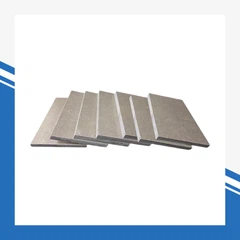
Mica insulation has unique fire-resistant properties. Our produces mica products for fire safety and electrical applications.
Mica's natural layered structure absorbs heat and slows fire spread. our mica is non-combustible and withstands temperatures up to 1200°C.
| Feature | Description |
|---|---|
| Non-Combustibility | Does not burn or support flame spread |
| High-Temperature Limit | Maintains strength up to 1200°C |
| Chemical Stability | No color or shape change under chemicals or high heat |
| Energy Absorption | Absorbs heat to slow fire and protect equipment |
Mica tapes and sheets protect wiring, machinery, and components in home appliances, trains, and electric vehicles.
Fire Protection Methods
Physical Barriers
Fire walls and barriers compartmentalize buildings to slow fire spread. They are a form of passive fire protection, rated from 1 to 4 hours. They protect critical areas and support evacuation.
Chemical Treatments
Chemical treatments improve fire performance of wood, fabrics, and other materials.
Pressure-impregnated wood
Flame-retardant coatings
Intumescent sprays
Modern treatments are safer and more eco-friendly.
Intumescent Fire Protection
Intumescent coatings expand up to 100x when heated, forming a thick foam barrier. They use an acid source, carbon source, and blowing agent. They are widely used on steel beams and columns for aesthetic and effective fire protection.
Insulation Technology
Fire-resistant insulation blocks heat and flame.
| Insulation | Fire Performance | Applications |
|---|---|---|
| Fiberglass | Non-combustible, meets ASTM E84/E136 | Thermal and acoustic control |
| Mineral Wool | Stops fire spread; ideal for perimeter fire stops | Interior/exterior walls |
| Polyisocyanurate | Continuous air, heat, and moisture barrier | Building envelope |
| Closed-Cell Spray Foam | High R-value, waterproof | Barns, shops, commercial buildings |
Applications of Fire-Resistant Materials
Construction
Walls, floors, ceilings use fire-resistant materials to meet IBC, ASTM E119, and UL 263. Fire protection preserves structural steel and prevents collapse.
Industrial Use
Cables, equipment, and data centers rely on fire-resistant cables, early detection systems, and clean-agent fire suppression.
Transportation
Rail, automotive, and aerospace use materials compliant with EN 45545-2, 49CFR238, and NFPA 130.
Personal Protective Equipment
Firefighter gear complies with NFPA 1971, 1977, and 1951, using aramid fibers for heat and flame protection.
Home Appliances
Fire-resistant countertops (granite, quartz) and flooring (ceramic, stone) improve household safety.
Selecting Fire-Resistant Materials
Intended Use
Selection depends on application, environment, temperature exposure, chemicals, and mechanical stress.
Compliance & Standards
Key standards:
ASTM E119
UL 263
EN 13501-1
Cost & Availability
Consider material cost, installation, maintenance, durability, and local supply.
Maintenance & Service Life
| Material | Typical Life | Maintenance |
|---|---|---|
| Intumescent Coatings | 10–20 years | Moderate |
| Mineral Wool | 30+ years | Low |
| Fire Boards | 20–30 years | Low–Moderate |
| Concrete | 50+ years | Very low |
Regular inspection extends service life.
FAQ
What makes a material fire-resistant?It is hard to ignite, withstands high heat, maintains strength, and produces little smoke or toxic gas.
Difference between fire-resistant and fire-retardant?Fire-resistant lasts longer and retains integrity. Fire-retardant only resists fire temporarily.
Common applications?Buildings, vehicles, factories, cables, equipment, and protective clothing.
Can fire-resistant materials stop all fires?No, but they slow spread, reduce harm, and allow evacuation.
Role of mica in fire protection?Mica blocks heat and electricity. Our mica insulates wires, machinery, and EV components.
How to choose the right material?Evaluate application, codes, cost, maintenance, and environment.
Do fire-resistant materials produce toxic smoke?High-quality materials produce minimal smoke and toxins.
How long do fire-resistant materials last?From 10 years to 50+ years, depending on type and maintenance.