






Choosing the right insulator material for high-voltage systems
High-voltage power systems depend on insulators that must withstand electrical stress, mechanical load, and harsh outdoor environments for decades. Although porcelain, composite, and glass insulators all serve the same purpose-providing electrical insulation and mechanical support-they differ greatly in performance, lifespan, cost, and application suitability.

1. Porcelain Insulators: The Long-Term Stability Benchmark
Porcelain has been used in electrical systems for more than 100 years and remains widely adopted due to its predictable and stable performance.
Key Advantages
High dielectric strength: 8–12 kV/mm, stable over decades
Excellent mechanical strength thanks to >1200°C firing
Outstanding resistance to UV, humidity, pollution, and salt fog
25–40 years service life (often longer in real projects)
Low maintenance requirements
Where Porcelain Performs Best
-High-voltage substations
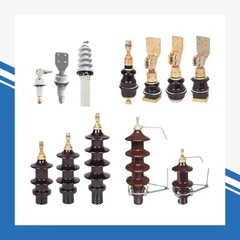
-Oil-immersed transformer bushings
-Outdoor switchgear support
-Coastal, industrial, or high-pollution areas
Porcelain is favored in regions such as Brazil, Turkey, and India, where high humidity and industrial pollution can quickly degrade other materials.
2. Composite Insulators: Lightweight, Flexible, and Growing in Popularity
Composite insulators use a fiberglass core with silicone rubber housings. They are widely used in transmission lines due to their low weight and strong anti-pollution performance.
Key Advantages
Lightweight (up to 70% lighter than porcelain)
High tensile strength due to fiberglass core
Excellent hydrophobic properties from silicone rubber
Effective in heavy pollution and coastal regions
Limitations
UV aging and surface chalking over time
Shorter lifespan: typically 8–15 years
More difficult to inspect visually
Risk of moisture ingress in the fiberglass core

Composite insulators are a good choice for long transmission lines, where reduced weight lowers tower load and maintenance needs.

Glass Insulators: High Transparency for Easy Inspection
Glass insulators provide unique visual inspection benefits. Since they are transparent, even small cracks or internal defects are visible immediately.
Advantages
Visual self-indication of damage (cracks become noticeable)
Excellent dielectric strength
Good resistance to humidity and chemicals
Limitations
More fragile during transportation and handling
Heavier than composite
Not ideal for areas with extreme mechanical loads
Limited application in modern substations
Glass is still commonly seen in overhead distribution lines, especially in regions where maintenance teams rely heavily on visual inspection.
4. Which Material Should You Choose?
Choose Porcelain If You Need:
Long service life with minimal maintenance
Stable dielectric performance in humid or polluted regions
Rugged material for substations and transformer bushings
Low total ownership cost (TCO)
Choose Composite If You Need:
Lightweight components for long-span transmission lines
Strong anti-pollution performance
Fast installation with lower tower loading
Choose Glass If You Need:
Easy visual inspection
Cost-effective solutions for distribution lines
Moderate voltage levels with predictable maintenance access
5. Industry Insight: Why Emerging Markets Still Prefer Porcelain
In countries like Brazil, Chile, Mexico, Turkey, and Indonesia, porcelain remains the most commonly specified insulator material for substations and transformers.
Reasons:
Harsh climatic conditions (humidity, UV, salt fog)
Utility preference for predictable long-term performance
Limited on-site maintenance resources
Lower TCO compared to composite
Stable mechanical strength, even under extreme heat
Many power companies in Brazil still operate porcelain units installed 25–30 years ago, with no measurable drop in dielectric performance-this long-term stability is a core reason procurement teams continue to rely on porcelain.
6. Why Customers Trust Our Insulator Solutions
We supply porcelain, composite, and glass insulators tailored to the needs of global transformer manufacturers, EPC contractors, and utilities.
Our Strengths
1.Complete material options: porcelain, composite, glass
2.Mold customization for transformer & switchgear OEMs
3.Strict IEC/ANSI/BS compliance
4.Rigorous QC: dielectric tests, bending tests, glaze inspection, salt-fog testing
5.Experience exporting to Brazil, Turkey, Middle East, and Latin America
6.Fast delivery + stable production capacity
With years of engineering experience, we help customers choose the right material based on voltage class, climate conditions, mechanical requirements, and lifecycle cost.