






Dielectric Strength of Mica & Electrical Insulation Properties
You will often find mica sheet dielectric strength values ranging from 10 to 25 kV/mm. This property measures the maximum electric field a material can withstand before losing its insulating performance. In many electrical devices, high-dielectric-strength materials are essential to prevent dangerous breakdown. Mica stands out due to its ability to withstand high voltage while maintaining dielectric stability, enabling safe and efficient insulation in generators, transformers, and power cables.

Key Summary
Mica offers excellent dielectric strength, typically 10–25 kV/mm, making it ideal for high-voltage applications.
Thicker mica sheets can withstand higher voltages, improving electrical insulation performance.
Mica remains stable at high temperatures: muscovite up to 700°C, phlogopite up to 1000°C.
Mica's moisture resistance ensures reliable insulation even in humid environments, suitable for outdoor and industrial use.
Using mica as electrical insulation helps prevent breakdown, ensuring safe and efficient operation of transformers, generators, and other equipment.
Dielectric Strength of Mica
Typical Values & Standards
Mica is widely used in electrical insulation thanks to its high dielectric strength - meaning it effectively blocks electric current until extremely high voltages are applied. Dielectric strength values are defined and tested under standards such as ASTM D149 and IEC 60243-1, which help compare materials and select the right grade for your needs.
Mica sheets generally have a dielectric strength of 10 to 25 kV/mm. Some technical reports show that special-grade mica sheets can reach values as high as 150 kV/mm, while pure muscovite mica can achieve approximately 2000 V/mm.
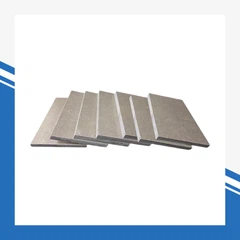
Mica sheet thickness typically ranges from 0.01 mm to 1.5 mm. Thicker sheets can withstand higher voltages before breakdown occurs, making them especially important in high-voltage equipment.
| Property | Muscovite Mica | Phlogopite Mica |
|---|---|---|
| Electrical Insulation | Excellent | Good (focused on heat resistance) |
| Typical Applications | Household appliances, general electrical insulation | Fire-resistant cables, induction furnace insulation |
Muscovite provides superior electrical insulation, while phlogopite excels in fire-resistant and high-temperature applications.
Note: Mica's dielectric constant (permittivity) usually ranges from 5 to 7, reflecting its ability to store electrical energy.
Factors Affecting Dielectric Strength
Several key factors influence mica's dielectric performance:
Purity: Higher purity improves dielectric strength; impurities reduce performance.
Thickness: Thicker mica sheets support higher voltage withstand.
Manufacturing Process: Strict quality control and precise processing preserve excellent dielectric properties.
How Thickness Influences Performance
Thinner mica sheets: Breakdown behavior is more cathode-dependent, sometimes resulting in higher dielectric strength readings.
Thicker sheets: Provide better thermal resistance and often higher voltage withstand, making them preferred in power electronics for strong insulation against short circuits.
| Property | Description | Importance in Electrical Insulation |
|---|---|---|
| Thickness | 0.01 mm – 1.5 mm | Critical for voltage withstand and insulation level |
| Dielectric Strength | Up to 100–200 kV/mm (high-grade) | Prevents breakdown in high-voltage systems |
Mica's combination of high dielectric strength and stable insulation properties makes it a top choice for many electrical applications.
Dielectric Properties of Mica
Electrical Insulation Performance
Mica's dielectric properties make it a highly efficient electrical insulator. It effectively resists current flow even under high voltage, thanks to its outstanding dielectric strength. This establishes mica as a preferred material for high-voltage devices such as transformers and generators.
Key characteristics supporting its insulation performance:
Dielectric constant: 6.4 to 9.3 - supports energy storage and electric field control.
Retains dielectric strength at elevated temperatures.
Excellent moisture resistance for reliable performance in harsh environments.
Can be split into thin, flexible sheets for versatile use.
| Property | Description |
|---|---|
| Dielectric Strength | Exceptionally high, essential for reliable electrical insulation |
| Stability | Maintains dielectric strength across wide temperature ranges |
| Temperature Limit | Begins losing dielectric strength only above ~650°C |
Mica paper is widely used in high-voltage coil insulation as it preserves these properties even after processing.
Thermal Conductivity & Stability
Mica has relatively low thermal conductivity, slowing heat transfer and protecting electrical components from overheating. Its layered structure creates air gaps that further enhance insulating performance.
Mica withstands extreme temperatures:
Muscovite: stable up to 700°C
Phlogopite: stable up to 1000°C
It maintains electrical insulation even at these high temperatures, making it highly reliable for industrial heaters, high-voltage cables, and other heat-generating equipment.
Tip: Mica is an ideal choice when both electrical insulation and thermal resistance are required.
Comparison with Other Dielectric Materials
Mica vs. Glass & Ceramics
Mica delivers superior dielectric strength, typically 50–150 kV/mm, providing stronger protection against electrical breakdown in high-voltage environments. It can be processed into thin, flexible sheets and offers excellent heat resistance.
Mica: High dielectric strength, thermal stability, flexible, ideal for safety‑critical applications.
Glass fiber: Lower dielectric strength (19–24 kV/mm), cost-effective but offers less electrical safety.
Ceramics: Retain insulation at high temperature and voltage but are brittle and difficult to form.
Note: Mica may require reinforcement due to moderate mechanical strength, while ceramics are stable but fragile and costly to machine.
Mica vs. Plastics & Polymers
The table below compares dielectric strength across common insulation materials:
| Material | Dielectric Strength (kV/mm) | Notes |
|---|---|---|
| Mica | 100 – 200 | Outstanding dielectric strength & heat resistance; used in high-voltage capacitors and motor insulation |
| Polyester | 150 – 200 | Cost-effective film for capacitors and slot liners |
| Polyimide | 200 – 300 | Excellent heat resistance and dielectric strength; used in motor windings and flexible PCBs |
Mica stands out for its natural thermal stability under extreme temperatures, which most polymers cannot match. Adding mica to composite materials has been shown to improve both thermal efficiency and electrical insulation. For high‑temperature and high‑voltage applications, mica remains a high-performance solution.

Applications of Mica
Electrical & Electronic Uses
Mica is widely used in electrical and electronic equipment due to its superior insulation and high dielectric strength.
High-voltage transformers & switchgear: Mica sheets insulate coils and busbars to prevent short circuits.
Motors & generators: Used as slot liners and insulation tape to resist leakage and mechanical wear.
Capacitors & sensors: Delivers stable dielectric performance for long service life and precision.
Power transmission equipment: Mica barriers and shields prevent unintended electrical discharge.
Mica is lightweight, flexible, and formable, with low conductivity and high dielectric strength - making it a premier high-voltage insulation material.
Industrial & Safety Benefits
Mica's high dielectric strength (typically 50–150 kV/mm) allows it to perform reliably under strong electric fields without breakdown. It is used in laminated insulation for transformers and switchgear to suppress arcing and enhance system safety.
Mica is non-flammable and does not release toxic fumes, providing critical fire protection in overheating or fire-risk conditions. Compared to materials such as PVC, mica offers far better electrical insulation and arc resistance.
| Property | Benefit |
|---|---|
| High dielectric strength | Prevents electrical breakdown |
| Chemical resistance | Durable in harsh industrial environments |
| Thermal stability | Performs consistently at high temperatures |
| Moisture resistance | Protects components reliably in humid conditions |
Understanding these properties allows you to select the best material for your critical electrical projects.