






Synthetic Mica vs. Calcined Mica: A Comprehensive Comparison
Synthetic mica and calcined mica are distinct materials, often seen together in products but with clear differences. Evaluation should focus on three core aspects: source, purity/appearance, and performance/applications. Each offers unique functionalities that influence material selection.
Key Summary
Synthetic mica is lab-manufactured, boasting high purity and exceptional heat resistance, ideal for high-performance applications.
Calcined mica is derived from natural mica via heat treatment, offering a cost-effective solution for general construction needs.
Synthetic mica features a smooth, bright appearance; calcined mica is rougher with lower luster.
Synthetic mica excels in high-temperature and electrical insulation, suiting stringent industry requirements.
Choose synthetic mica for high-end products; opt for calcined mica for economical, large-scale projects.

1. Source & Manufacturing Process
The most obvious difference lies in how each mica is produced.
Synthetic Mica (Synthetic Fluorphlogopite Mica)
Synthetic mica is manufactured through a controlled laboratory process. It starts with a mixture of raw materials, including:
Quartz sand, potassium carbonate, aluminum oxide, potassium fluorosilicate
Additional components: Aluminum, magnesium, sodium salts; commercial oxides/salts (SiO₂, Al(OH)₃, MgF₂, NaCl); and natural clay minerals (e.g., kaolinite).
The process involves multiple steps:
| Step | Description |
|---|---|
| 1 | Mix powdered materials in precise proportions. |
| 2 | Incorporate commercial oxides and salts (SiO₂, Al(OH)₃, MgF₂, NaCl). |
| 3 | Add natural clay minerals (e.g., kaolinite). |
| 4 | Heat the mixture at high temperature using the molten salt method (NaCl). |
Synthetic mica contains no hydroxyl groups (-OH), a key feature that enables it to withstand temperatures up to 1100°C. It is the preferred choice for industries demanding maximum thermal stability and high purity.
Calcined Mica
Calcined mica is made from natural mica flakes that are heated in a furnace.
The typical calcination temperature for phlogopite mica is approximately 800°C.
This thermal treatment modifies the mica's physical structure:
| Property | Change After Calcination |
|---|---|
| Particle Size (d10, d50) | Minimal change (< 3 μm). |
| Particle Size (d90) | Moderate change for large flakes. |
| Surface Area | Decreases. |
| Water Absorption | Increases due to chemical changes. |
Natural mica begins to decompose at 450°C and nearly fully decomposes at 900°C, making calcined mica's heat resistance inferior to synthetic mica.
2. Purity & Appearance
Purity varies significantly, directly impacting texture, color, and performance.
Synthetic Mica Purity
Synthetic mica is engineered in a lab, resulting in extremely high purity with virtually no natural impurities. Its uniform crystal structure is free from heavy metals or harmful minerals.
Benefits:
Cosmetic Industry: Delivers brighter, smoother, and more consistent mica powder. Safe for skin, ideal for eyeshadows and highlighters.
Consistency: Ensures uniform color and texture across batches.
Calcined Mica Purity
Even after calcination, natural mica retains trace impurities from its geological origin, leading to inconsistent color and texture.
Texture & Color Comparison
| Feature | Synthetic Mica | Calcined Mica |
|---|---|---|
| Purity | Extremely High | Moderate |
| Texture | Smooth, sleek | Rough, matte |
| Color | Bright, clear, transparent (glass-like) | Dull, uneven, with spots/streaks |
| Uniformity | Consistent | Variable |
These differences are most pronounced in cosmetic, paint, and plastic applications. Synthetic mica creates a glossy, vibrant finish; calcined mica results in a lower-luster, coarser texture.

3. Performance & Applications
The manufacturing process and purity dictate performance characteristics and suitable use cases.
Synthetic Mica: High-Performance Applications
Synthetic mica's key strengths are exceptional heat resistance and superior electrical insulation.
| Property | Value |
|---|---|
| Max Temperature Resistance | Up to 1200°C |
| Electrical Insulation | 1000x better than natural mica |
Key Applications:
Aerospace: Thermal and fire barriers.
Electric Vehicles (EVs): Battery system insulation.
Steel & Foundry: High-temperature thermal insulation.
Consumer Electronics: Safe insulation for heating elements.
Electrical Engineering: High-grade insulation.
Cosmetics/Personal Care: Premium, glossy mica powder.
Automotive/Industrial Coatings: Metallic finish effects.
Plastics/Rubber: Improved mechanical properties.
Calcined Mica: General Industrial & Construction
Calcined mica is cost-effective and suitable for non-critical, large-scale applications.
Key Applications:
General Construction: Specialized welding materials, building panels, exterior cladding, composite sewage pipes.
Building Materials: Environmental construction materials, plastic steel doors/windows, artificial marble.
Coatings: Exterior wall paint, road marking paint, heavy-duty anti-corrosive coatings.
Other: Plasters, ceramic, oil drilling, friction materials, anti-seepage engineering.
Final Selection Guide
| Scenario | Recommended Mica |
|---|---|
| Extreme high-temperature or high-voltage insulation | Synthetic Mica |
| High-purity, vibrant cosmetic pigments | Synthetic Mica |
| General construction, industrial coatings, or large-scale projects | Calcined Mica |
| Budget-conscious, non-critical applications | Calcined Mica |

FAQs
What are mica sheets used for?
Mica sheets are used for electrical insulation, heat shields, and in devices like toasters. They resist high temperatures and electrical stress, finding use in electronics, home appliances, and lab instruments.
What is the difference between mica sheets and mica boards?
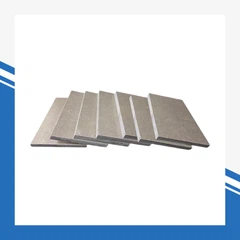
Mica Sheets: Small, flat, thin pieces. Used in paints/plastics for sparkle; or as thin insulators.
Mica Boards: Large, layered, solid structures. Used for insulation or to create smooth, strong surfaces.
Can I cut mica sheets at home?
Yes, use scissors or a sharp knife. Wear gloves and cut slowly. Mica is brittle-avoid over-bending to prevent cracking. It can be shaped for crafts or repairs.
Is mica sheet safe for food contact?
No. Mica sheets are not safe for direct food contact. Appliances use mica with a protective covering; never use it as a plate or cooking surface.
How should I store mica sheets?
Store flat in a dry place to prevent water damage and breakage.
Do not stack heavy items on top.
Place paper between sheets to prevent scratches and dust accumulation.
Keep away from direct moisture and heavy pressure.