




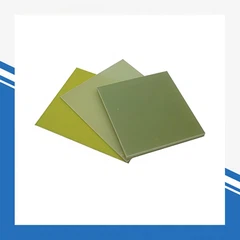


Mica tape for fire-resistant cables is a shielding material used in cables that helps prevent the spread of fire in emergencies.Over half of major fires in the past decade have been caused by cable failures, often due to poor fire resistance.Mica tape is made from muscovite, phlogopite, or synthetic mica and can withstand high temperatures up to 900°C.This material allows circuits to operate longer under extreme heat, reduces the risk of further fire spread, and supports safe evacuation.

What Are Fire-Resistant Cables?
Definition
Fire-resistant cables are special cables designed to continue functioning even in a fire.They keep critical equipment such as fire alarms and emergency lighting operational during emergencies.
Safety standards such as IEC 60331 and BS 6387 require fire-resistant cables to maintain operation for a specified period during fire exposure, typically 60 to 120 minutes.These cables use mica tape, mineral insulation, or ceramifiable silicone rubber.
They are not the same as flame-retardant cables, which only slow down fire spread but cannot maintain circuit function in a fire.
Note: Fire-resistant cables are also called circuit integrity cables.Safety codes mandate their use in essential systems including buildings, tunnels, and hospitals.
Main Features
Maintain power supply during fires to support emergency equipment
Use high-melting-point copper conductors and multi-layer mica tape for enhanced safety
Often halogen-free, producing low smoke and toxic gas for safe evacuation
Comply with strict regulations such as NEC 760.176(F)
Restrict fire and smoke spread while preserving circuit function
| Characteristics | Fire-Resistant Cables | Standard (Flame-Retardant) Cables |
|---|---|---|
| Electrical integrity in fire | Maintain power and circuit operation for a rated period | Fail to maintain function in fire |
| Structure | High-melting copper; multi-layer mica tape between conductor and insulation | Standard construction without fire-resistant layers |
| Purpose | Keep critical devices (alarms, emergency lights) working in fire | Slow fire spread, not maintain operation |
| Compliance | Meet strict fire-performance codes (NEC 760.176(F)) | Focus on flame retardancy only |
| Safety | Often halogen-free, low smoke & low toxicity | May contain halogens |
Fire-resistant cable performance is evaluated by:
Operating duration under fire conditions
Ability to block fire and smoke
Smoke and toxic gas emission
Mechanical strength under high temperature and stress
These features make fire-resistant cables ideal for protecting lives and property during fires.

Types of Mica Tape
Phlogopite Mica Tape
Also known as amber mica tape, phlogopite mica tape withstands extremely high temperatures.It retains strength between 800°C and 900°C and decomposes slowly in fire.At temperatures above 800°C, it releases crystal water, helping it remain tough under extreme heat.
It is widely used in high-temperature fire-resistant cables.Phlogopite is resistant to water, acids, alkalis, oils, and solvents.It is non-combustible and produces no harmful smoke.Many engineers choose phlogopite mica tape for general fire-resistant cable projects due to its balanced performance and cost.
Muscovite Mica Tape
Sometimes called white mica tape, muscovite mica tape withstands temperatures from 500°C to 700°C.It releases crystal water at around 600°C, so it cannot endure as high temperatures as phlogopite.
However, it performs better in high-voltage environments, making it suitable for certain electrical applications.It is less commonly used in cables requiring long-term operation in severe fires.It is ideal for applications needing only moderate fire resistance.
Synthetic Mica Tape
Synthetic mica tape provides the highest fire resistance.It maintains strength above 950°C and can operate above 1000°C.Since it contains no crystal water, it does not decompose like natural mica at high temperatures.
It is used in critical projects such as nuclear power plants and tunnels.Synthetic mica tape remains flexible and strong even after fire exposure.
Tip: Mica tape produces no harmful smoke in fires, supporting safe evacuation.
| Mica Type | Temperature Range (°C) | Fire Performance | Typical Applications |
|---|---|---|---|
| Synthetic Mica | 950 – 1000+ | Excellent; stable over 1000°C | Critical high-safety projects |
| Phlogopite Mica | 800 – 900 | Stable at 840°C, 1000V for 90 mins | General fire-resistant cables |
| Muscovite Mica | 500 – 700 | Limited by early crystal water release | Moderate fire resistance |
Each type of mica tape serves specific applications.The correct grade should be chosen based on the required fire-resistance level.
Standards and Applications
International Standards
Multiple organizations issue standards to ensure safe performance during fires.
IEC 60331 series: Verifies continuous function under fire at ≥750°C for up to 120 minutes; covers power, telecom, and fiber-optic cables
IEC 60332 series: Evaluates flame propagation on single and bundled cables
BS 6387 (UK): Includes fire, water spray, and mechanical impact tests
EN 50200 & EN 50577 (EU): Assess service life under fire and shock
UL 2196 (North America): Tests fire resistance of cable systems
IEC 61034 & IEC 60754: Measure smoke density and toxic gas emission
Standards ensure cables maintain function, limit fire spread, and reduce toxic smoke.
Regional & Industry Applications (2023)
North America: Strict NEC compliance, UL-certified cables; ~25% market share
Europe: Strict green regulations, LSOH (Low Smoke Zero Halogen) preferred; ~20%
Asia-Pacific: Fast growth, strict urban codes, high LSOH use; >35%
Middle East & Africa: Developing safety rules, cost-sensitive; ~10%
Power Plants: High fire resistance, low smoke; ~20%
Industrial Sector: Chemical-resistant, durable fireproof cables; ~35%
Residential: Low-smoke safety cables for high-density areas; ~25%
Infrastructure: High safety for airports, railways, subways; ~20%
Typical Uses
Mica tape fire-resistant cables are used in critical systems:
Fire and gas alarms for early warning
Emergency lighting and exit signs
Elevators, fire doors, and ventilation systems
Communication systems in tunnels, airports, and stations
Life support, control rooms, and data centers in hospitals
Pumps and safety equipment in oil and gas facilities
SCADA and RTD systems for emergency control
Non-compliant cables may cause failure of alarms or lighting during fires, endangering lives and violating regulations.
Structure & Performance Summary
Fire-resistant principle: Mica tape layers protect the cable core in fire
Structure: Multi-layer mica tape between conductor and insulation
Key standards: IEC 60331, IEC 60332, BS 6387, UL 2196
Test parameters: Fire resistance at 110V–1000V, heat release, burning behavior
LOI (Limiting Oxygen Index): Indicates real-fire resistance
High-quality certified fire-resistant cables are always used in critical systems to protect people and buildings.
FAQ
What role does mica tape play in fire-resistant cables?
Mica tape acts as a thermal and fire barrier, protecting the cable core and allowing continued operation at high temperatures.
Can mica tape fire-resistant cables be used outdoors?
Yes, many grades are suitable for outdoor use and resist water, chemicals, and UV radiation. Always check the outdoor rating.
How to verify compliance with fire safety standards?
Check markings such as IEC 60331 or BS 6387 and request test certificates from the supplier.
Are fire-resistant cables safe for hospitals and schools?
Yes. They are low-smoke and low-toxicity, making them ideal for public buildings.
Does mica tape reduce cable flexibility?
No. Mica tape remains flexible and can be bent easily around corners and tight spaces for convenient installation.