






Mica Insulation: Temperature Limits, Properties & Applications
For high-temperature insulation, mica stands out with a thermal resistance of up to 600°C to 1000°C, depending on the type.
| Mica Type | Temperature Limit (°C) | Temperature Limit (°F) |
|---|---|---|
| Muscovite | 500 | 932 |
| Phlogopite | 800–1000 | 1472–1832 |
Its crystalline structure provides exceptional heat resistance without decomposition, making mica ideal for electrical and thermal applications where other materials fail.
Key Summary
Mica insulation withstands temperatures up to 1000°C, ideal for extreme heat environments.
Muscovite resists up to 500°C; phlogopite performs reliably at 750–1000°C.
Mica offers excellent electrical insulation and moisture resistance for long-term reliability.
Used in electrical equipment, heating elements, aerospace, and nuclear power plants.
Always select the appropriate mica grade based on operating temperature for safety and efficiency.

Temperature Limits of Mica Insulation
Muscovite Mica Limits
Muscovite is widely used for its reliable heat resistance, with a maximum continuous operating temperature of 500°C.Beyond this range, structural changes occur:
Flaking, chipping, and physical degradation
Dehydroxylation (loss of structural water) starting above 673 K (400°C)
Reduced electrical performance and insulation capability
Phlogopite Mica Limits
Phlogopite is the preferred choice for extreme high-temperature environments:
Continuous operating range: 750°C to 1000°C
Short-term peak resistance up to 1000°C+
Its high magnesium content delivers superior thermal stability, maintaining insulation properties where other materials break down.
How Temperature Limits Are Determined
Laboratory testing including the Transient Plane Source (TPS) method to measure thermal conductivity at 300–500°C
Temperature Index (TI) testing for long-term thermal aging performance
Evaluation of chemical composition and crystalline structure
| Mica Type | Max Temperature (°C) | Chemical Composition |
|---|---|---|
| Phlogopite | 900 | Magnesium‑rich |
| Muscovite | 550 | Low magnesium |
Mica vs. Other Insulation Materials

Mica vs. Fiberglass
| Property | Mica Insulation | Fiberglass Insulation |
|---|---|---|
| Heat Resistance | Up to 1200°C | Good for general use, not for extreme heat |
| Electrical Insulation | Excellent | Not specified |
| Durability | Long service life, wear‑resistant | Not specified |
| Moisture Resistance | Excellent | Not specified |
| Cost | Higher | Economical |
| Handling | Fragile, careful installation needed | Easy to install, DIY‑friendly |
| Health Safety | Non‑toxic |
May irritate skin and lungs
|
Mica vs. Ceramic & Mineral Insulation
| Insulation Material | Temperature Limit |
|---|---|
| Mica | 600°C (1112°F) |
| Ceramic (Type L‑5) | 760°C (1400°F) |
| Mineral (MgO) | >1094°C (2000°F) |
Insulation Classes
Mica typically falls under Class B (130°C) and Class F (155°C) standards, with specialty grades exceeding these for high‑temperature applications.
Applications of Mica Insulation
Electrical Equipment
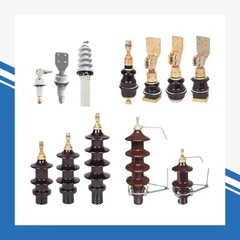
High‑voltage insulation for transformers and capacitors
Prevents short circuits in power transformers
Used in control rods in nuclear power plants for thermal and radiation resistance
Dielectric strength: 50–150 kV/mm
Melting point above 1200°C with minimal thermal expansion
Heating Elements
Household appliances: toasters, hair dryers, heaters (150–480°C)
Industrial heaters: up to 700°C+
Uniform, efficient surface heating
Longer service life than traditional wire elements
Safe operation without open flames
High‑Temperature Industries
Aerospace: thermal protection for aircraft and spacecraft
Industrial furnaces: stable insulation above 500°C
Nuclear power: resistance to radiation and high temperatures
Power transformers: short‑circuit protection under thermal stress
Key Properties
| Property | Value |
|---|---|
| Maximum Temperature | Up to 1000°C |
| Service Life | 5–15 years |
| Cost‑Effectiveness | High |
| Moisture Absorption | Negligible |
| Thermal Expansion | Very low |
Frequently Asked Questions
What happens if mica exceeds its temperature limit?
Mica may crack, flake, lose insulation performance, or disintegrate. Always verify temperature ratings before use.
Can mica insulation be easily cut or shaped?
Yes, with scissors or a utility knife. Wear gloves as mica is brittle and can break.
Is mica safe for home use?
Yes. It is widely used in toasters and hair dryers. It does not burn or release toxic fumes under normal operating temperatures.
How does mica compare to asbestos?
Mica is much safer. It does not pose the same respiratory health risks as asbestos.
Does mica absorb water?
No. Mica is highly moisture‑resistant and maintains insulation performance in humid environments.