






Selecting the right enameled wire for transformer winding is one of the most critical material decisions in transformer design and manufacturing. The wrong choice can lead to excessive temperature rise, higher energy losses, premature insulation failure, and ultimately reduced transformer lifespan.

1. Start with Your Transformer Type
The first and most important question is:
What type of transformer are you building?
Different transformer types impose different requirements on enameled wire:
Oil-immersed transformers
Key priorities:
Thermal stability in oil
Mechanical strength under winding tension
Stable insulation performance over long-term operation
Recommended wire types:
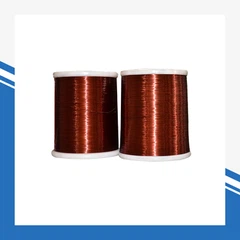
Enameled copper wire (preferred for high-performance units)
Paper-covered enameled wire for larger power ratings
Transposed wire based on enameled strands for reduced AC losses
Why this matters:
In oil-immersed transformers, local overheating can degrade oil quality and shorten transformer life. Using high-quality enameled wire with consistent enamel thickness reduces hot spots and improves long-term reliability.
Dry-type transformers
Key priorities:
Higher temperature resistance
Better mechanical robustness
Stronger enamel adhesion
Recommended wire types:
Class F (155°C) or Class H (180°C) enameled copper wire
Rectangular enameled wire for compact winding design
Typical industry target:
Many modern dry-type transformers are designed for temperature rise limits between 80–120°C, which requires carefully selected enamel systems.
Choose the Right Temperature Class (Critical Decision)
One of the most common mistakes buyers make is selecting wire based only on price instead of temperature class.
Here is a practical comparison:
| Temperature Class | Max Working Temp | Typical Use |
|---|---|---|
| Class B | 130°C | Standard distribution transformers |
| Class F | 155°C | High-efficiency dry-type transformers |
| Class H | 180°C | Heavy-duty transformers, motors, reactors |
From our production experience at Hangzhou Weshare Import & Export Co., Ltd., we recommend:
If energy efficiency is a priority → Class F or H
If cost control is the priority → Class B
If compact design is required → Class F/H rectangular wire
3. Copper vs Aluminum: Which Should You Use?
We manufacture both enameled copper wire and enameled aluminum wire, and each has its place.
Enameled Copper Wire
Advantages:
Higher conductivity (typically 97–101% IACS)
Lower temperature rise
Smaller winding size for the same power rating
Longer service life
Best for:
Power transformers
High-efficiency transformers
Export projects requiring strict standards
Round Wire vs Rectangular (Flat) Wire
Another crucial decision is wire shape.
Round Enameled Wire
Best for:
Small transformers
Standard winding machines
Simple coil structures

Enameled Aluminum Wire
Advantages:
Lighter weight
Lower material cost
Good for cost-sensitive projects
Limitations:
Larger cross-section required for the same current
Slightly higher temperature rise
Best for:
Medium and low-cost distribution transformers
Projects where weight reduction is important
Rectangular (Flat) Enameled Wire
Best for:
High-power transformers
Compact designs
High efficiency applications
Why many manufacturers prefer flat wire:
Better slot fill factor
Lower AC losses
Better heat dissipation
At Hangzhou Weshare, we are especially strong in large-diameter enameled wire and rectangular enameled wire, which many suppliers struggle to produce consistently.
We can manufacture:
Large conductor sizes
Custom width-to-thickness ratios
High-precision tolerances
This is one of the reasons many overseas transformer factories choose us as a long-term partner.
ay Attention to Enamel Quality (Most Buyers Overlook This)
Not all enamel coatings are equal.
Key performance indicators you should request from your supplier:
-Breakdown voltage
-Elongation performance
-Scratch resistance
-Thermal shock resistance
-Adhesion strength
-A high-quality enamel system should:
-Withstand winding tension
-Resist cracking during bending
-Maintain insulation integrity at elevated temperatures
Our enameled wires are tested according to:
IEC 60317 series standards
Relevant national and customer-specific specifications
We also provide test reports upon request, including:
Dielectric strength
Mechanical properties
Thermal endurance
Conductor Purity Matters More Than You Think
We primarily use:
ETP copper (≥ 99.90%)
Oxygen-free copper (OFC) (≥ 99.99%)
Why OFC is becoming more popular:
Better conductivity
Lower internal resistance
Reduced heat generation
More stable long-term performance
For premium transformers, many buyers now specify OFC enameled copper wire as a standard requirement.