

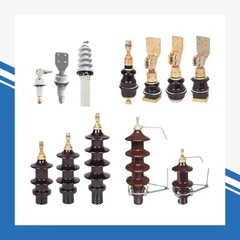
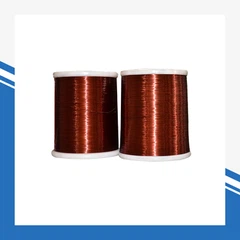

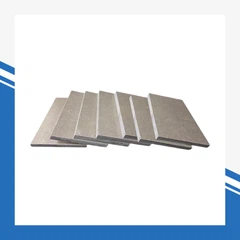
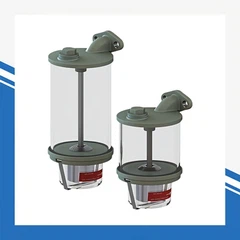




Transformer Motor Insulation Material

Why the solid insulation - not the oil - sets the limit
An oil-immersed transformer's insulation is not one material. It is a composite system: a liquid dielectric (transformer oil) plus a solid dielectric (pressboard, laminated board and high-strength composite laminate). The oil fills space and moves heat efficiently, but it cannot carry the full dielectric stress on its own where clearances are tight. The solid laminate does that job - it defines the withstand voltage between windings, between winding and yoke, and along creepage paths.
That is why a high-strength composite insulation laminate is never specified by a single number. It is specified by a set of performance characteristics, and each one maps directly to a dominant failure mode of oil-immersed insulation:
| Failure mode | Root cause | Governing characteristic |
|---|---|---|
| Partial discharge (PD) | Trapped air voids | Full, fast oil impregnation |
| Oil degradation / gassing | Material impurity | Low dissipation-factor increment |
| Delamination / mechanical fatigue | Shear load + thermal cycling | Interlaminar shear strength |
| Dielectric breakdown | Insufficient electric strength | Perpendicular and in-plane electric strength |
A fifth characteristic - stable oil absorption - sits underneath all four. It is what keeps the oil-and-board system balanced over the service life of the unit.
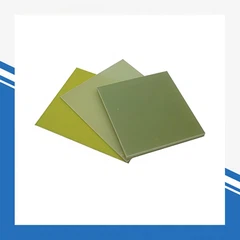
The laminate described here was introduced with German manufacturing technology and then developed and improved in-house, resulting in three product series (C, T and P) for different transformer insulation duties. Its electrical and mechanical properties are specified well above the corresponding IEC baselines.
Below are the five characteristics worth asking a supplier to prove with test data, not adjectives.
The plate is vacuumed for 12 hours, using vacuum oil injection process, after 24 hours of hot oil circulation, the oil will be uniformly absorbed to reach saturation state, without closed air chamber.
01
The dielectric loss increment is less than 0.0002, the material is pure, the pollution to the transformer oil is minimal, and no gas is generated.
02
The interlayer shear strength is 2 times higher than the IEC standard, without surface and interlayer cracking.
03
A vertical electrical strength of 20% above IEC standards and a parallel breakdown voltage of 40% above IEC standards can ensure safe transformer operation.
04
The high oil absorption rate ensures the operational stability of insulation components.
05

Product Display


Technical support

material -- from Germany beech wood

Advanced cooking degreasing technology


Product testing
Electrical property testing
HT-100 Dielectric Breakdown Voltage Tester - Measures the short-time electric strength of solid insulation, both perpendicular (through-thickness) and parallel (in-plane), in accordance with IEC 60243-1. It verifies the laminate's electric-strength margin above the IEC baseline.
QS-40A Power-Frequency Schering Bridge - Measures the dissipation factor (tan δ) of insulating oil and oil-impregnated materials. It verifies the dissipation-factor increment of the oil and confirms oil quality under IEC 60296.
PC-68 Digital High-Resistance Meter - Measures the volume and surface resistivity of solid insulating materials in accordance with IEC 60093.
Mechanical property testing
QJ2120 Electronic Universal Testing Machine (UTM) - Performs tensile, flexural, compression and interlaminar shear tests using the methods of the IEC 60893-2 series. It verifies the interlaminar shear strength of the laminate.
Thermal & sample conditioning
DZ2BC Vacuum Drying Oven - Removes moisture under vacuum and supports oil-impregnation and water-content testing (IEC 60814).
FX101-2 Forced-Air Electric Drying Oven - Conditions samples and supports thermal-aging tests (IEC 60216).
98-1-B Electronically Controlled Heating Mantle - Heats the insulating oil for the hot-oil circulation (impregnation) test.
Physical & chemical testing
FA2004A Electronic Analytical Balance - Measures mass to high resolution and supports oil-absorption (weight-gain) testing.
QND Viscometer - Measures insulating-oil viscosity (IEC 60296).
LP-5810 Thickness Gauge (lever-lift type) - Verifies thickness and dimensional tolerance.

Technica data sheet of laminated wood
Laminated densified wood is produced by pressing beech veneer under heat and pressure into a dense, void-free sheet. Because it combines high mechanical strength with good dielectric behaviour, it is widely used in oil-immersed transformers for spacers, blocks, rings, lead supports and clamping components. The tables below list our C series and T series against the requirements of IEC 61061.
C series (C2R / C4R)
| No. | Property | Unit | IEC 61061 C2R |
Typical C2R |
IEC 61061 C4R |
Typical C4R |
|---|---|---|---|---|---|---|
| 1 | Apparent density | g/cm³ | 0.9–1.1 | 0.9–1.1 | 1.2–1.3 | 1.2–1.3 |
| 2 | Moisture content | % | ≤6 | 5 | ≤6 | 5 |
| 3 | Oil absorption | % | ≥15 | 17 | ≥5 | 6 |
| 4 | Flexural strength, perpendicular to laminations - direction A | MPa | ≥55 | 80 | ≥80 | 120 |
| 5 | Flexural strength, perpendicular to laminations - direction B | MPa | [confirm] | [confirm] | [confirm] | [confirm] |
| 6 | Apparent flexural modulus of elasticity, perpendicular to laminations - direction A | GPa | ≥6 | 8 | ≥9 | 11 |
| 7 | Apparent flexural modulus of elasticity, perpendicular to laminations - direction B | GPa | [confirm] | [confirm] | [confirm] | [confirm] |
| 8 | Compressibility at 20 MPa - C | % | ≤4 | 3 | ≤2.5 | 2 |
| 9 | Compressibility at 20 MPa - Cer (recovery) | % | ≥70 | 95 | ≥70 | 95 |
| 10 | Impact strength - direction A | kJ/m² | ≥10 | 16 | ≥15 | 18 |
| 11 | Impact strength - direction B | kJ/m² | [confirm] | [confirm] | [confirm] | [confirm] |
| 12 | Interlaminar shear strength | MPa | ≥7 | 10 | ≥9 | 18 |
| 13 | Electric strength, perpendicular to laminations (in oil, 90 ± 2 °C) | kV/mm | ≥10 | 12 | ≥12 | 14 |
| 14 | Breakdown voltage, parallel to laminations (in oil, 90 ± 2 °C) | kV | ≥50 | 70 | ≥50 | 70 |
| 15 | Contamination of the liquid dielectric (Δtan δ) | – | ≤0.1 | 1.0×10⁻³ | ≤0.1 | 1.0×10⁻³ |
| 16 | Shrinkage after drying - direction A | % | ≤3 | 2.5 | ≤3 | 2.5 |
| 17 | Shrinkage after drying - direction B | % | ≤3 | 2.5 | ≤3 | 2.5 |
| 18 | Shrinkage after drying - thickness | % | [confirm] | [confirm] | [confirm] | [confirm] |
| 19 | Dissipation factor at 50 Hz (tan δ), 20 °C | % | ≤2 | 1 | ≤2 | 1 |
| 20 | Dissipation factor at 50 Hz (tan δ), 90 °C | % | ≤10 | 5 | ≤10 | 5 |
| 21 | Volume resistivity, 90 °C | MΩ·m | ≥1.0×10⁶ | ≥1.0×10⁸ | ≥1.0×10⁶ | ≥1.0×10⁸ |
Direction A = along the grain; direction B = across the grain. All typical values may be adjusted to meet specific transformer designs.
T series (T2R / T4R)
| No. | Property | Unit | IEC 61061 T2R |
Typical T2R |
IEC 61061 T4R |
Typical T4R |
|---|---|---|---|---|---|---|
| 1 | Apparent density | g/cm³ | 0.9–1.1 | 0.9–1.1 | 1.2–1.3 | 1.2–1.3 |
| 2 | Moisture content | % | ≤6 | 5 | ≤6 | 5 |
| 3 | Oil absorption | % | ≥5 | 6 | ≥5 | 6 |
| 4 | Flexural strength, perpendicular to laminations - Ø > 1000 mm | MPa | ≥140 | 190 | ≥100 | 130 |
| 5 | Flexural strength, perpendicular to laminations - Ø ≤ 1000 mm | MPa | ≥125 | 175 | ≥90 | 110 |
| 6 | Apparent flexural modulus of elasticity, perpendicular to laminations | GPa | ≥13 | 14 | ≥10 | 12 |
| 7 | Compressibility at 20 MPa - C | % | ≤3 | 2.5 | ≤5 | 3.5 |
| 8 | Compressibility at 20 MPa - Cer (recovery) | % | ≥70 | 85 | ≥70 | 85 |
| 9 | Impact strength | kJ/m² | ≥35 | 47 | ≥25 | 35 |
| 10 | Interlaminar shear strength | MPa | ≥9 | 18 | ≥7 | 15 |
| 11 | Electric strength, perpendicular to laminations (in oil, 90 ± 2 °C) | kV/mm | ≥10 | 12 | ≥10 | 12 |
| 12 | Breakdown voltage, parallel to laminations (in oil, 90 ± 2 °C) | kV | ≥50 | 70 | ≥50 | 70 |
| 13 | Contamination of the liquid dielectric (Δtan δ) | – | ≤0.1 | 1.0×10⁻³ | ≤0.1 | 1.0×10⁻³ |
| 14 | Shrinkage after drying - perimeter | % | ≤0.5 | 0.3 | ≤0.5 | 0.3 |
| 15 | Shrinkage after drying - thickness | % | ≤3 | 1 | ≤3 | 1 |
| 16 | Dissipation factor at 50 Hz (tan δ), 20 °C | % | ≤2 | 1 | ≤2 | 1 |
| 17 | Dissipation factor at 50 Hz (tan δ), 90 °C | % | ≤10 | 5 | ≤10 | 5 |
| 18 | Volume resistivity, 90 °C | MΩ·m | ≥1.0×10⁶ | ≥1.0×10⁸ | ≥1.0×10⁶ | ≥1.0×10⁸ |
Ø = component diameter grade (rings and blocks). T-series values are quoted per diameter class.
why choose us
Professional international resources and perfect development path
20000m3
Rich resource reserves
10+PG
Professional technical team
AUTO+AI
Perfect Technical support
ISO9000/MES
ERP/BOOM/BI
Strengthen management system