









Polyesterimide Enamelled Round Copper Wire, Class 180
Most magnet wire datasheets lead with thermal class. Industrial winding failures rarely come from steady-state overheating.
Cores fail because the film was thinned by tension during winding, scuffed by a guide, displaced by short-circuit force, or cracked by a rapid thermal cycle. By the time the winding runs hot enough to matter thermally, the damage has usually already been done - during manufacture, or during the first fault the unit survived.
Class 180 polyesterimide enamelled copper wire - EIW / QZY, GB/T 6109.5, IEC 60317-8, NEMA MW 30-C and MW 72-C, 0.08–3.50 mm - is specified for industrial motors and medium power transformers because the film survives all four of those loads. A class 130/155 polyester film, which is the correct and cheaper choice for steady low-stress duty, starts to give up on them much earlier.
Four ways a winding actually fails
1. Winding tension and mandrel bending
An automatic winder pulls wire at constant tension through a path with corners in it. At every corner the film on the inside of the bend is compressed and the film on the outside is stretched. If adherence is marginal, that stretch becomes a local thinning - and a thinned film where two turns sit at different potentials is a turn-to-turn breakdown waiting for the first surge.
This is why the relevant test is flexibility and adherence after mandrel bending, not tensile strength: the conductor is not what fails. The film leaves the metal.
2. Abrasion at the guides and slot edges
Wire runs across felt, ceramic guides and slot edges at speed. Each contact removes a small amount of film, and it removes it at the point where the electric field is highest - the slot, where turns are packed closest together.
A scuffed film passes a continuity test. It fails at hipot, or it fails in service after moisture and contamination find the thin spot. The scrape test exists because this damage is invisible until it is expensive.
3. Cut-through under short-circuit pressure
A through-fault compresses the winding radially and axially, and adjacent turns press against each other with force proportional to the square of the current. At the same time the winding is hot, so the film is at its softest.
If the film yields, two turns touch. The result is a shorted turn that no routine factory test detects - the unit passes, ships, and fails years later when the shorted turn overheats. Cut-through resistance at temperature is the property that decides this, and it is why class alone is a poor specification: two wires of the same class can differ substantially here.
4. Thermal shock cracking
A power tool stalls, a load steps, a contactor chatters. The winding heats in seconds and cools in minutes, and the film has to follow a conductor that moves more than it does.
A film with poor heat-shock resistance cracks at the bend on the first severe cycle. The crack starts on the outside of the bend, where the strain is highest, and it propagates under the varnish so that nothing is visible from the outside.
Where class 180 is specified
| Application | The risk that forces class 180 |
|---|---|
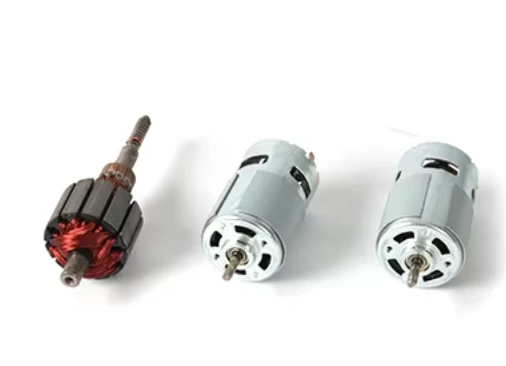
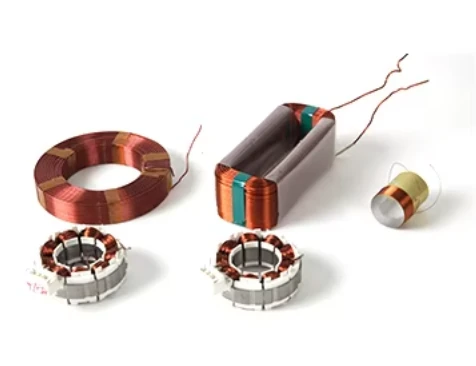
| Class H industrial motors | Continuous high hot spot combined with cyclic mechanical stress |
| Medium and large power transformers | Short-circuit compressive force and heavy winding tension |
| Power tool windings | Rapid thermal cycling from stall and sudden load changes |
| Motor rewind work | The replacement must match the original insulation system or the service life changes |
A note on class F nameplates. Many motors rated class F (155 °C) are wound with class 180 wire. That is not an overload practice - it is design margin, and it is standard industry practice. The 180 rating covers the transient the nameplate does not describe: the short circuit, the stall, the cooling failure, the hot day. If someone proposes downgrading a class F motor to class 155 wire to save cost, the saving is real and the margin is what disappears.
Application
The rewind shop detail
Class 180 polyesterimide strips cleanly and takes solder at normal iron temperatures once stripped, which is what makes it practical on a rewind bench. It is not self-solderable - unlike polyurethane (UEW) wire, the film has to be removed mechanically or chemically before the joint is made.
If the original winding used a polyamide-imide overcoated wire (polyester(imide) Overcoated with Polyamide-Imide Enamelled Copper Wire, Class 200/220), expect the film to resist stripping and plan for mechanical removal. Confirming which construction the motor was originally built with is worth two minutes before a rewind is quoted: the labour difference between the two is significant, and a quote based on the wrong one is a loss on the job.
Specification
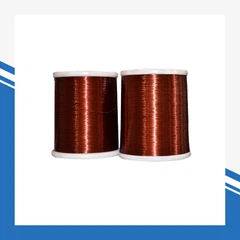
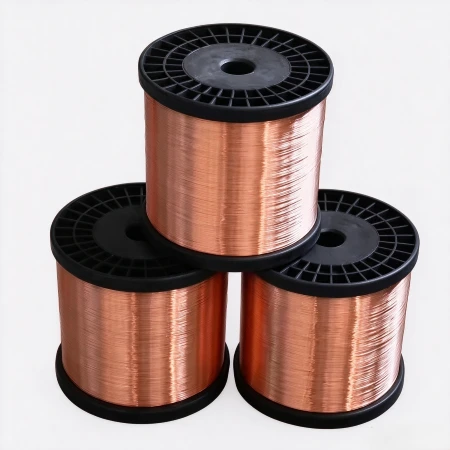
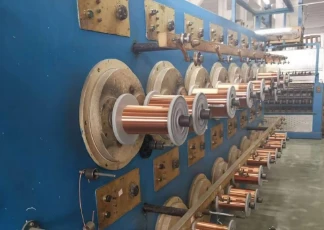
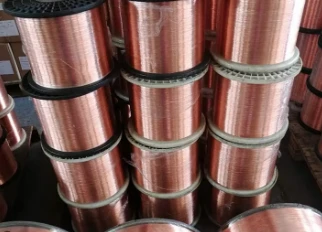
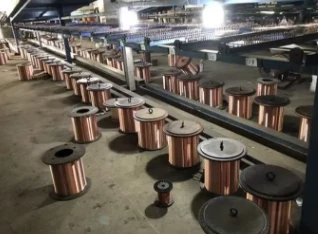
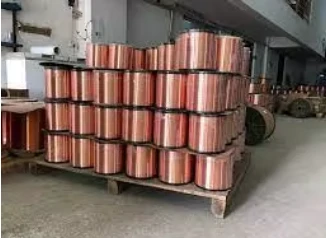
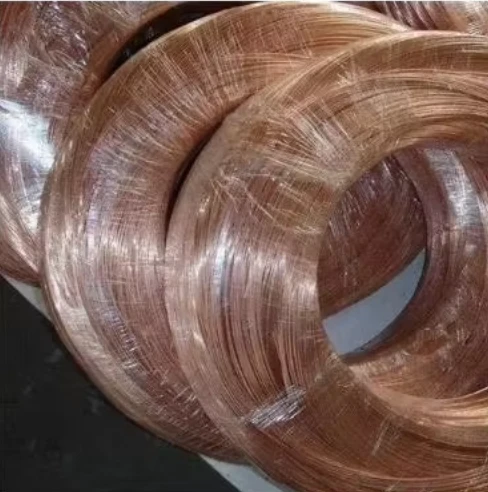
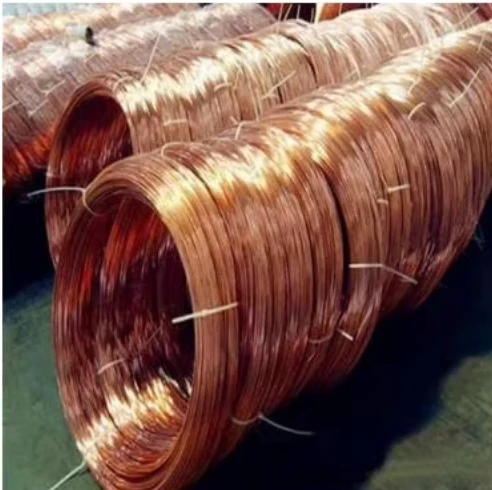
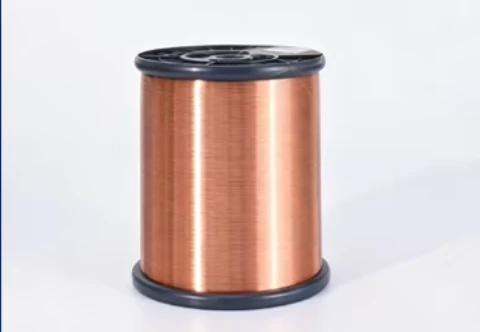
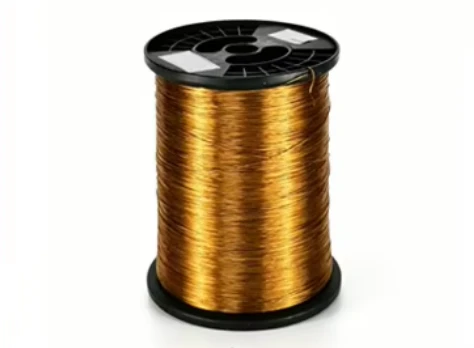
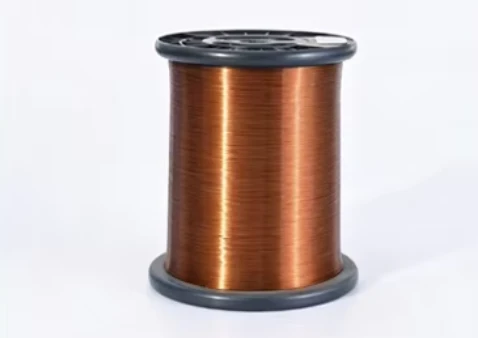
Caption: Class 180 polyesterimide enamelled round copper wire (EIW) - 0.08–3.50 mm.
| Item | Specification |
|---|---|
| Type designation | EIW - QZY |
| Thermal class | 180 (Class H) |
| Standard | GB/T 6109.5-2008, IEC 60317-8, NEMA MW 30-C / MW 72-C, JIS C3202 |
| Conductor | Copper, round, annealed |
| Size range | 0.08–3.50 mm |
| Properties | Thermal stability, insulation and abrasion resistance, solvent resistance |
| Enamel build | Grade 1, 2, 3 |
| Enamelling passes | 10–13 |
| Spools / net mass | PT-4, PT-10, PT-15, PT-25, PT-30, PT-60 - wooden or to request |
| Typical applications | Class H motors, medium and large power transformers, power tool windings |
Test schedule for every batch
Every delivery is accompanied by a batch test report covering:
| Group | Tests performed |
|---|---|
| Conductor | conductor diameter and tolerance, elongation, springback |
| Film | enamel build, continuity of covering, flexibility and adherence, heat shock, cut-through, scrape resistance, adhesion |
| Electrical | breakdown voltage, electrical resistance, tangent delta |
| Chemical | solvent resistance |
The values are diameter-dependent, so they belong on the report for the size you buy rather than in a generic table.
Products display
VIdeo
Product Series
our Cooperating customers

Certification

Hot Tags: polyesterimide enamelled copper wire, China polyesterimide enamelled copper wire suppliers, electronics industry application of transformer winding, flux density of transformer winding, furniture service application of transformer winding, high speed transformer winding, packaging service application of transformer winding, textile service application of transformer winding