









One lot, four standards - and what that means for you
| Reference standard | Market it serves | What it does for the our customer |
|---|---|---|
| GB/T 6109.7 | China | Domestic inspection and acceptance without a translation argument |
| IEC 60317-34 | Global / EU projects | The reference most international project specifications cite |
| JIS C3202 | Japan, Korea, wider Asia | Meets the incoming test schedule Asian appliance platforms actually run |
| NEMA MW 5-C | North America | The designation a US audit or drawing will ask for |
The commercial effect is not "we hold four certificates". It is that a single lot can be inspected once and reported against whichever of the four your customer's quality department uses. No second supplier, no duplicate qualification run, no argument about whether the acceptance table in one standard is stricter than another.
One boundary worth stating plainly: the same measured values are reported against each standard, and they satisfy all four. Where two standards set different limits on the same property, we tell you which standard the lot was accepted against, on the report. Buyers who have been caught by this before will ask, and the answer should be on the page rather than in an email after the complaint.
Where the money is actually saved
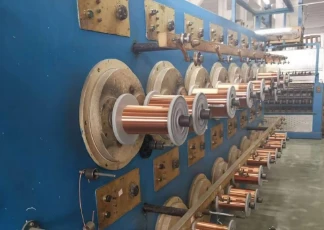
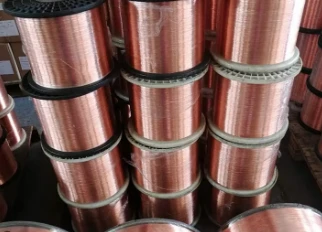
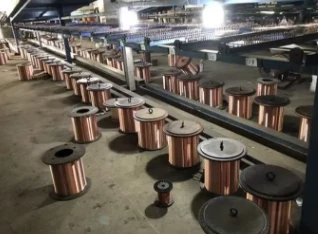
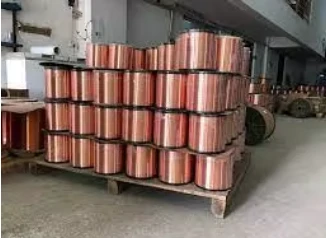
SKU count. Four regional part numbers collapse into one material, held in one place, reorderable in one unit of measure.
Incoming inspection. One sampling plan instead of four. The same report serves the appliance customer, the transformer customer and the audit.
Qualification cost. A new regional customer normally means a new first-article approval. With a wire already qualified across four schedules, that approval starts from an existing report rather than from a fresh trial run.
Stock and shelf life. One material ages on one shelf. Four materials age on four, and at least one of them is always the wrong one.
The size range is a purchasing decision, not a specification
0.08 mm to 3.50 mm is a single production route, and that matters more commercially than it does technically.
At 0.08 mm you are buying process control: drawability, pinhole count, and winding tension on the take-up. The applications are instrument transformers, foil-wound coils and micro motors, where a single pinhole is a reject.
At 3.50 mm you are buying film toughness: bend radius, adhesion, and whether the enamel survives being formed into a heavy low-voltage coil at all.
Between those ends the range runs continuously, so the same purchase order can carry a 0.12 mm instrument winding and a 2.50 mm low-voltage coil without a second supplier or a second approval. For a customer running several product lines, that is the difference between one wire contract and five.
Application
Choosing the class and the build grade
Thermal class 130 or 155. In practice this is usually a safety-file decision, not a thermal one. The insulation class printed on the component's approval file has to match the wire in the winding, and the auditor checks the certificate rather than your hot-spot calculation. Where the design genuinely runs hot, the class is a thermal decision as well - and if the hot spot passes 155 °C, this is the wrong product and P7 is the correct one.
Build grade.
| Grade | Film | Choose it when |
|---|---|---|
| 1 | Thin | The window is the constraint and the winding is machine-laid and gentle |
| 2 | Standard | The default for most motors and transformers |
| 3 | Heavy | Rough handling, high turn-to-turn voltage, or a winding process that scuffs film |
Specification
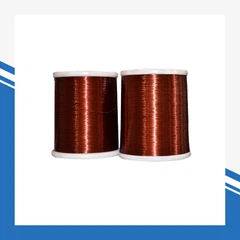
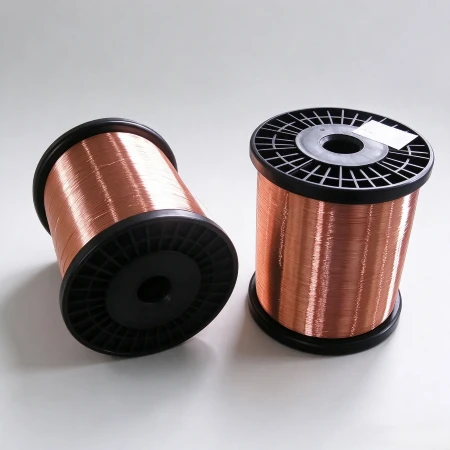
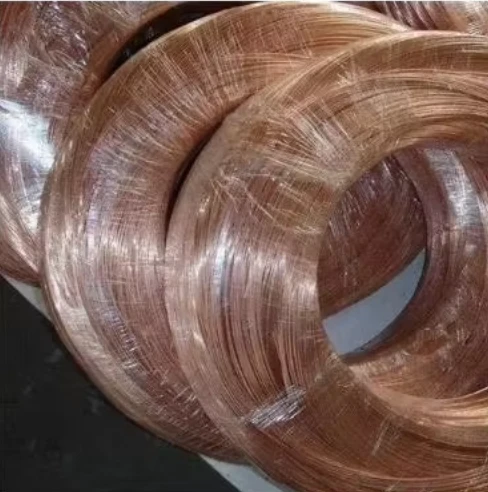
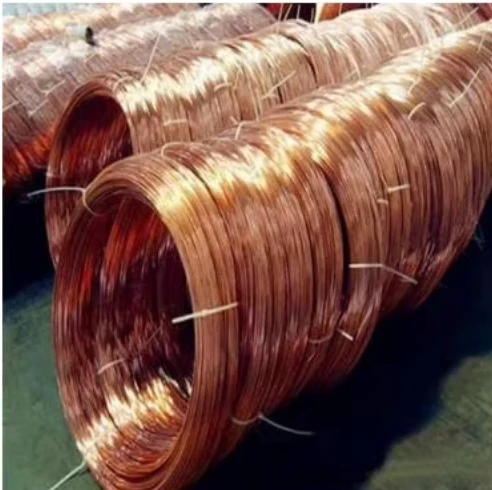
Caption: Class 130/155 polyester enamelled round copper wire (PEW) - 0.08–3.50 mm, four-standard acceptance.
| Item | Specification |
|---|---|
| Type designation | PEW - QZ, QZ(G) |
| Thermal class | 130 (Class B) or 155 (Class F) |
| Standard | GB/T 6109.7, IEC 60317-34, JIS C3202, NEMA MW 5-C |
| Conductor | Copper, round, annealed |
| Size range | 0.08–3.50 mm |
| Properties | Thermal stability, heat resistance, good mechanical properties |
| Enamel build | Grade 1, 2, 3 |
| Enamelling passes | 10–13 |
| Spools / net mass | PT-4, PT-10, PT-15, PT-25, PT-30, PT-60 - wooden or to request |
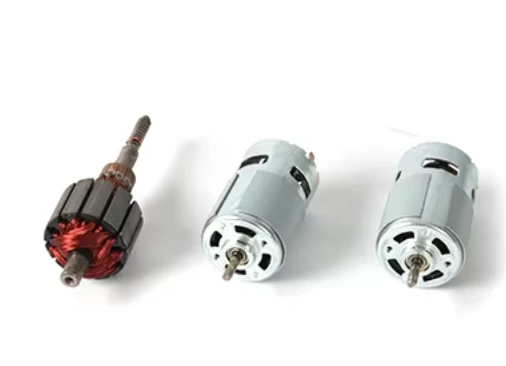
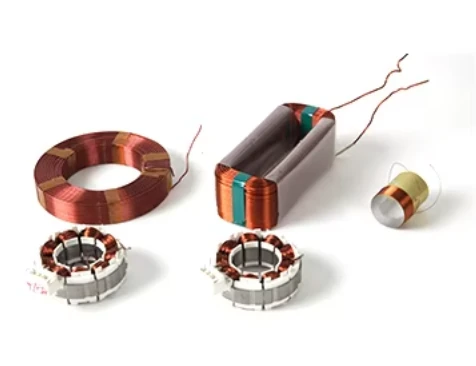
| Typical applications | Class B motors, general industrial motors, household appliance motors, general-purpose transformers |
Test schedule for every batch
Every delivery is accompanied by a batch test report, issued against the standard your inspection department works to:
| Group | Tests performed |
|---|---|
| Conductor | conductor diameter and tolerance, elongation, springback |
| Film | enamel build, continuity of covering, flexibility and adherence, heat shock, cut-through, scrape resistance, adhesion |
| Electrical | breakdown voltage, electrical resistance, tangent delta |
| Chemical | solvent resistance; refrigerant resistance where the application requires it |
The values are diameter-dependent, so they belong on the report for the size you buy rather than in a generic table. Ask for a sample report at your diameters before the first order.
Products display
VIdeo
Product Series
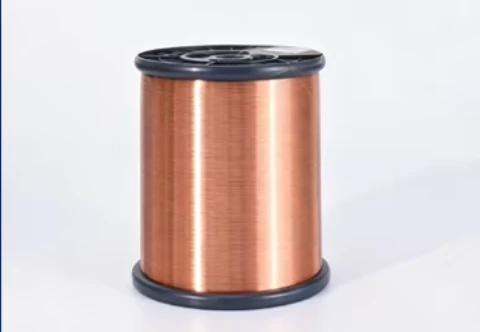
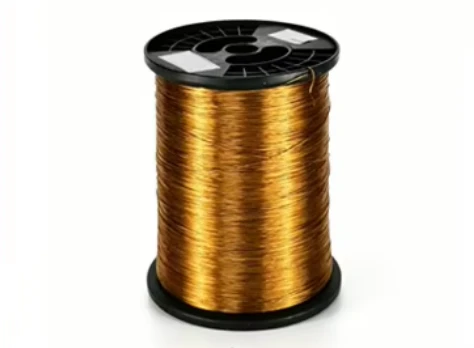
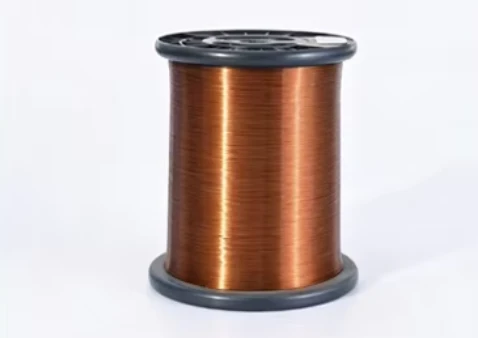
What to send with your enquiry
| # | What we need | Why |
|---|---|---|
| 1 | Wire diameter and enamel grade | Fixes the product and the dimensional limits |
| 2 | Thermal class, 130 or 155 | Sets the enamel system and the certificate |
| 3 | Which standard the inspection report must cite | GB/T, IEC, JIS, NEMA - or more than one |
| 4 | Application and annual consumption | Sizing, spool choice, price break |
| 5 | Spool type and net mass per package | Affects packing, freight and line set-up |
Frequently asked
Can one lot be reported against more than one standard?
Yes. The test series is run once and the results are reported against the standard your inspection cites, provided the values satisfy each of them. If two standards set different limits on a property, the report states which standard the lot was accepted to.
Do you supply both classes from the same size range?
Yes - 0.08 mm to 3.50 mm in both class 130 and class 155. The class is a field on the order, not a separate product line.
Can I get the same wire on different spools for different lines?
Yes. PT-4 to PT-60 covers the range; fine wire is normally supplied on smaller packages so a fast winding head is not accelerating a heavy spool. Plastic spools and moisture-barrier export packing are available.
our Cooperating customers

Certification

Hot Tags: polyester enamelled round copper wire, China polyester enamelled round copper wire suppliers, frequency of transformer winding, semi automated transformer winding, textile service application of transformer winding, winding consistency of transformer, winding inductance of transformer, winding tightness of transformer