









Description
12 kV Rear T-Body Surge Arrester
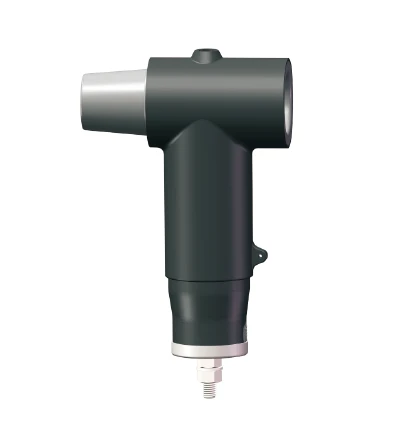
The 12 kV rear T-Body surge arrester protects 12 kV class components - transformers, switchgear, cable and cable accessories - from high-voltage surges caused by lightning or switching. It is a fully shielded, dead-front arrester that plugs into the rear leg of an EN12-630 separable tee connector, adding surge protection at the same plug-in point where the cable is terminated. Its gapless metal-oxide varistor (MOV) core, molded inside peroxide-cured EPDM insulation, gives a compact, touch-safe protective device with no minimum phase-clearance requirement.
Because the arrester shares the tee connector's platform, it is installed and replaced as a plug-in module - no separate mounting bracket, no exposed live parts, and no extra ground grid work beyond the connector's own grounding system.
How a Deadfront T-Body Arrester Works
A surge arrester is a voltage-controlled switch. Under normal system voltage it behaves as an insulator; when a surge (lightning or switching) raises the voltage above its protective level it conducts the surge current to earth, then immediately returns to its insulating state. This arrester uses a two-terminal metal-oxide resistor element with a markedly nonlinear volt-ampere characteristic - the basis of gapless MOV protection.
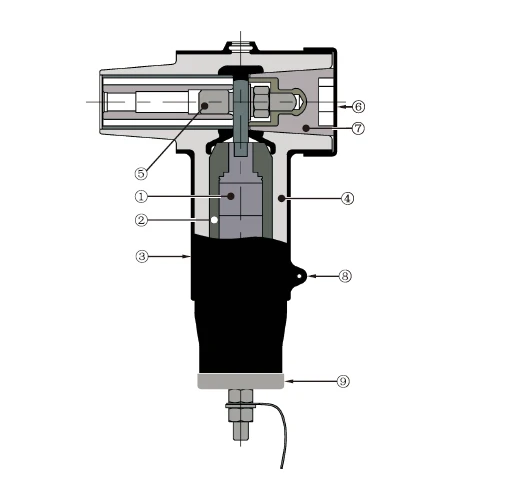
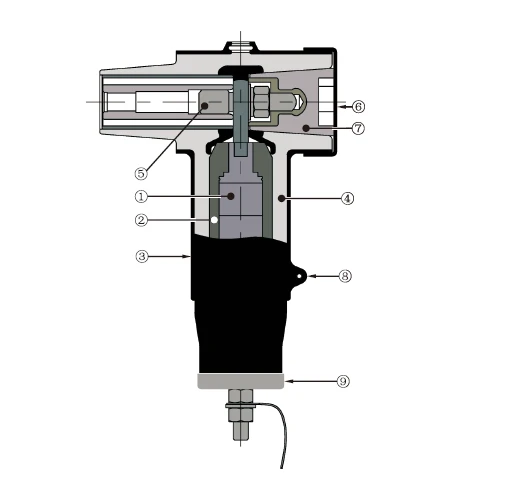
Its construction mirrors the separable connector platform:
Metal oxide resistor elements - a two-terminal resistive element, composed of an electronic semiconductor with suitable contacts, that has a markedly nonlinear volt-ampere characteristic.
Semiconducting insert - precision-molded, peroxide-cured semiconducting insert provides corona-free electrostatic shielding of the compression connector.
Semiconducting shield - precision-molded, peroxide-cured semiconducting shield provides ground-shield continuity.
Insulation layer - high-quality peroxide-cured EPDM insulation, mixed and formulated in-house for complete control of rubber characteristics.
Stud - zinc-plated, threaded steel stud.
Conductive rubber cap - completes the grounding system.
Insulating plug - molded epoxy insulating plug provides excellent electrical, thermal and mechanical reliability.
Drain wire tab - provides a convenient point to connect the drain wire and so ensure grounding of the connector shield.
Steel cap - the portion of the arrester in which each end of the unit is terminated with an electrode exposed to the external environment.
Key Features
Provides fully shielded deadfront arrester protection.
Metal (zinc) Oxide Varistor (MOV), gapless design - no series spark gaps to wear or drift.
EPDM insulation molded around the MOV module - sealed, void-free dielectric around the varistor stack.
No minimum phase-clearance requirements - the fully screened body lets arresters sit close together in compact apparatus.
100% electrically tested at factory - every unit is tested before it leaves the line.
Plug-in compatibility with the EN12-630 separable tee connector - surge protection at the cable termination point.
parameters
| Parameter | Value |
|---|---|
| Class | 12 kV |
| Type | Rear T-body, deadfront, separable plug-in |
| Technology | Gapless metal oxide varistor (MOV) |
| Insulation material | Peroxide-cured EPDM (in-house formulated) |
| Semiconducting components | Peroxide-cured molded semiconducting insert + shield |
| AC withstand, 5 min (60 Hz, crest) | 39 kV |
| Partial-discharge minimum extinction voltage | 15 kV |
| Grounding | Conductive rubber cap + drain wire tab |
| Companion connector | EN12-630 separable tee connector |
| Compliance / test basis | IEC 60502-4 |
Protective Characteristics
Select the arrester code by system voltage; the MCOV (Maximum Continuous Operating Voltage) must be at least the system's maximum continuous phase-to-ground voltage.
| Arrester code | Duty voltage rating (kV) | MCOV (kV) | Residual voltage - lightning, station (kV) | Residual voltage - lightning, circuits (kV) |
|---|---|---|---|---|
| A | 5 | 4 | 13.5 | 15 |
| B | 10 | 8 | 27 | 30 |
| C | 12 | 9.6 | 32.4 | 35.8 |
| D | 15 | 12 | 40.5 | 45.6 |
| E | 17 | 13.6 | 45 | 50 |
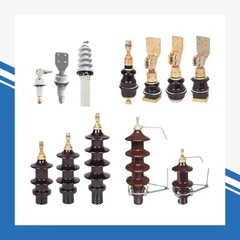
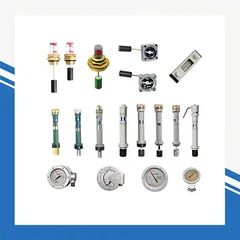
Product display


Note: We can provide all of the following accessories.
Kit Contents
The Rear T-Body Surge Arrester kit is supplied in a heavy-duty polyethylene bag. Each kit contains:
Rear T-Body surge arrester
Stud (double-ended threaded stud)
Connecting rod (copper connecting rod)
Silicone lubricant
Installation instruction sheet
Clean paper / cleaning wipe
Applications
This is a distribution-class protective device for dead-front MV apparatus. Its plug-in, deadfront format makes it the natural surge-protection choice wherever an EN12-630 separable tee connector is used. Typical applications:
1. Distribution transformers
Lightning and switching surges travelling down an MV cable are the leading cause of distribution transformer failure. Fitting a rear T-body arrester at the transformer's dead-front bushing clamps the surge at the cable termination, protecting the transformer windings and the cable end together. Ideal for pole-mounted and pad-mounted distribution transformers on exposed or rural feeders.
2. Switchgear and ring main units (RMUs)
MV switchgear and RMUs are commonly fed from overhead lines or long cable runs that collect surges. A deadfront T-body arrester installed at the panel or RMU connector shields the switchgear insulation, current transformers and busbar from steep-fronted surges - and because it is gapless and fully screened, it fits the compact clearances inside modern SF6 and vacuum panels.
3. Overhead-line to underground-cable transitions (riser poles)
Where an overhead feeder drops into an underground cable, the transition point sees some of the highest surge exposure on the network. A rear T-body arrester at this junction intercepts the incoming lightning surge before it enters the cable, protecting the cable, its terminations and everything downstream. This is one of the most common specifying points for deadfront arresters.
4. Cable terminations and separable connectors
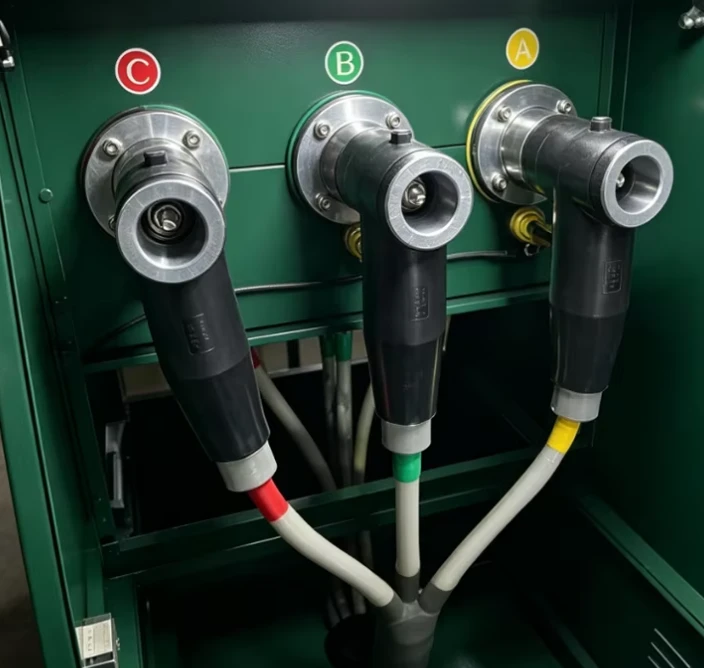
The arrester shares the EN12-630 platform with the separable tee connector, so it protects the connector, the compression lug and the cable insulation right at the termination - the point where surge reflections and stress concentrations are highest. It is the recommended companion accessory for any EN12-630 terminated cable that is exposed to overhead or mixed overhead/underground networks.
5. Compact and pad-mounted substations
In compact secondary substations and pad-mounted switchgear, phase clearance is tight. Because the arrester needs no minimum phase clearance and mounts directly on the connector, it can be used where conventional gapped arresters would not fit, keeping the enclosure footprint small.
6. Industrial, commercial and infrastructure facilities
Factories, mines, oil & gas sites, data centres and large commercial campuses that operate their own 12 kV distribution benefit from arrester protection at the incoming transformer and main switchgear. The deadfront format suits indoor plant rooms and outdoor yards alike, and the plug-in design keeps maintenance simple.
7. Renewable-energy collector networks
Wind and solar farms collect many MV feeders into a common network, and long collector cables are efficient surge collectors. Rear T-body arresters at the transformer and switchgear interfaces help protect inverters' MV sides, turbine transformers and collector switchgear from induced surges.
8. Coastal and high-lightning-density regions
In coastal, tropical and high-keraunic (high lightning-density) regions - where soil resistivity, salt spray and frequent storms accelerate insulation ageing - arrester protection is specified as standard practice. The sealed EPDM body resists moisture ingress, making it suitable for humid, saline and monsoon environments.
9. Network upgrades and retrofit
Because the arrester plugs into the rear leg of an existing EN12-630 connector, it can be added during a network upgrade or as a retrofit to unprotected dead-front points without re-terminating the cable - a fast, low-disruption way to raise the surge withstand of an existing 12 kV network.

Why Specify This Arrester
Deadfront, fully shielded protection - touch-safe, no exposed live parts, suitable for compact enclosures.
Gapless MOV technology - consistent protective level, no spark-gap wear.
Molded EPDM body around the MOV module - sealed dielectric, moisture-resistant.
No minimum phase clearance - install arresters close together in tight apparatus.
100% factory electrical tested - every unit verified before shipment.
Plug-in companion to the EN12-630 connector - one platform for termination and protection.
Complete kit - arrester, stud, connecting rod, silicone lubricant, instruction sheet.
FAQ
Q. What is a T-body surge arrester? A T-body surge arrester is a deadfront, separable surge protector that plugs into the rear leg of a T-body (tee) separable connector. It diverts lightning and switching surges to earth, protecting the cable, connector and the apparatus it connects to.
Q. What is the difference between a T-body connector and a T-body surge arrester? A T-body connector makes the electrical tee junction and terminates the cable; a T-body arrester protects that junction from surges. They share the same separable platform - the arrester plugs into the rear leg of the connector.
Q. What technology does it use? A gapless metal-oxide varistor (MOV) element with a nonlinear volt-ampere characteristic, molded inside peroxide-cured EPDM insulation.
Q. What is MCOV? MCOV is the Maximum Continuous Operating Voltage - the highest RMS voltage the arrester can withstand continuously without degrading. It must be at least the system's maximum continuous phase-to-ground voltage.
Q. Which arrester do I choose for a 12 kV system? Code C - a duty voltage rating of 12 kV and an MCOV of 9.6 kV.
Q. Does it need a separate mounting bracket or clearance? No. It mounts directly on the tee connector and requires no minimum phase clearance.
Q. Is it suitable for outdoor and coastal use? Yes. The sealed EPDM body resists moisture ingress, making it suitable for outdoor, humid and saline environments.
Q. Is it compatible with third-party connectors? It is designed for the EN12-630 separable tee connector platform. Confirm your connector interface before ordering.
Hot Tags: 12kv rear t-body surge arrester, China 12kv rear t-body surge arrester suppliers, power transformer accessories, transformer accessories, transformer hubs, transformer industrial automation accessories, transformer remote areas, transformer representatives