






What is insulating paper?
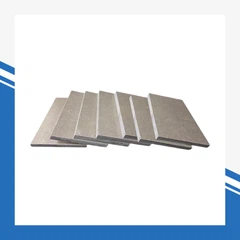
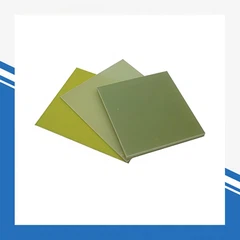
Insulating paper is a general term for electrical insulating paper. It is used as insulating material for various electrical equipment such as cables and coils. In addition to having good insulation performance and mechanical strength, each has its own characteristics.
What is the use of insulating paper?
DMD insulating paper can prevent the contact and friction between the enameled wire and the stator during the motor production process, which will damage the enameled wire! It is one of our commonly used insulating materials. Weshare Insulating Materials mainly produces insulating paper, including DMD insulating paper, NMN insulating paper, NHN insulating paper, green shell paper, pet film, motor film, etc. It also acts as an agent for NOMEX DuPont insulating paper in the United States.

Types of insulating paper materials
1. Motor insulating paper
Motor insulating paper is a paper material specially used for manufacturing motors, which has properties such as heat resistance, fire resistance, acid and alkali resistance, corrosion resistance, and UV resistance. It can also be used in the manufacture of high-voltage equipment, with high moisture resistance, oil resistance, and thermal stability.
2. Polyester insulating paper
Polyester insulating paper is similar to motor insulating paper, but it can withstand higher temperatures and has better moisture resistance. It is mainly used to manufacture high-voltage electrical devices and has excellent fire resistance, wear resistance, and corrosion resistance.
3. Polyurethane insulating paper
Polyurethane insulating paper is a widely used insulating paper. It contains reinforcing agents, fire retardants, and fillers, etc. It has excellent fire resistance and high temperature characteristics and can withstand high-voltage environments.
4. High-voltage insulating paper
High-voltage insulating paper is a high-voltage insulating paper that has high withstand voltage and breakdown strength and can withstand higher voltages. It has good shock resistance, moisture resistance, temperature resistance, impact resistance, and good stability.
5. Aviation insulating paper
Aviation insulating paper is a special grade of paper material, mainly used in aviation and aerospace fields. It has excellent corrosion resistance, fire resistance, UV resistance, oxidation resistance and impact resistance, and can withstand high temperature, high pressure and low temperature environments.

Six types of motor insulation papers commonly used in motors and their allowable temperatures
The motor insulation papers commonly used in motors are divided into six grades: A, E, B, F, H and C according to their heat resistance.
1. Class A insulation
Class A insulation includes organic fiber materials such as cotton yarn, silk, paper, etc. that have been impregnated, and magnetic paint on ordinary enameled wires. Currently, it is only used in transformers. The maximum allowable operating temperature of Class A insulation is 105℃.
2. Class E insulation
Class E insulation includes films made of polyester resin, epoxy resin, triacetate fiber, etc., and magnetic paint on high-strength enameled wires of polyvinyl acetal. It is used in medium and small AC and DC motors. The maximum allowable operating temperature of Class E insulation is 120℃.
3. Class B insulation
Class B insulation includes materials and compositions made of inorganic materials such as mica, asbestos, and glass fibers with organic paint or resin (heat-resistant treatment) as adhesives, and magnetic paint on high-strength polyester enameled wires. It is generally used in large and medium-sized synchronous machines and medium and small AC and DC motors. The maximum allowable operating temperature of Class B composite insulation paper is 130°C.
4. Class F insulation
Class F insulation includes synthetic resin paint modified with silicone organic compounds for inorganic materials such as mica, asbestos, and glass fibers, or materials or their combinations made of alkyd and epoxy resins as adhesives with heat resistance that meets the requirements of this grade. The maximum allowable operating temperature of Class F composite insulation paper is 155°C.
5. Class H insulation
Class H insulation includes silicone organic materials and materials made of silicone organic paint for inorganic materials such as mica, asbestos, and glass fibers. It is mainly used in situations where it is required to minimize size and reduce weight, such as aviation motors, crane motors, traction motors, etc. The maximum allowable operating temperature of Class H high temperature resistant insulation paper is 180°C.
6. Class C insulation
Class C insulation includes mica, quartz, glass fibers, etc. without binders, asbestos, glass fiber fabrics or other products treated with organic resins and polyimide impregnation varnishes with particularly good thermal stability, as well as magnetic paints for polyimide-based enameled wires, polyimide films, etc. Class C insulation is an insulation material with higher requirements and is currently being promoted. Its maximum allowable operating temperature is above 180°C.