


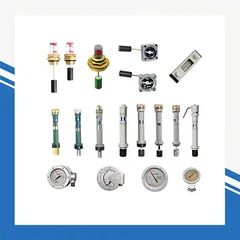




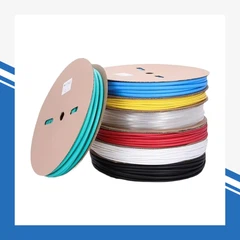

As a manufacturer of high-quality transformer accessories, we often receive questions from our global clients such as: "Why do so many transformers use oil? What role does it play?" In this blog, we will provide a practical and in-depth explanation of oil-immersed transformers, their internal structure, the function of each component, and how our parts contribute to safe, efficient, and long-lasting operation.
This guide is especially for B2B buyers, engineers, and power equipment specialists who need reliable insights before purchasing or upgrading transformer systems.

Internal Structure of Oil-Immersed Transformers
To understand how oil-immersed transformers work, we need to examine their internal structure. Below are the main components, along with a description of their roles.
a. Core
Function: Conducts magnetic flux between primary and secondary windings.
Material: Usually made from cold-rolled silicon steel sheets to reduce eddy currents and minimize losses.
b. Windings (Coils)
Function: Converts voltage levels by electromagnetic induction.
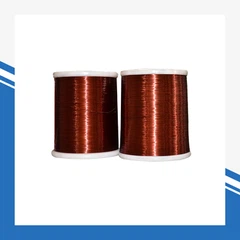
Material: Typically copper or aluminum. Copper offers higher conductivity, but aluminum is more lightweight and cost-effective.
Types: High-voltage winding and low-voltage winding, wound concentrically.
c. Insulating Oil
Function: Cools and insulates the core and windings.
Types: Mineral oil, synthetic ester, or silicone-based fluids, depending on fire risk and environmental needs.
d. Tank
Function: Houses the core, windings, and oil.
Design: Typically steel, sealed to prevent oxidation and moisture.
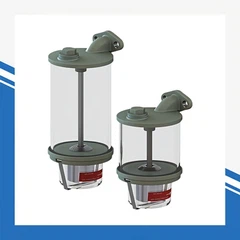
e. Conservator Tank (in sealed transformers)
Function: Accommodates oil expansion during heating.
Includes: Breather to prevent moisture entry, often filled with silica gel.
f. Radiators
Function: Dissipates heat absorbed by oil.
Designs: Finned panels or tube-type radiators.
g. Tap Changer
Function: Adjusts the voltage ratio to compensate for load variations.
Types: On-load tap changer (OLTC) and off-circuit tap changer (OCTC).
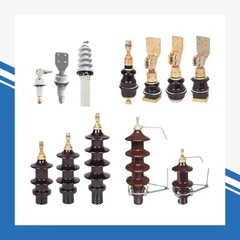
h. Bushings
Function: Provide insulated passage for electrical connections through the tank wall.
Material: Porcelain or epoxy resin.
i. Pressure Relief Device
Function: Releases excess pressure to prevent tank rupture.
j. Buchholz Relay
Function: Detects gas accumulation, an early warning of internal fault
Applications & Market Demand

Oil-immersed transformers are widely used in the following industries:
Power Generation & Transmission
Heavy Industry (Steel, Cement, Mining)
Renewable Energy (Wind, Solar Farms)
Infrastructure (Railway Electrification, Airports)
Data Centers and Smart Grids
As global demand for stable energy distribution increases, the reliability of transformers and their internal components becomes even more critical.
About Weshare
a. High-Conductivity Copper/Aluminum Windings
We supply precision-wound coils using high-purity copper (99.99%) or electrical-grade aluminum.
Insulated with heat-resistant enamel or layered with paper or film, depending on customer needs.
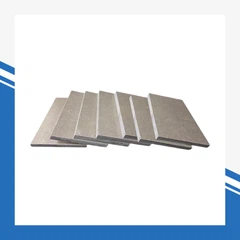
b. Insulation Materials
We offer a variety of insulation solutions, including:
Pressboard & Presspaper: High mechanical strength and oil absorbency.
Epoxy-Glass Laminates (e.g., FR4): High heat resistance and electrical insulation.
Nomex & Aramid Paper: For high-temperature Class H insulation.
c. Transformer Oil Tanks & Radiators
Customizable in design, we fabricate sealed tanks and welded radiators with anti-corrosive coatings.
Leak-free welding and precise dimensional control ensure durability and performance.
d. Tap Changers & Bushings
Our tap changers are robust, with smooth switching and long mechanical life.
Bushings are manufactured with reinforced porcelain and high-quality gasket seals to prevent oil leakage.
