




Part 1: What is Insulating Paper?
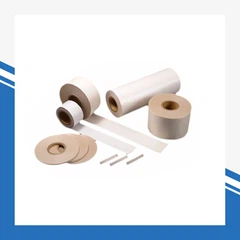
Insulating paper is a dielectric material designed to prevent electrical current leakage, resist heat, and provide mechanical support in electrical systems. Made from cellulose, synthetic fibers, or composite materials, it is engineered to withstand extreme operational conditions.
Part 2: Types of Insulating Paper & Their Applications

2.1 Cellulose-Based Papers
Crepe Paper:
Material: Crinkled cellulose for enhanced flexibility.
Applications: Dry-type transformers, motor slot insulation.
Key Features:
High elongation (15–20%).
Conforms to irregular shapes.
2.2 Synthetic Fiber Papers
Nomex® (Aramid Paper):
Material: Meta-aramid fibers.
Thickness: 0.1–0.3 mm.
Applications: High-temperature motors, aerospace equipment.
Key Features:
Thermal rating: 220°C (Class H).
Flame-resistant (UL 94 V-0).

2.3 Composite Insulating Papers

DMD (Dacron-Mylar-Dacron):
Structure: Polyester film sandwiched between non-woven layers.
Applications: Motor and generator insulation.
Key Features:
Thermal rating: 155°C (Class F).
Moisture-resistant.
NMN (Nomex-Mylar-Nomex):
Structure: Aramid layers with polyester core.
Applications: Industrial inverters, EV traction motors.
Key Features:
High mechanical strength.
Resists partial discharge.

Part 3: Key Applications of Insulating Paper
3.1 Transformers
Oil-Immersed Transformers:
Use: Layer insulation between windings.
Preferred Paper: Kraft or crepe paper (0.2–0.3 mm).
Dry-Type Transformers:
Use: Phase barriers and slot insulation.
Preferred Paper: Nomex® or DMD (0.15–0.25 mm).

3.2 Electric Motors & Generators
Motor Slot Liners:
Use: Insulate copper windings from stator cores.
Preferred Paper: Crepe or Nomex® (0.1–0.2 mm).
Generator Ground Wall Insulation:
Use: Separate rotor windings.
Preferred Paper: Mica or NMN composites.
3.3 High-Voltage Cables
Use: Wrap conductors to prevent arcing.
Preferred Paper: Ultra-smooth kraft paper (0.08–0.15 mm).
3.4 Consumer Electronics
Use: Insulation in power supplies, circuit boards.
Preferred Paper: Thin polyester films (0.05–0.1 mm).
4.1 Factory-Backed Quality Assurance
We ensure:
Material Consistency:
Cellulose from FSC-certified mills. Nomex® sourced from DuPont-approved suppliers.
Precision Production:
Thickness tolerance: ±3% (laser-verified). Slitting accuracy: ±0.2 mm.
Testing Protocols:
Dielectric Strength: IEC 60243-1 compliant (tested at 2x rated voltage).
Thermal Aging: 7 days at 155°C with ≤10% tensile loss.
4.2 Cost Efficiency
Competitive Pricing:
Kraft paper: 2.50–2.50–5.00/kg.
Nomex®: 15–15–25/kg.
Bulk Discounts: 5–10% off orders >1 ton.
4.3 Custom Solutions
Tailored Specifications:
Custom thickness (0.05–5.0 mm).
Perforations, pre-cut shapes, adhesive backing.
Low MOQs:
Standard grades: 500 kg.
Custom grades: 1 ton.
Part 5: Why choose us?
5.1 Quality Certifications
Global Standards: UL, IEC, REACH, RoHS.
Industry-Specific:
IEEE C57.15: For transformer insulation.
ISO 9001: Manufacturing consistency.
5.2 Supply Chain Reliability
Lead Times:
Stock items: 10–15 days.Custom orders: 20–30 days.
Part 6: How to Choose the Right Insulating Paper
6.1 Assess Operational Conditions
Temperature: Match thermal class (e.g., Class B for 130°C).
Voltage: Higher dielectric strength for >10 kV systems. Environment: Moisture-resistant grades for outdoor use.
6.2 Verify Supplier Credentials
Certifications: UL, IEC, and ISO marks. Test Reports: Batch-specific dielectric and thermal data.
6.3 Request Samples
Practical Tests:
Bend/fold to check flexibility. Heat exposure to simulate operating conditions.