






1. Why Talk About DMD?
When it comes to motors and transformers, insulation is not just a detail-it's what keeps the entire system safe and reliable. Among the many insulation materials on the market, DMD insulation paper has become one of the most practical and widely used.
Instead of giving a textbook-style definition, let's break it down: what it's made of, how it's produced, where it's used, and

2. What Exactly Is DMD Material?
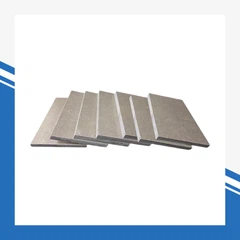
The name "DMD" comes from its three-layer structure:
D (first layer): polyester non-woven fabric.
M (middle): polyester film (PET).
D (outer layer): another layer of non-woven fabric.
In simple terms, it's a film sandwiched between two non-woven fabrics. This design makes it both flexible and strong, which is exactly what's needed in electrical insulation.
Standard thermal classes: B (130℃) and F (155℃).
Typical dielectric strength: ≥ 4 kV depending on thickness.
Thickness range: 0.15–0.40 mm.
3. Raw Materials and Structure in Practice
Polyester Film (PET): This is the backbone. It provides the electrical insulation, with dielectric strength often exceeding 150 kV/mm.
Non-woven Fabric: Think of it as the protective layer. It improves resin bonding, absorbs varnish, and adds mechanical toughness.
Composite Result: When the film and non-woven are combined, the result is a flexible sheet that resists tearing during winding and still maintains excellent insulation.

4. How DMD Is Produced
Factories like ours usually follow these steps:
- Material selection – choosing PET films and polyester fabrics that meet insulation standards.
- Lamination – bonding the three layers under heat and pressure.
- Curing – stabilizing the material so it doesn't delaminate later.
- Slitting and cutting – converting large rolls into sheets, strips, or narrower rolls.
- Optional resin treatment – some customers need resin-coated DMD for higher thermal stability.
5. Quality Control: What We Check
Every batch goes through inspection. The main checks include:
- Thickness tolerance: within ±0.005 mm.
- Dielectric strength: must meet or exceed 4 kV.
- Tensile strength: to ensure it won't tear during motor winding.
- Thermal aging: tested at 130℃ or 155℃ depending on class.
- Surface condition: no bubbles, folds, or delamination.
These checks may sound basic, but they make the difference between a material that works for years and one that fails in months.
6. DMD vs. Other Insulation Papers
Here's how DMD stacks up against other common insulation composites:
| Material | Structure | Heat Class | Key Advantage | Typical Use |
|---|---|---|---|---|
| DMD | Non - woven + PET film + Non - woven | B/F (130℃/155℃) | Good balance of cost and performance | Motors, transformers |
| NMN | Nomex + PET film + Nomex | H (180℃) | High thermal resistance, more expensive | High - voltage motors |
| NHN | Nomex + PI film + Nomex | H (180℃+) | Premium option, excellent durability | Specialized equipment |
| DMDM | Non - woven + PET + Non - woven + PET | B/F | Extra mechanical strength | Large rotating machines |
Why engineers often choose DMD:
Reliable insulation for most Class B/F systems.
Easier to cut, punch, and wind compared to Nomex composites.
More cost-effective while still meeting international insulation standards.
7. Why Work With a Factory Supplier
From the buyer's point of view, the choice is not only about the material itself but also about supply reliability. As a factory focusing on transformer insulation materials, we can provide:
Custom dimensions: width from 10 mm to 1000 mm, rolls or sheets.
Stable quality: ISO-certified production and full QC process.
Lead time: standard sizes in stock, customized orders within 7–15 days.
OEM packaging: with customer's logo and branding.
Technical advice: support on insulation design and selection.
Phone Number:+8618658827883 Whatsapp:+8618658827883
Email:tongchao@weshare-china.com If you have purchasing needs, please contact us!