







Copper Foil Winding Process
1.1 Types of Copper Foil and Its Role in Transformers
Copper foil can be classified into two types based on its surface appearance: bare copper and adhesive-backed copper. The adhesive-backed copper foil has a layer of tape on its surface, while the bare copper does not. Copper foil can also be categorized by its position within the transformer: internal copper and external copper. Bare copper is typically used for the external copper in transformers. Copper foil in transformers generally serves as a shielding material, primarily to reduce leakage inductance and magnetizing current. When the current passing through the winding is too high, copper foil can replace copper wire, serving as a conductor.
1.2 Copper Foil Processing
A. Processing Method for Internal Copper Foil:
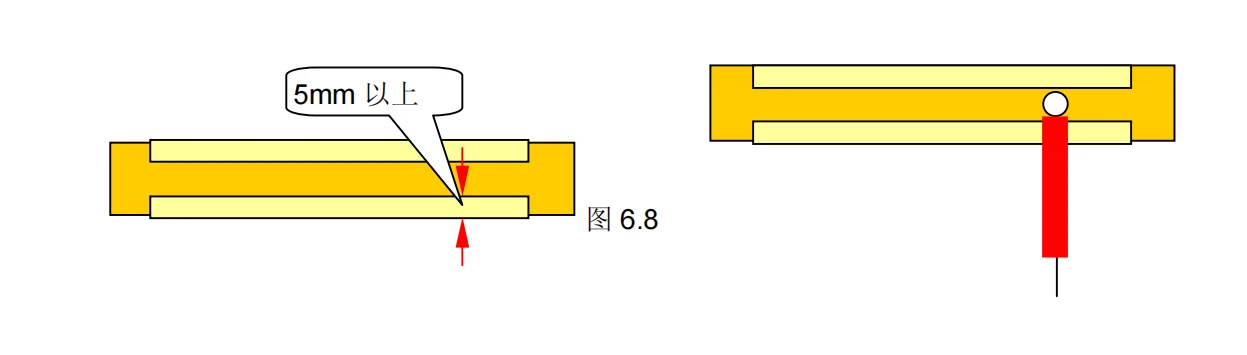
The typical method involves welding lead wires, with both ends of the copper foil attached flat to the center of acetate cloth. The acetate cloth is then folded back to completely cover the welding points. The acetate cloth is trimmed, ensuring that at least 1mm of copper foil is left on both sides.

Internal copper processing method: (as shown in the figure)
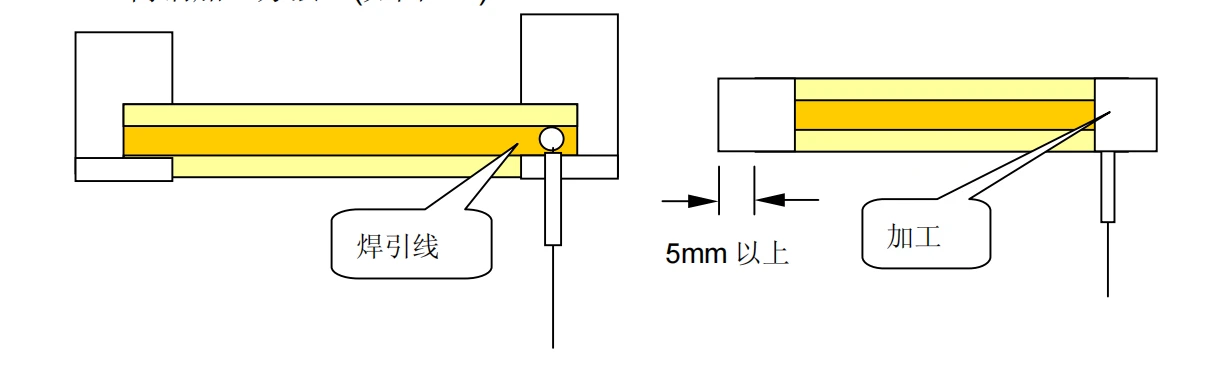
External copper processing method: (as shown in the figure)
2. Copper Foil Processing Requirements in Transformers:
a. Copper Foil Winding Method:
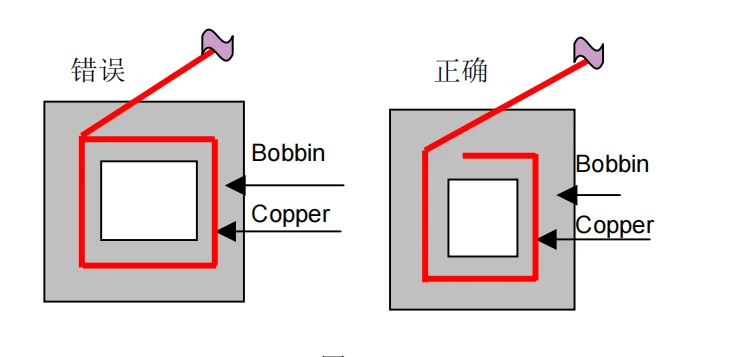
When winding copper foil, except at the welding points, the starting edge of the copper foil should not be pressed onto the corner of the Bobbin. It should begin winding from the center of the Bobbin to prevent the second layer of copper foil from being pressed against the first layer and piercing the insulating tape, which could cause a short circuit (as shown in Figure 6.9).
b. Internal Copper Foil as Shielding Between Layers:
When copper foil is used as shielding between layers of windings, its width should cover as much of the winding area of the layer as possible. If the copper foil thickness is below 0.025mm (1mil), the edges can be left square. However, if the copper foil thickness is 0.05mm (2mils) or more, the edges must be rounded to prevent damage during winding.
The copper foil must be wrapped straight and flat, and cannot be tilted to one side or mounted on the retaining wall.
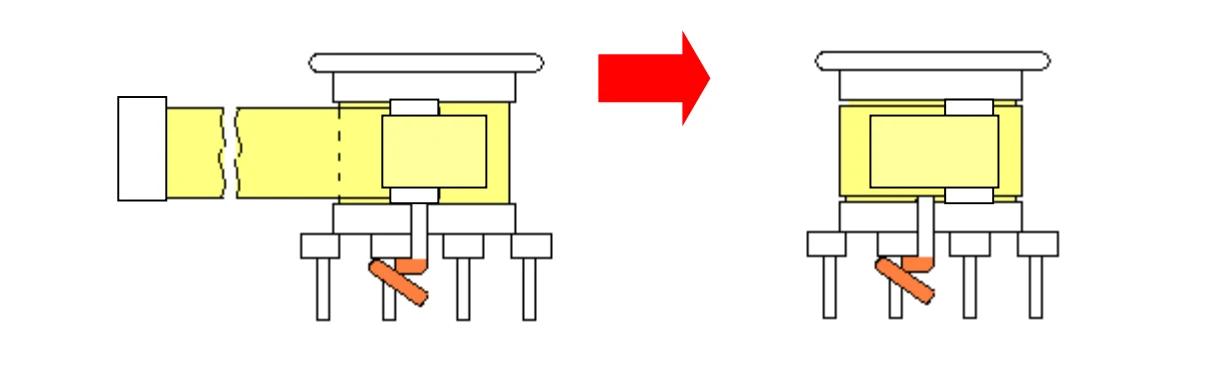
Solder external copper
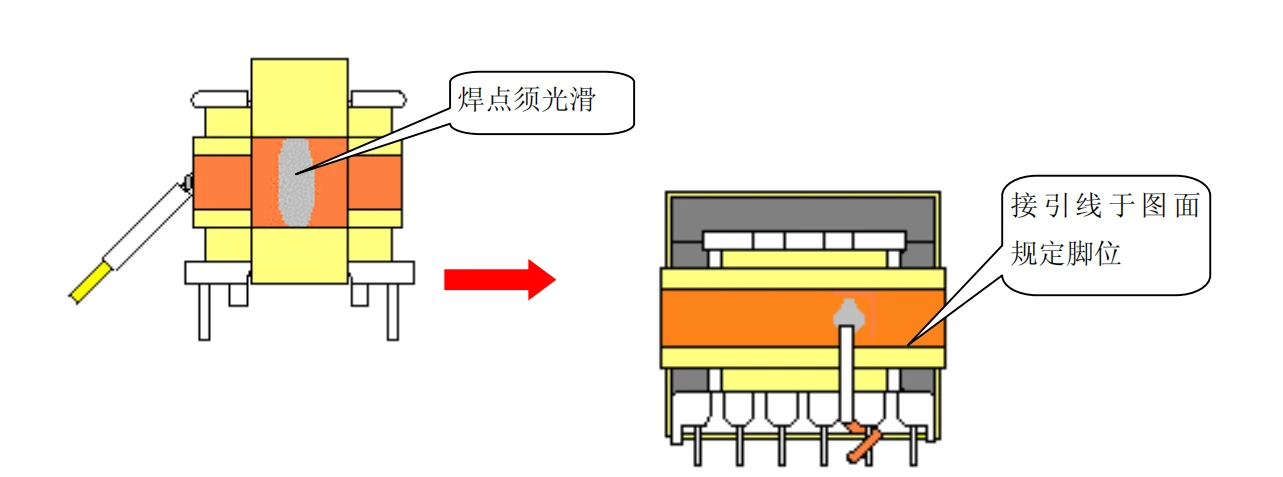
Copper Foil Welding Points:
According to the engineering drawings, the copper foil should be pulled tight and wrapped flat. It must not be biased to one side.
Soldering:
Use an appropriate amount of solder. The soldering points should be smooth, without burrs or sharp edges. The soldering time should not be too long to avoid damaging the insulating tape.
Short-Circuit Copper Foil Specifications:
In practice, a copper foil thickness of 0.64mm is sufficient. The copper foil width should only be half of the width of the copper window winding.