






1. Why cracks occur in insulators:
The shrinkage and expansion coefficients of porcelain parts, cast iron and adhesives of insulators are very different under different temperatures.
For example, in cast iron, the calibration agent is several times larger than that of porcelain parts, and even More than ten times, additional mechanical power is generated in the porcelain parts. When the mechanical force exceeds the specified limit, the insulator will crack. The main causes of cracks are poor quality and improper adjustment during installation.
2. Why insulators get damp:
Insulators get damp, mostly caused by the entry of moisture into the joint between porcelain and cast iron or the blisters in the casting. Secondly, it is caused by moisture entering into defects in the enamel (such as missing glaze) and cracks or damage in the porcelain.
3. Why is there rust on the surface of the insulator:
The cast iron parts of the insulator produce rust after getting damp. When it rains, the water flow carries rust and flows on the surface of the insulator, forming rust. Rust is a conductive substance, so the porcelain skirt should be cleaned regularly.
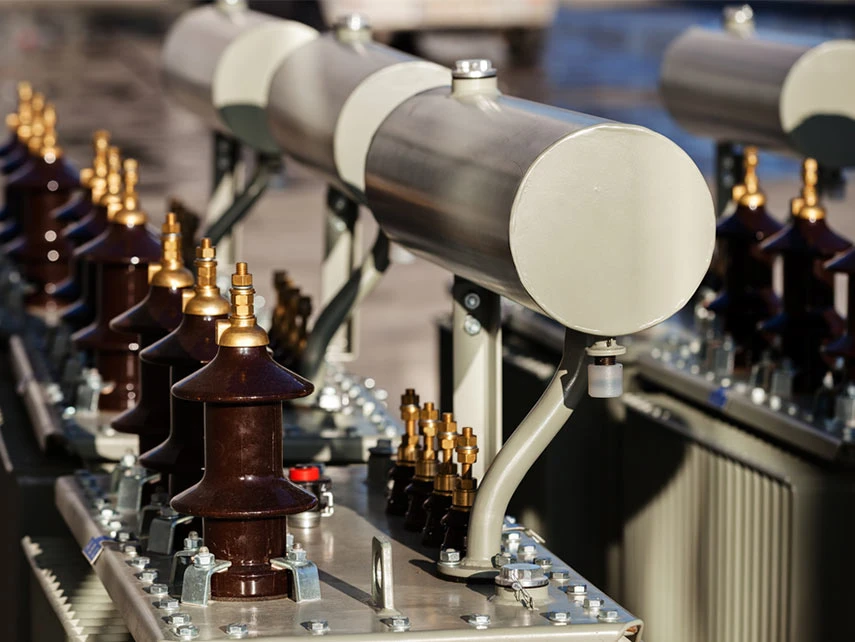
In view of the above possible causes of insulator loss and accidents, targeted preventive detection can be carried out through the following methods.
1. Ultrasonic detection method:
The principle is that when there are cracks in the insulator, ultrasonic waves enter or pass through the insulator, and emission, refraction and mode conversion will occur at the cracks. By processing the received ultrasonic waves, the deteriorated insulators can be effectively identified and detected. , this method is also called the flaw detection method and is mainly used for non-destructive testing of porcelain bottle insulators. Commonly used instruments include Hongbo Measurement and Control HB-TX2 insulator flaw detector.
2. Infrared imaging method:
The principle is that after the insulators deteriorate or the surface is seriously contaminated, the distribution voltage of the running insulator string will change, the leakage current will be abnormal, and signs of heating or local cooling will appear.
Using infrared detection technology, it can The thermal field distribution of the insulator string is obtained, which corresponds to the voltage distribution of the insulator string. Since deteriorated insulators will cause temperature rise at cracks, increased internal penetrating leakage current and surface creepage leakage current, and increased heat generation, the surface temperature will be higher.
According to the comparison between the surface temperature of the insulator and the surface temperature of the normal insulator at the corresponding position, it can be Determine the operating status of the insulator. The disadvantage of this method is that when the insulation resistance of the deteriorated insulator is between 5-10 MΩ, the temperature change is not obvious, making it difficult to distinguish through infrared thermal imaging, and there is a detection blind zone.
3. Ultraviolet imaging method:
The detection principle is that when discharge occurs on the surface of the insulator, corona, flashover or arc will be generated depending on the intensity of the electric field, which contains part of the ultraviolet light. The abnormal temperature of the equipment can be directly detected by the ultraviolet imager. The disadvantage of the discharge process before upgrading is that it is difficult to predict the deterioration of insulators early.