








Transformer Moisture Holders (Breather)
What Is a Transformer Moisture Holder?
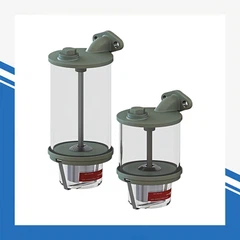
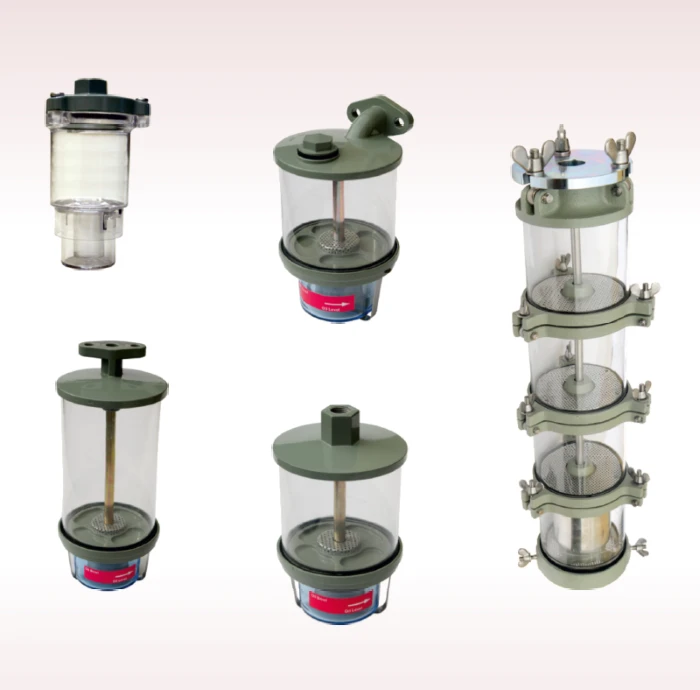
A moisture holder (also called transformer breather or silica gel dryer) is a protective accessory installed on the conservator tank of oil‑immersed transformers. Its main job is to adsorb moisture and impurities from incoming air when the transformer oil expands or contracts due to temperature changes. By keeping the internal insulation system dry, it prevents oil degradation, internal condensation, and insulation failure.
Working Principle
When the transformer load or ambient temperature rises, the insulation oil expands and expels air out of the tank. When temperature falls, the oil volume shrinks and outside air is drawn in.
The air first passes through a small oil bath at the bottom, which filters dust and prevents direct contact between moist air and the drying agent. The air then moves upward through color‑indicating silica gel that absorbs moisture. Dry, clean air finally enters the conservator tank, protecting the transformer's insulation performance and service life.
Key Functions
Absorbs moisture from intake air to avoid condensation inside the tank
Filters dust, dirt, and impurities to keep insulation oil clean
Slows down transformer oil aging and oxidation
Maintains insulation strength and extends transformer service life
Stabilizes electrical performance and reduces failure risks
Main Structure & Materials
Upper Part
Cast aluminum flange or flange assembly
Electrostatic powder coating for corrosion resistance
Middle Part
Transparent cylinder: glass or polycarbonate
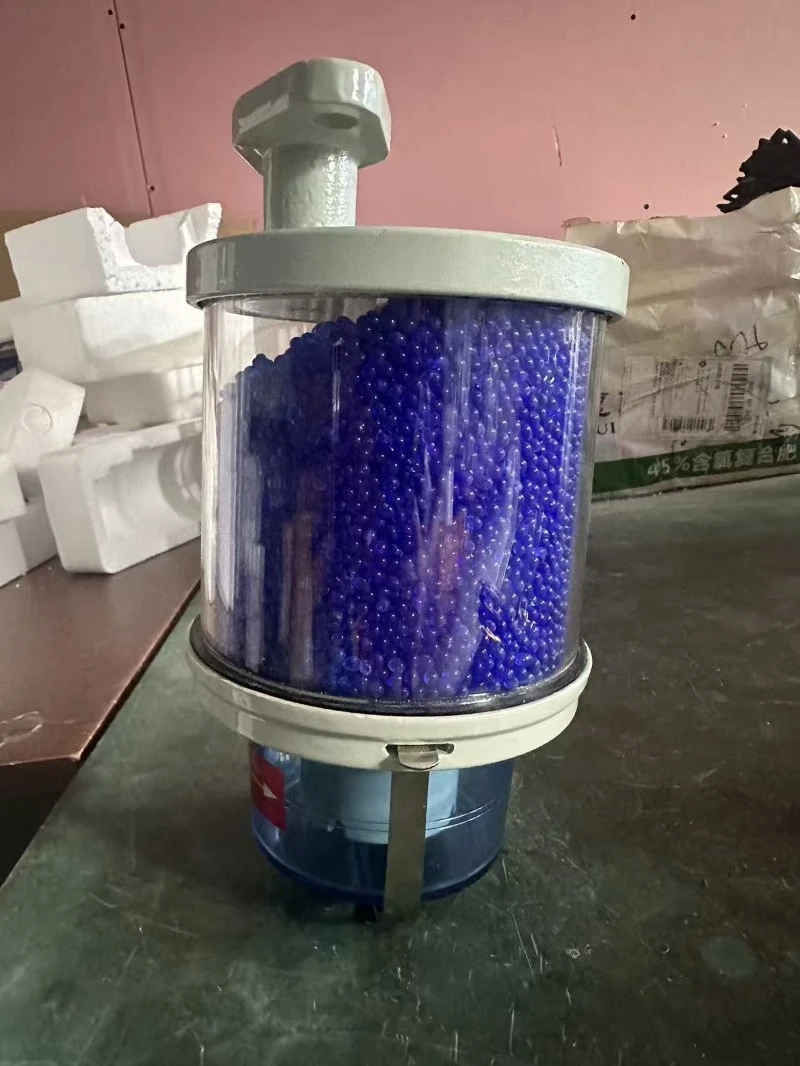
Filled with blue/white indicating silica gel
Lower Part
Oil bowl: polycarbonate or glass
Oil layer: blocks moisture and cleans air
Internal sieves, gaskets, fasteners: stainless steel or zinc‑plated steel
Main Types & Specifications
Standard Series (DIN 42567)
MH 0.15 kg | Max transformer oil: 600 kg
MH 0.5 kg | Max transformer oil: 1800 kg
MH 1.0 kg | Max transformer oil: 3600 kg
Heavy‑Duty Series (DIN 42562)
MH 1.2 kg | 4500 kg
MH 2.4 kg | 9000 kg
MH 3.6 kg | 13500 kg
MH 4.8 kg | 18000 kg
How to Select the Right Moisture Holder
Match with transformer oil capacity
Consider ambient humidity (higher humidity requires larger capacity)
Consider temperature change range and breathing frequency
Choose structure: Form A, B, C or DIN 42562 type
Select cylinder material: glass (high temperature resistance) or polycarbonate (shockproof)
Installation & Usage Guide
Install vertically below the conservator tank
Keep the oil bowl filled with clean transformer oil to the marked level
Ensure good sealing; replace damaged gaskets immediately
Check silica gel color regularly
Replace silica gel when it turns pink or white (fully saturated)
Keep connectors clean to avoid air leakage
Maintenance Tips
Check silica gel status every 1–3 months
Refill or replace silica gel when discolored
Keep the oil bowl clean and oil at proper level
Tighten loose bolts and replace aging gaskets
Clean dust and oil contamination on the surface
Do not use in strongly corrosive or high‑dust environments without protection
FAQ – Frequently Asked Questions
Q: Why does silica gel change color?
A: Blue silica gel turns pink when saturated; white silica gel turns transparent. This means it has absorbed too much moisture and must be replaced.
Q: Can I reuse silica gel?
A: Yes. Saturated gel can be dried at 100–120°C until it recovers its original color. However, repeated regeneration reduces adsorption capacity.
Q: What happens if I do not replace the moisture holder?
A: Moisture enters the transformer, lowering insulation resistance, accelerating oil aging, causing partial discharge, and even leading to transformer breakdown.
Q: What kind of oil should be used in the oil bowl?
A: Use the same transformer insulation oil as in the main tank. Do not mix with other oils.
Q: How long does a moisture holder last?
A: Under normal conditions, the shell can be used for 5–10 years. Silica gel needs replacement every 3–12 months depending on humidity.
How Does a Moisture Holder Protect the Transformer?
A moisture holder (also called a transformer breather) is a small but critical safety component that protects oil‑immersed transformers from moisture, oxidation, and contamination. Here is its full protection mechanism in clear, professional English for your website:
1. Absorbs Moisture from Incoming Air
When a transformer operates, its insulation oil expands and contracts with temperature changes. This "breathing" effect pulls moist outdoor air into the conservator tank.The moisture holder uses silica gel inside to absorb water vapor, ensuring only dry air enters the transformer.This prevents condensation, internal dampness, and insulation failure.
2. Prevents Insulation Oil Degradation
Moisture and oxygen are the biggest enemies of transformer oil.By drying incoming air, the moisture holder:
Slows oil oxidation
Reduces acid formation
Maintains oil insulation strength
Extends oil service life
3. Stops Dust and Contamination
The oil bowl at the bottom of the moisture holder filters dust, dirt, and particles before air reaches the silica gel.This keeps the transformer interior clean and avoids particulate discharge risks.
4. Avoids Partial Discharge & Internal Faults
Moisture in windings or core laminations causes:
Lower insulation resistance
Partial discharge
Corrosion on core and clamping parts
Short-circuit or burnout risks
The moisture holder eliminates moisture at the source, greatly improving transformer reliability.
5. Stabilizes Transformer Performance & Service Life
By maintaining a dry, clean internal environment:
Core loss remains stable
Winding insulation stays intact
Noise and vibration do not increase
Transformer life is extended by years
Simple Summary
The moisture holder dries incoming air, filters dust, blocks moisture, and preserves insulation.It is the first and most effective line of defense for every oil‑immersed transformer.

How Often Should a Moisture Holder Be Replaced?
The housing (body) of a moisture holder is durable and typically lasts 5–10 years with proper maintenance. However, the silica gel desiccant requires regular replacement - this is the part that actually protects the transformer.
Replacement Frequency (Industry Standard)
Silica gel: Every 3–12 months→ Replace when blue gel turns pink or white gel becomes transparent.
In high-humidity areas (tropical / coastal / rainy regions): Replace every 1–3 months.
In dry climates: Can last up to 12 months.
Gaskets & seals: Replace every 1–2 years or if cracked / leaking.
Plastic / polycarbonate parts: Replace every 5–8 years when aging or brittle.
7.4 Green Development: Low‑Carbon Processes Become the Norm
Against the global push for carbon neutrality, low‑carbon production methods - including energy‑saving annealing and eco‑friendly insulation coatings - are being widely adopted to reduce energy use and industrial emissions. Toroidal cores support green manufacturing by achieving nearly 100% material utilization, minimizing waste. This circular, low‑waste design will continue to be prioritized across the magnetic core industry.
8. Industry Summary
As a high‑performance magnetic component, the toroidal core features a fully closed magnetic circuit, ultra‑low flux leakage, high efficiency, low noise, and compact structure. It is indispensable in high‑efficiency, miniaturized, and low‑noise electrical equipment.
With ongoing advances in materials and manufacturing, the toroidal core industry is entering a new phase of high‑quality development. In the future, it will evolve toward higher performance, smarter production, and greater sustainability. Amorphous and nanocrystalline materials will become more widely used, while production lines will become increasingly automated and intelligent.
For industry professionals, understanding core materials, performance parameters, and application scenarios is essential to optimizing design, lowering costs, and improving competitiveness. As global energy‑efficiency standards rise and new energy and intelligent manufacturing expand, the toroidal core industry will continue to expand into new markets and applications.