




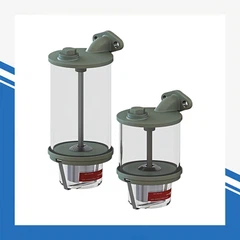








In the power industry, transformers are among the most common electrical devices. You may have noticed that they are often equipped with a device known as a dehydrating breather, also commonly referred to as a breather.
For transformers, the most widely used type of breather is the suspended structure breather. Inside, it contains a desiccant, typically silica gel, which serves the purpose of connecting the transformer's conservator oil to the atmosphere. The desiccant works by absorbing moisture and impurities from the air, ensuring that the transformer's insulating oil retains its optimal performance.

To allow for a visual indication of the silica gel's moisture absorption, color-changing silica gel is often used. This works based on the properties of cobalt chloride (CoCl₂), which changes color depending on the amount of water of crystallization it contains. When cobalt chloride has six water molecules, it appears pink; with two water molecules, it turns purplish-red; and when it is completely anhydrous, it turns blue.
The function of the breather is to regulate the flow of air within the transformer when its internal temperature fluctuates. This helps to relieve the pressure changes within the oil conservator caused by temperature variations during the transformer's normal operation.
When the transformer's temperature decreases, the silica gel absorbs moisture from the incoming air, effectively removing humidity. Additionally, it's worth noting the role of the oil-sealing cup: it prolongs the lifespan of the silica gel by isolating it from direct exposure to the atmosphere. This design ensures that only air entering the transformer passes through the silica gel.

The function of the breather is to provide a channel for the internal gas to enter and exit the transformer when the temperature changes, and to relieve the pressure on the oil tank caused by temperature changes during normal operation.
The function of the silica gel in the respirator is to dehumidify the inhaled gas when the temperature of the transformer drops.
The function of the oil seal cup is to extend the service life of the silica gel and isolate the silica gel from the atmosphere. Only the air entering the transformer passes through the silica gel.
The transformer breather is a critical device designed to protect transformers from humidity-related damage. In power systems, transformers play an essential role in converting and transmitting electrical energy. However, humidity is a significant factor that can impact their proper operation.
Excessive or insufficient humidity can lead to various issues inside the transformer. High humidity levels can accelerate the aging of insulation materials, reduce insulation strength, and even cause insulation breakdown, posing risks to the safety and stability of the entire power system. Conversely, extremely low humidity can also harm the transformer, leading to drying and cracking of insulation materials and a subsequent decline in insulation performance.
By using a transformer breather, the service life of the transformer can be extended, and its performance and reliability can be improved. Breathers are typically installed on the transformer's oil tank or insulation enclosure and can automatically activate or deactivate based on actual humidity levels. This ensures the transformer remains in optimal operating condition at all times. Such humidity management devices provide critical support for the stable operation of power systems.