






Oil Duct Strip (Transformer Oil Duct Support Strip)
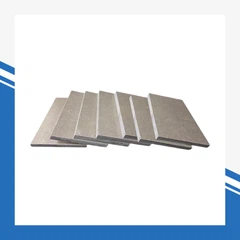
Oil duct strip, also known as transformer oil duct support strip, insulating support strip, spacer strip, and commonly referred to as oil duct stay, vent strip, in the industry, is a core insulating and supporting component for oil-immersed transformers, high-voltage transformers, and reactors. It is also often made into oil duct strip curtain (also called oil duct curtain, insulating oil duct curtain, insulating support strip curtain) for integrated application in transformer windings. Its core function is to support transformer windings, isolate insulation layers, and form unobstructed oil flow channels, ensuring effective heat dissipation and stable insulation performance of transformers under long-term high-temperature and high-voltage operation. Below is a detailed introduction to its industry knowledge, including production, processing, packaging, and frequently asked questions (FAQ), with various product names integrated throughout.

1. Production of Oil Duct Strip (Oil Duct Support Strip)
The production of oil duct strip (including oil duct support strip, spacer strip, and oil duct strip curtain semi-finished products) adheres to strict international standards such as IEC 60641 (laminated paperboard standard) and Chinese national standards such as GB/T 19264 (electrical laminate standard), focusing on raw material quality and process precision to ensure the product's mechanical strength, insulation performance, and oil resistance. The entire production process is semi-automated with strict quality control at each link, laying a solid foundation for subsequent processing and application.
1.1 Raw Material Selection
The core raw materials of oil duct strip (oil duct stay, vent strip) are divided into two main categories according to application scenarios, ensuring adaptability to different transformer working conditions:
Electrical-Grade Laminated Paperboard: Commonly used for ordinary oil-immersed transformers, it is made of high-purity electrical-grade kraft wood pulp through lamination and hot pressing. It has excellent dielectric properties, oil absorption, and mechanical toughness, and its density is strictly controlled above 1.15 g/cm³ in line with international standardssuperscript:2>. This material is the main raw material for traditional oil duct support strips and spacer strips, ensuring basic insulation and support performance.
Thermosetting Resin-Impregnated Fiberglass: Used for high-voltage, high-temperature resistant transformers, it is made of non-alkali glass fiber impregnated with thermosetting resin and formed through pultrusion process-this is the raw material for the industry's commonly referred to Dog bone (I-shaped strip) and Dog bone (pultruded strip)superscript:5>. It has high mechanical strength, excellent flame retardancy (meeting UL 94 V0 standard), corrosion resistance, and high-temperature resistance, effectively solving the problem of traditional oil duct strips being prone to deformation and displacement.
Auxiliary Materials: Including environmentally friendly sulfur-free adhesives (for oil duct strip curtain bonding), anti-corrosion coatings, and non-ionized water (for paper pulp processing), all of which meet electrical insulation product requirements to avoid ion contamination and ensure the overall performance of the oil duct strip.
1.2 Core Production Steps
The production process of oil duct strip (including various aliases such as insulating support strip, oil duct stay) varies slightly according to raw materials, but the core steps are consistent, with key links as follows:
Raw Material Pretreatment: For electrical-grade laminated paperboard, the selected kraft wood pulp is subjected to pulping, refining, and screening to remove lignin and impurities, ensuring pulp uniformity and fineness; for fiberglass raw materials, the non-alkali glass fiber is dried to remove moisture, ensuring full impregnation with thermosetting resin.
Forming Processing: - For paper-based oil duct support strips and spacer strips: The refined pulp is formed into base paper, then laminated layer by layer according to the required thickness, and hot-pressed at high temperature and pressure to form a dense laminated paperboard, which lays the foundation for the strength and insulation performance of the oil duct strip. - For fiberglass-based (I-shaped strip) and (pultruded strip): The dried glass fiber is impregnated with thermosetting resin, then pulled through a special mold by a pultrusion machine for one-time molding, ensuring the cross-sectional shape (I-shaped, rectangular, etc.) is uniform and consistent.
Heat Treatment & Impregnation: The formed semi-finished products are sent to a curing furnace for high-temperature curing to enhance structural stability. For high-performance oil duct strips, vacuum impregnation treatment is added-air and moisture in the material gaps are removed, and insulating resin is injected to further improve oil resistance and insulation performancsuperscript:1>.
Initial Cutting & Drilling (Optional): According to the basic specifications of the oil duct strip, the cured semi-finished products are cut into fixed-length blanks by a high-precision cutting machine. For oil duct strips that need to optimize heat dissipation, trapezoidal or rectangular heat dissipation holes are drilled at equal intervals to improve oil flow distribution and heat dissipation efficiency, solving the problem of traditional oil duct strips occupying excessive heat dissipation areasuperscript:1>.
Initial Quality Inspection: Each batch of semi-finished oil duct strips (including oil duct stay, vent strip) undergoes strict inspection, including dimensional accuracy (thickness, width, length), density, dielectric strength (not less than 40 kv/mm), and tensile strength (longitudinal not less than 80 MPa)superscript:2>. Unqualified products are eliminated in time to ensure only qualified semi-finished products enter the processing link.

2. Processing of Oil Duct Strip (Oil Duct Support Strip)
The processing of oil duct strip (including insulating support strip, spacer strip) is based on semi-finished products, and further precision processing and customization are carried out to meet the specific installation and use requirements of transformers. The processing focuses on dimensional precision, structural stability, and compatibility with transformer windings, especially for oil duct strip curtains, which require strict consistency in assembly.
2.1 Key Processing Steps
Precision Cutting: According to the transformer design requirements, the semi-finished oil duct strips are cut into precise lengths by a numerical control cutting machine, with a cutting accuracy controlled within ±0.5mm. For oil duct strip curtains, the cut oil duct support strips are cut into uniform lengths to ensure consistency during assembly.
Cross-Section Finishing: The cut ends of the oil duct strip (oil duct stay, vent strip) are polished and deburred to ensure the cross-section is flat and free of burrs, avoiding scratching the transformer insulation paper and windings during installation. For fiberglass pultruded strip, special polishing equipment is used to ensure the surface is smooth and free of resin burrs.
Special Shaping (Optional): For oil duct strips that need to be fixed on transformer coils, bending processing is performed to form inner and outer contact parts, and connecting pieces with clamping grooves are matched to form a closed loop, enhancing structural stability and avoiding displacement under short-circuit force . For I-shaped strip, the cross-sectional shape is further trimmed to ensure it fits tightly with the transformer windings.
Oil Duct Strip Curtain Assembly: For oil duct strip curtains (insulating oil duct curtains), the processed oil duct support strips are evenly spaced and pasted on dot glue paper or cable paper, then fixed by white cloth tape binding or gluing to form an integrated curtain structure, which is convenient for on-site installation on transformer
Surface Coating: The surface of the processed oil duct strip is coated with a special anti-corrosion and moisture-proof coating, which enhances moisture resistance and oil resistance, prevents the material from absorbing moisture or being corroded by transformer oil, and ensures long-term stable operation. The coating used does not contaminate transformer oil and meets environmental protection requirements.
Final Precision Testing: Each processed oil duct strip (including all aliases) undergoes comprehensive testing, including dimensional accuracy, straightness, dielectric strength, tensile strength, and coating adhesion. For oil duct strip curtains, the spacing accuracy of the support strips and the firmness of the bonding are also tested to ensure the product meets international standards and customer requirements.
2.2 Processing Key Points
The key points of oil duct strip processing are: first, ensuring the dimensional consistency of the product, especially the length and cross-sectional size, to avoid affecting the oil duct gap and insulation effect; second, for fiberglass-based oil duct strips, ensuring the resin impregnation is uniform to avoid local brittleness; third, for oil duct strip curtains, ensuring the spacing of the support strips is uniform and the bonding is firm to prevent the support strips from falling off during installation and use.
3. Packaging of Oil Duct Strip (Oil Duct Support Strip)
The packaging of oil duct strip (including insulating support strip, spacer strip, oil duct stay, and oil duct strip curtains) focuses on moisture-proof, dust-proof, anti-collision, and convenient transportation, ensuring the product is not damaged during storage, transportation, and loading and unloading, and maintaining its insulation performance and dimensional accuracy. The packaging process strictly complies with relevant industry standards and export requirements.
3.1 Packaging Materials
High-quality packaging materials that meet the requirements of electrical insulation products are adopted, and the materials are selected according to the product type:
Inner Layer: Moisture-proof plastic film or vacuum packaging bag, which effectively isolates moisture and air, preventing the oil duct strip from absorbing moisture and affecting insulation performance, especially suitable for paper-based oil duct support strips and oil duct strip curtains.
Middle Layer: Shock-proof foam or pearl cotton, which buffers the impact during transportation, avoids collision and deformation between oil duct strips, and protects the surface coating and cross-section of the product.
Outer Layer: Thickened corrugated carton or wooden case, with strong load-bearing capacity, preventing the product from being crushed during stacking and transportation. For long-length oil duct strips, special wooden brackets are used to fix both ends to avoid bending.
Auxiliary Materials: Foam filler (for filling gaps between products), waterproof tape (for sealing cartons), and wooden pallets (for large-volume orders, facilitating loading, unloading, and transportation).
3.2 Packaging Process
Single/Small Batch Packaging: Each oil duct strip (or a small batch of the same specification) is first wrapped with moisture-proof plastic film, then wrapped with shock-proof foam, and placed in a small carton. For oil duct strip curtains, they are rolled up and wrapped with foam to avoid folding and damage.
Large-Batch Packaging: The individually packaged oil duct strips are placed in a thickened outer carton or wooden case, and the gaps between the products are filled with foam filler to ensure the products do not shake during transportation. The number of products per carton/wooden case is determined according to the product size and weight, usually 10-20 pieces per case, to avoid excessive weight leading to packaging damage.
Labeling and Marking: Clear product labels are pasted on the outer packaging, including all common product names (oil duct strip, oil duct support strip, spacer strip, oil duct stay), specification (length, width, thickness, cross-sectional shape), production date, batch number, quality inspection certificate number, and international standard compliance information (IEC 60641, GB/T 19264)superscript:2>. For export products, labels are printed in both Chinese and English to facilitate customs inspection and customer identification.
Storage and Transportation Tips: The outer packaging is printed with clear tips, such as "Moisture-Proof", "Anti-Collision", "Handle with Care", and "Stacking Limit", to remind the transporter and storage personnel to protect the product. The product should be stored in a dry, ventilated, and cool warehouse, away from moisture, high temperature (above 40℃), and corrosive substances, with a storage period of up to 12 months under proper storage conditions.
4. Frequently Asked Questions (FAQ) About Oil Duct Strip (Oil Duct Support Strip)
To help global customers better understand oil duct strips (including insulating support strip, spacer strip, oil duct stay, oil duct strip curtain) and their performance, use, and maintenance, we have sorted out common questions and provided professional answers:
Q1: What are the common aliases of oil duct strip, and are they different in performance?
A1: The common aliases of oil duct strip include oil duct support strip, insulating support strip, spacer strip, oil duct stay, vent strip, I-shaped strip, pultruded stri), and the assembled product is calledoil duct strip curtain (oil duct curtain, insulating oil duct curtain). These aliases essentially refer to the same type of product, but there are slight differences in form and material: paper-based products are often called oil duct support strip, spacer strip, or oil duct stay; fiberglass pultruded products ; the integrated assembly is oil duct strip curtain. Their core functions (support, insulation, heat dissipation) are the same, and performance differences mainly depend on raw materials (paper-based vs. fiberglass-based), not aliases.
Q2: What is the core function of oil duct strip (oil duct support strip) in transformers?
A2: The core function of oil duct strip (including all aliases) is dual: first, mechanical support: supporting transformer windings and insulation layers to prevent winding deformation and displacement under short-circuit force impacts, avoiding changes in the main air gap size between high and low voltage coils and insulation breakdown accidentsuperscript:1>; second, heat dissipation and insulation: isolating insulation layers to form unobstructed oil flow channels, allowing transformer oil to circulate and take away heat generated by the transformer during operation, while providing electrical insulation to prevent short circuits between windings. Oil duct strip curtains integrate these functions and are more convenient for batch installation.
Q3: What are the key performance requirements of oil duct strip (spacer strip) to meet international standards?
A3: According to international standards such as IEC 60641 and Chinese standards such as GB/T 19264superscript:2>, the key performance requirements include: density ≥ 1.15 g/cm³, longitudinal tensile strength ≥ 80 MPa, dielectric strength ≥ 40 kv/mm, good oil resistance and moisture resistance, and no pollution to transformer oil. For fiberglass-based Dog bone, additional flame retardancy (UL 94 V0) and environmental protection (sulfur-free) requirements may be required according to customer agreementssuperscript:2>.
Q4: How to choose between paper-based and fiberglass-based oil duct strips (oil duct stay)?
A4: The selection depends on the transformer's working conditions: paper-based oil duct strips (oil duct support strip, spacer strip) are suitable for ordinary oil-immersed transformers with medium and low voltage, low cost, good oil absorption, and can meet basic insulation and support needs; fiberglass-based Dog bone are suitable for high-voltage, high-temperature, and high-power transformers, with higher mechanical strength, flame retardancy, and corrosion resistance, solving the problem of traditional paper-based products being prone to deformation and displacementuperscript:1>superscript:5>. Oil duct strip curtains are suitable for large-scale transformers that require efficient installation.
Q5: How to store and maintain oil duct strips (including oil duct strip curtains) to ensure performance?
A5: Pay attention to three key points: first, store in a dry, ventilated, cool warehouse, control the relative humidity below 60%, avoid moisture, high temperature, and corrosive substances, and prevent the paper-based oil duct strip from absorbing moisture and the fiberglass-based product from aging; second, avoid stacking too high, the stacking height should not exceed 1.2 meters, to prevent the bottom oil duct strip from being crushed or bent; third, before use, check whether the product has moisture absorption, deformation, surface damage, or coating peeling-if any abnormality, do not use it. The product should be used within the 12-month storage period to ensure optimal performance.
Q6: Can oil duct strips (insulating support strip) be customized according to special requirements?
A6: Yes. We can provide full customization services according to customer needs, including: 1. Material customization (paper-based, fiberglass-based, or other special materials); 2. Dimensional customization (length, width, thickness, cross-sectional shape-such as I-shaped, rectangular, trapezoidal); 3. Structural customization (drilling heat dissipation holes, bending forming, matching connecting pieces)superscript:1>; 4. Oil duct strip curtain customization (support strip spacing, length, bonding method). We also provide OEM/ODM services and free samples for customer testing before mass ordering.
Q7: What is the difference between oil duct strip and other transformer insulation materials (such as transformer crepe paper tube, DDP, TUDDP)?
A7: The core difference lies in product form and application scenario: Oil duct strip (including all aliases) is a strip-shaped or curtain-shaped support and insulation component, mainly used to form oil ducts, support windings, and focus on heat dissipation and mechanical support; transformer crepe paper tube is a cylindrical component, mainly used for winding and conductor insulation protection; DDP and TUDDP are sheet-shaped insulation materials, mainly used for insulation between transformer coils. The four materials complement each other and form a complete transformer insulation system to ensure stable operation.
Q8: Why are trapezoidal heat dissipation holes set on some oil duct strips, and what are the advantages?
A8: Trapezoidal heat dissipation holes are set to solve the problem that traditional oil duct strips occupy excessive oil duct space and affect heat dissipationuperscript:1>. The advantages are: first, optimizing oil flow distribution, accelerating the circulation speed of transformer oil, and improving heat dissipation efficiency; second, reducing the weight of the oil duct strip while ensuring mechanical strength; third, the trapezoidal structure is more stable, avoiding oil flow stagnation and ensuring uniform heat dissipation of the transformer windings.