






Mica's Critical Role in EV Battery Insulation
Mica plays a vital role in electric vehicle (EV) battery insulation, offering exceptional high-temperature resistance and electrical isolation to effectively ensure passenger safety.
Nearly all electric vehicles rely on mica and mica-based insulation materials to manage battery heat. If battery insulation fails, the vehicle can face severe risks:
| Risk | Description |
|---|---|
| Loss of Isolation (LOI) | Renders the vehicle unsafe |
| Electrical Stress | Can cause fire or electric shock |
| Mechanical Stress | Degrades insulation performance and may lead to failure |
| Chemical Stress | Harmful chemicals damage the insulation layer |
| Environmental Conditions | Excessive heat can cause arcing and current leakage |
| Aging | Old insulation may crack and become unsafe |
EVs demand robust insulation to support environmental sustainability. Mica is approved as an automotive safety standard, highlighting its essential role in vehicle safety. As more consumers adopt electric vehicles, mica will become even more critical for environmental protection and battery safety.

Key Takeaways
Mica insulation is indispensable for EV batteries: It prevents overheating, suppresses power surges, ensures battery safety, and extends service life.
Extreme temperature resistance: Mica performs reliably across wide temperature ranges, making it ideal for diverse battery applications.
Fire and thermal runaway suppression: Reduces accident risk and enhances vehicle safety.
Design flexibility: Mica can be formed to fit various battery shapes while maintaining strong insulation.
Eco-friendly: As a natural and recyclable mineral, mica supports cleaner, safer mobility.
Core Functions of Mica in EVs
1. Battery Insulation
In electric vehicles, battery safety depends on high-performance insulation.Mica acts as both a separator layer and a dielectric barrier in lithium-ion batteries, stabilizing individual cells, reducing thermal runaway risk, and blocking heat transfer between cells.
Mica's non-combustible nature and low thermal conductivity make it ideal for safety-critical battery environments.It can be produced as:
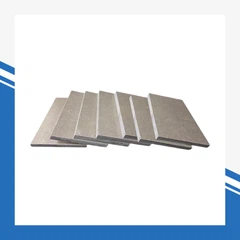
Thin, flexible mica sheets for complex-shaped batteries
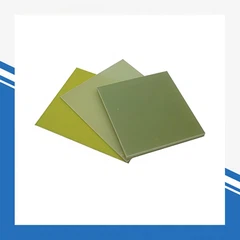
Rigid mica plates for high-protection zones
This flexibility allows mica insulation to fit nearly any EV battery design.
Tip: Mica insulation in battery systems blocks both heat transfer and electrical cross-talk between cells, effectively preventing short circuits.
2. EV Safety
Safety is paramount in electric vehicles.Mica protects batteries and inverters from heat and electrical surges, acting as a fire and thermal barrier even during thermal runaway events.
Mica-based insulation materials meet the UL 94 V‑0 flammability standard, meaning they are highly flame-resistant even at extreme temperatures.Mica serves as the primary dielectric barrier in:
Battery packs
High-voltage components
Charging systems
It ensures stable performance even under heavy load conditions.

3. Thermal Stability
Batteries require insulation that withstands extreme heat.Mica maintains exceptional performance at high temperatures:
| Mica Type | Max Temperature |
|---|---|
| Muscovite | 600°C |
| Phlogopite | 1000°C |
This stability protects batteries during high-power discharge or high external temperatures, reducing fire risk.
4. High Dielectric Strength
Mica effectively blocks current from flowing where it should not, preventing short circuits.
| Material | Dielectric Strength (kV/mm) | Dielectric Constant | Water Absorption |
|---|---|---|---|
| Muscovite | 2000 – 78.74 | 6–7 | Very low |
| Phlogopite | 1500 – 59.05 | 5–6 | Very low |
Its high dielectric strength ensures safe, stable battery operation.
5. Chemical Inertness
Mica does not react with water, oxygen, acids, or common industrial chemicals.It resists corrosion and degradation, making it highly durable in harsh automotive environments.
6. Design Flexibility
Mica can be manufactured as thin films, flexible sheets, or rigid plates.It adapts to any battery architecture, enabling:
Effective thermal management
Reliable electrical insulation
Easy installation and bonding
EV Batteries & Thermal Runaway Protection
Battery Compartment Insulation
Mica forms a powerful fire barrier inside battery packs, blocking heat and flame propagation between cells.This inter-cell insulation drastically reduces the risk of thermal runaway.
Key benefits:
Acts as a fireproof barrier during thermal events
Prevents heat spread across modules
Withstands extreme heat from combustion and cell ejection
Resists mechanical impact
Thermal Management
Mica stabilizes temperature inside battery packs, even under heavy load.Mica sheets withstand temperatures up to 700°C (1292°F), effectively preventing thermal runaway and maintaining safe operating conditions.
Mica also insulates charging components, enhancing safety during charging and discharging cycles.
Thermal Runaway Protection
Thermal runaway can be triggered by:
Internal short circuits
Excessive heat buildup
Overcharging
Mica slows heat propagation, creates a safety buffer, and protects both the vehicle and passengers.It is one of the most important materials for modern battery safety.

Mica vs. Alternatives
Ceramics
Ceramics resist heat and flame but crack under impact or thermal shock.Mica offers superior heat and voltage resistance (up to 1000°C) and better mechanical stability, making it safer for EVs.
Plastics
Plastics are lightweight and low-cost but melt or degrade at high temperatures.Mica remains structurally stable and non-combustible even in extreme heat, providing far higher safety.
Cost & Performance
Mica delivers an optimal balance:
Outstanding electrical insulation
Extreme heat resistance
Mechanical toughness and flexibility
Long service life
Eco-friendly and recyclable
It outperforms ceramics and plastics in safety, durability, and total value.
Real-World Applications
Battery Modules
Mica is widely used in EV batteries worldwide.Manufacturers choose mica for:
Fire resistance
High-temperature stability
Long-term durability
Uniform heat distribution
Mica sheets between cells prevent hotspots and ensure safe operation during fast charging and high-speed driving.
Leading Manufacturers
Major EV companies use mica in:
Battery packs
Battery casings
Charging components
Reasons for selection:
Lower manufacturing carbon footprint
Recyclable and eco-friendly
Reduced maintenance and longer vehicle life
Superior fire and electrical fault protection
A Surprising Use: High-End Cosmetics
Mica is also widely used in cosmetics for:
Light reflection and shimmer
Smooth texture
Skin-blurring effect
It appears in eyeshadows, highlighters, and powders, proving its versatility beyond industry.
Market Trends
Dominant end-use: Automotive manufacturers are the largest consumers of mica insulation, driven by EV growth.
Market expansion: Rising EV adoption directly increases mica demand.
Safety enablement: Mica prevents fires, electrical failures, and thermal runaway.
Material innovation: New lightweight mica composites meet advanced EV design requirements.
FAQ
What makes mica better than other insulators for EV batteries?
Mica withstands higher temperatures without burning or melting.It also provides superior electrical insulation, making it the top choice for major automakers.
Can mica insulation prevent battery fires?
Yes. Mica acts as a heat and flame barrier, stopping fire spread between cells and protecting passengers.
Is mica environmentally safe?
Yes. Mica is a natural mineral, recyclable, and does not release toxic chemicals when heated.
Where is mica used in electric vehicles?
Mica is found in:
Battery modules
Battery packs and casings
High-voltage and charging components