






Mica Insulation for Heating Elements: Paper, Rigid Sheet & Tape Comparison
When applying electrical insulation near heating elements, the form of mica you choose directly impacts safety, reliability, and manufacturability. Rigid machinable sheets perform very differently from thin, flexible materials that conform tightly to leads and coils. While pure mica mineral withstands extreme temperatures, the continuous operating temperature of composite products (sheets or tapes) is typically limited by their binder system. To put it simply: mica is the brick, and the binder is the mortar.
This guide compares mica paper, rigid mica sheet (laminate), and mica tape specifically for electrical insulation in heater applications. We use conservative, verifiable performance ranges, reference recognized testing standards, and organize recommendations by application rather than declaring a single "best" product.
At a Glance: Mica Paper vs. Mica Sheet vs. Mica Tape
Below is a neutral overview of typical performance and best-use scenarios. Values are for reference only-actual specifications vary by grade, thickness, binder, and reinforcement. Always verify against current datasheets and applicable standards.
| Product Form | Typical Thickness | Continuous Temp (Conservative) | Short-Term Peak Temp | Typical Dielectric Strength (Room Temp) | Physical Characteristics | Best For (Heater Applications) |
|---|---|---|---|---|---|---|
| Mica Sheet (Rigid Laminate) | 0.3–20 mm | Muscovite: 500–600°CPhlogopite: 700–800°C(limited by binder) | 1000–1100°C+ | 15–30 kV/mm | Rigid, machinable, mountable | Supports, barriers, fixed fixtures near elements; slot liners; thin rigid shields |
| Mica Tape (glass/film reinforced) | 0.08–0.20 mm per layer | Typically limited by system rating (F/H class: 155–180°C) | Stable at 850–1000°C+; fire resistance ≥830°C (IEC 60331) | ~20–25 kV/mm (mica layer) | Flexible wrap; 10–50 mm widths | Winding wires/terminals; tight coil turns; fire barriers in wiring harnesses/cables |
| Mica Paper (base layer) | 0.05–0.15 mm per layer | Depends on composite; low standalone durability | Similar to sheet/tape when laminated | Aligns with sheet/tape when laminated | Thin webs for laminate production | Intermediate layers in custom composites; thin-gap reinforced insulation |

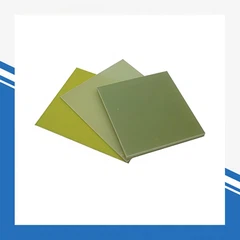
Rigid Mica Sheet Laminate
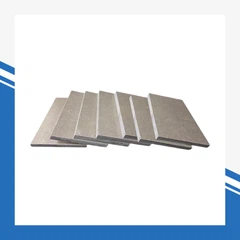
Ideal for high-temperature components near heating elements, rigid mica sheet combines high dielectric strength, dimensional stability, and machinability, making it suitable for heater supports, barriers, and mounting fixtures.
Key Specifications
Thickness: 0.3–20 mm (special grades available outside this range)
Dielectric Strength: 15–30 kV/mm at room temperature (IEC 60243 / ASTM D149)
Mechanical Strength: Flexural strength ≥80 MPa for industrial grades; excellent screw retention and edge stability
Thermal Rating: Continuous use up to 500–600°C (muscovite) or 700–800°C (phlogopite); short-term peaks above 1000°C
Advantages
Machinable for supports, slots, and precision fixtures
Stable creepage and clearance distances at high temperatures
UL 94 V‑0 flame resistance available in suitable constructions
Limitations
Heavier and thicker than tape, increasing assembly height
Continuous temperature limited by binder resin; incorrect resin selection leads to premature degradation
Recommended For
Toasters, ovens, strip heater supports, appliance fixtures, and screw-mounted rigid shields directly adjacent to heating elements.
Design Notes
Validate binder system based on thermal profile: silicone/inorganic binders for high temperatures; epoxy/phenolic for lower heat
Dielectric performance at elevated temperatures may not follow room-temperature values-test under operating conditions
Mica Tape
Mica tape is a thin, flexible composite made from mica paper, reinforcement (glass cloth or film), and low-organic binder. It provides high dielectric strength with excellent conformability, and proven fire resistance in cable systems.
Key Specifications
Thickness: 0.08–0.20 mm per layer
Width: 10–50 mm for wiring and harness applications
Dielectric Strength: ~20–25 kV/mm for the mica layer (IEC 60243 / ASTM D149)
Fire Resistance: Supports compliance with IEC 60331 (≥830°C for 90–120 minutes) and BS 6387 (C/W/Z categories)
Advantages
Conforms tightly around wires, terminals, and compact coils
Enables thin, overlapped wraps optimized for voltage and fire resistance
Limitations
Continuous operating temperature often limited by full insulation system class (F/H: 155–180°C)
Requires controlled wrapping (tension, overlap) to ensure consistent dielectric and fire performance
Recommended For
Wire and terminal wrapping near hot zones, compact turn-to-turn insulation, and fire isolation layers in heater wiring harnesses and cables.
Design Notes
Confirm number of layers and overlap percentage for required voltage and standards
Verify dielectric performance at operating temperatures based on reinforcement and binder
Mica Paper
Mica paper serves as the base material for mica tape and rigid sheet. While mechanically weak as a standalone layer, it is essential for producing thin, custom composites (laminates, tubes, gaskets) that require mica's dielectric and thermal stability.
Key Specifications
Layer Thickness: 0.05–0.15 mm
Dielectric Strength: 10–25+ kV/mm when integrated into composites
Thermal Behavior: Determined by mica type (muscovite/phlogopite) and binder system
Advantages
Enables highly customizable multilayer structures with precise thickness control
Suitable for thin gaps where rigid laminates are too bulky
Limitations
Low standalone durability without reinforcement
Performance highly dependent on binder quality and lamination process
Recommended For
Engineers designing custom laminates, tubes, and gaskets for heater assemblies; OEMs requiring custom thicknesses and geometries.
Design Notes
Use glass or film reinforcement to achieve required mechanical strength
Test finished composite performance, not just base mica paper
Application Guide: How to Select the Right Mica Insulation
Rigid mounting near heating elements (supports, shields)Use phlogopite mica sheet with silicone/inorganic binder for continuous 700–800°C environments. Use muscovite mica sheet for 500–600°C. Maintain proper creepage and clearance, and confirm UL 94 V‑0 where flame resistance is required.
Thin, conformable wrapping for leads/terminalsSelect mica tape with appropriate thickness and overlap. For circuit integrity in fire conditions, design to IEC 60331 and BS 6387 where applicable. Validate wrapping process on-site.
Compact coils and turn-to-turn insulation near heat sourcesUse mica tape grades designed for motor and transformer inter-turn insulation. Note that full insulation system may be limited to F or H class.
Custom gaskets, tubes, or thin composite partsUse mica paper as a core layer with reinforcement or lamination. Verify finished composite dielectric and thermal properties.
Safety & Reliability Best Practices
Derate continuous operating temperatures below datasheet peak values; use conservative ratings
Test dielectric strength at actual operating temperatures (IEC 60243 / ASTM D149)
Document and validate wrap overlap, percentage, and tension as critical process parameters
Key Industry Standards
IEC 60371: Specifications for mica materials; widely referenced for laminates
IEC 60243 / ASTM D149: Standard test methods for dielectric breakdown
IEC 60085 / IEC 60216: Thermal classification frameworks for electrical insulation
UL 94: Flammability rating (V‑0 available for many mica sheets)
IEC 60331: Fire resistance testing for cables (≥830°C for 90–120 minutes; optional 1000°C grade in IEC 60331‑4:2024)
BS 6387: UK cable performance for fire resistance, water spray, and mechanical shock
Conclusion
Choose mica insulation form based on functional needs in heater applications:
Rigid mica sheet for stable, high-temperature mounting and structural support
Mica tape for thin, flexible dielectric insulation and fire barriers
Mica paper for custom reinforced composites
Base material selection on conservative continuous temperature ratings, validate high-temperature dielectric performance, and ensure compliance with relevant standards. Always confirm specifications against up-to-date manufacturer datasheets before finalizing your BOM.