







Mica: Mineral Properties, Chemistry & Industrial Applications
Industry Knowledge – Hangzhou Weshare Imp. & Exp. Co., Ltd.
Mica refers to a group of naturally occurring silicate minerals renowned for their exceptional physical and chemical properties, making them indispensable across a vast range of industrial, technical, and consumer applications. Featuring a layered crystalline structure, mica exhibits unique cleavage characteristics, allowing it to be split into thin, flexible sheets while maintaining outstanding structural integrity.

1. Mica as a Mineral Group
Mica belongs to the phyllosilicate family, defined by its sheet-like (layered) atomic structure. The term "mica" covers more than 30 mineral species, yet only a few hold major commercial significance:
MuscoviteThe most common type of mica, composed of potassium aluminum silicate hydroxide with the formula KAl₂(AlSi₃O₁₀)(OH)₂.Colorless to light brown and translucent, it is highly valued for its superior dielectric strength and thermal stability up to 700°C.
PhlogopiteA magnesium-rich mica with the formula K(Mg,Fe)₃(AlSi₃O₁₀)(OH)₂.Ranging from golden brown to copper-colored, it offers exceptional heat resistance up to 1000°C, ideal for extreme-temperature applications.
BiotiteAn iron-magnesium mica with dark coloring (black to brown).It has fewer industrial applications due to lower insulating performance compared to muscovite and phlogopite.
All mica minerals crystallize in the hexagonal system, enabling them to be cleaved into thin, elastic sheets – some as thin as 0.001 mm – without losing mechanical strength.

2. Physical Properties of Mica
Mica's versatility stems from its exceptional physical characteristics, governed by its crystalline structure.
Thermal Conductivity
Mica demonstrates low thermal conductivity (0.2–0.3 W/m·K), meaning it strongly resists heat transfer. This makes it a critical thermal insulation material for high-temperature equipment such as industrial furnaces, automotive engines, and electronic devices. Phlogopite, for instance, is widely used to line heating elements in kilns and foundries to protect surrounding components from overheating.
Electrical Conductivity & Insulation
One of mica's most valuable traits is its excellent electrical insulation. With a dielectric strength exceeding 20 kV/mm and volume resistivity above 10¹² Ω·cm, it is perfectly suited for insulation in high-voltage electrical systems. Muscovite, in particular, is extensively used in capacitors, transformers, and cable insulation to prevent arcing and short circuits.
Mechanical Properties
Flexibility & Toughness: Mica sheets are highly flexible and can be bent without breaking, adapting to complex shapes in industrial components.
Hardness: Mica has a Mohs hardness of 2.5–3, soft enough to be cut with a knife yet durable enough to withstand mechanical stress in gaskets and washers.
Cleavage: Mica's perfect basal cleavage allows production of ultra-thin sheets, essential for precision applications in electronics and optics.
| Physical Property | Description |
|---|---|
| Color | Variable by type: Muscovite is colorless, transparent, or light-colored; biotite is dark brown to black; phlogopite is golden to brownish-red. |
| Luster | Vitreous; pearly luster on cleavage surfaces. |
| Hardness (Mohs) | 2–3, relatively soft; can be slightly scratched by a fingernail. |
| Cleavage | Perfect basal cleavage; easily split into micron-thin sheets. |
| Specific Gravity | 2.7–3.0 (muscovite ~2.76; phlogopite ~2.7–2.85). |
| Transparency | Transparent to translucent; muscovite offers high light transmission. |
| Elasticity | Thin flakes are highly elastic; bendable and recoverable after deformation. |
| Insulation | Excellent electrical insulator, especially muscovite. |
| Heat Resistance | Muscovite up to ~700°C; phlogopite up to 800–1000°C; biotite around 500°C. |
| Chemical Stability | Resistant to acids and alkalis (except HF); strong weathering resistance. |

3. Chemical Properties
Mica is chemically inert and resistant to most acids, alkalis, and organic solvents, enhancing durability in harsh environments.
Chemical Inertness: Does not react with water, oxygen, or common industrial chemicals, ensuring long-term performance outdoors or in corrosive settings.
Thermal Decomposition: Stable at high temperatures but releases water vapor above 600°C (muscovite) or 800°C (phlogopite), a factor carefully managed in aerospace and high-temperature systems.
| Chemical Property | Description |
|---|---|
| Classification | Phyllosilicate mineral with layered tetrahedral silicate sheets and interlayer cations (K⁺, Na⁺, etc.). |
| Main Composition | Muscovite: KAl₂(AlSi₃O₁₀)(OH)₂Phlogopite: K(Mg,Fe)₃(AlSi₃O₁₀)(OH)₂Fluorophlogopite: KMg₃(AlSi₃O₁₀)(F,OH)₂ |
| Acid & Alkali Resistance | Resistant to common acids and bases at room temperature; attacked by hydrofluoric acid (HF). |
| Stability | Chemically stable under ambient conditions; muscovite is more weather-resistant than iron-bearing biotite. |
| Thermal Stability | Muscovite decomposes above ~700°C; fluorophlogopite remains stable up to 1000°C; biotite oxidizes above ~500°C. |
| Solubility | Insoluble in water and most organic solvents; slowly dissolved by concentrated HF. |
| Ion Exchange | Weak interlayer cation exchange; overall highly inert. |
4. Industrial Applications
Mica's unique combination of properties makes it irreplaceable across key industries.
Electronics & Electrical Engineering
Mica Capacitors
Insulation: Mica sheets are used in winding insulation for motors, generators, and transformers, ensuring efficient power transmission without current leakage.
Circuitry: Thin mica films serve as substrates for flexible electronics and high-frequency circuits due to low dielectric loss.
Energy & Automotive
Battery Safety & Efficiency
Battery Systems: Mica-based composites including mica tapes and tubes are critical in lithium-ion batteries for electric vehicles (EVs), providing thermal runaway protection.
Renewable Energy: Mica insulates components in solar inverters and wind turbines, resisting temperature fluctuations and humidity.
Manufacturing & High-Temperature Equipment
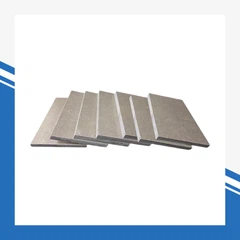
Industrial Furnaces: Mica bricks and plates line furnace walls, crucibles, and molten metal handling equipment.
Aerospace: Mica is used in rocket nozzles and satellite components for extreme temperature and radiation insulation.
Consumer Products
Cosmetics: Mica flakes add pearlescent effects to eyeshadows, lipsticks, and skincare products.
Home Appliances: Mica heating elements are used in toasters, hair dryers, and electric stoves for uniform heat distribution and electric shock protection.
5. Conclusion: Mica as a Foundation of Modern Technology
From its ancient use as window glazing to today's electric vehicle battery systems, mica remains a cornerstone of material science. Its unmatched combination of thermal insulation, electrical resistance, flexibility, and chemical stability makes it irreplaceable in industries requiring reliability under extreme conditions.
As technology advances – especially in renewable energy, electronics, and aerospace – mica's role will continue to expand, solidifying its status as a "mineral of the future."
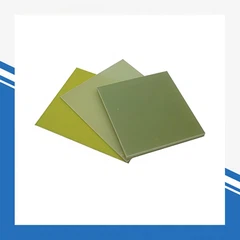
For companies like Weshare specializing in high-performance mica products – including mica sheets, tubes, and composite materials – understanding these fundamental properties is essential to developing innovative solutions that meet evolving industrial demands. From household appliances to next-generation spacecraft, mica continues to prove that even ancient minerals can power cutting-edge technology.