






Mica Insulation Materials for Safer Energy Storage Systems
Industry Knowledge by Hangzhou Weshare Imp. & Exp. Co., Ltd.
Mica insulation materials make energy storage systems safer by effectively protecting against high temperatures and electric shock risks. Worldwide, there is growing demand for safer energy storage solutions, supported by strong market trends:
The global smart energy storage system market is projected to grow at a CAGR of 10.3% from 2024 to 2030.
In 2022, India planned to deploy approximately 175 GW of installed renewable energy capacity.
The market value of battery insulation materials such as mica is expected to double by 2033.
Mica features exceptionally high dielectric strength, ranging from 50 to 150 kV/mm, enabling it to withstand high voltages and ensure system safety.
Key Summary
Mica insulation materials enhance the safety of energy storage systems by effectively preventing thermal runaway and electrical failures. Using mica allows batteries to operate reliably under high-temperature and high-voltage conditions, improving stability and reducing fire risks.By following safety standards and applying mica insulation, energy storage systems can be effectively protected while extending their service life.

Safety Risks in Energy Storage Systems
New Energy Batteries and Mica
Common Hazards and Failure Modes
Personnel operating energy storage systems face multiple hazards that can compromise safety and performance, including:
Thermal runaway: Occurs when a single battery cell overheats and triggers chain overheating in adjacent cells.
Internal short circuits: Cause excessive current to flow along unintended paths.
Battery overcharging: Raises temperatures beyond safe operating levels.
Rapid temperature spikes during system operation.
Gas leakage and liquid spillage, both of which can lead to fire or explosion.
Electrical or mechanical failures within battery cells, modules, or large-scale storage containers.
Industry reports indicate:
Fire detection and suppression issues account for 28% of major failures.
Auxiliary circuit board faults represent 19%.
Thermal management problems cause 15% of failures.
The Clean Energy Association notes that many battery energy storage system issues are related to inadequate fire detection and suppression. Uncontrolled temperatures lead to thermal runaway, while excessive voltage creates current and voltage surges. Abnormalities in power systems can also trigger fires in transformers or inverters.
Role of Insulation in Safety
Insulation is critical to energy storage safety. It electrically isolates components, prevents short circuits, and helps maintain safe operating temperatures.
Failure of insulation can lead to rapid, catastrophic consequences. The BESS explosion in Surprise, Arizona, demonstrated how quickly thermal runaway can spread. EV battery fires often begin with insulation failure, making evacuation and firefighting more difficult.
Industry standards emphasize the importance of insulation:
| Standard | Description |
|---|---|
| IEC 61557 | Specifies insulation testing to prevent electrical faults and ensure safety. |
| IEC 62619 | Addresses battery safety and requires high-quality insulation to avoid failures. |
| NFPA 855 | Provides fire safety codes for energy storage systems and identifies thermal insulation as essential for fire-resistant construction. |
Using fire-resistant battery enclosures and high-quality insulation testing tools further improves safety. Compliance with these standards reduces failure risks and better protects systems. Mica insulation materials meet these requirements and support safe energy storage operation.

Mica Insulation for Enhanced Safety
Key Properties of Mica in Energy Systems
Mica is uniquely suited for battery thermal and electrical insulation due to its outstanding performance under harsh conditions. Engineers especially prefer mica for high-density batteries.
| Property | Description |
|---|---|
| Thermal Resistance | Mica withstands temperatures over 1000°C without decomposition, making it ideal for extreme heat environments. |
| Electrical Insulation | Mica has high dielectric strength, preventing electrical failure and securing high-voltage systems. |
| Fire Resistance | Mica is non-flammable, reducing fire risk in electrical systems. |
| Thermal Conductivity | Mica sheets resist heat transfer, helping keep battery packs cooler. |
| Energy Efficiency | Mica's insulating properties improve overall energy utilization in batteries. |
Mica is chemically stable and non-combustible. It resists corrosion from acids, alkalis, and electrolytes, extending battery life in harsh environments. Compared to G11 insulation, mica withstands higher temperatures and will not burn - a critical advantage in preventing battery fires.
How Mica Insulation Works
Mica acts as a combined thermal and electrical barrier inside batteries. Its layered structure effectively blocks the spread of electrical faults. Mica controls heat distribution and eliminates damaging hotspots. It also reduces cross-cell electrical failures, greatly improving overall battery safety.
Mica provides exceptional dielectric strength, the foundation of reliable insulation.
It withstands electrical stress and partial discharge.
Mica sheets block fault propagation.
Mica maintains safe cell temperatures, especially in large-scale BESS and electric vehicles.
Mica insulation delays fire caused by thermal runaway, providing valuable evacuation time and improving response windows for emergency crews. Because mica does not burn, it actively slows fire spread and protects battery modules.
| Property | Description |
|---|---|
| Melting Point | Mica melts above 1200°C, suitable for extreme high-temperature applications. |
| Non-Combustibility | Mica will not burn, improving energy storage safety. |
| Thermal Resistance | Heat stability ensures safe, consistent battery performance. |
| Electrical Resistance |
High resistivity makes mica ideal for battery insulation. |

Applications in Batteries and Electric Vehicles
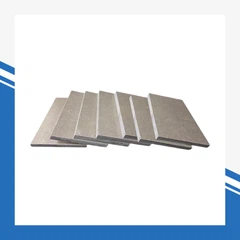
Mica insulation is widely used in lithium-ion batteries and EV components. Manufacturers apply mica in battery packs and thermal shields.
| Application | Description |
|---|---|
| Cell & Module Barriers | Mica forms separators between individual battery cells and modules. |
| Battery Pack Perimeter Insulation | Lines inner edges of battery packs to block heat transfer. |
| Battery Pack Top Covers | Integrated into pack lids for thermal protection. |
| Flexible Coverings for Busbars & Cables | Wraps around high-current conductors inside battery packs. |
Mica can be formed into sheets, tubes, or composite parts, allowing engineers to design battery packs that resist thermal runaway and fire risks. Even under high compression in high-density batteries, mica remains safe and reliable.
Measurable Benefits
Mica insulation makes energy storage systems safer, more reliable, and more resistant to extreme heat.
| Improvement | Measurement |
|---|---|
| Temperature Resistance | Up to 1000°C |
| Voltage Withstand | Can withstand up to 2000 V |
| Safety in Thermal Runaway | Slows fire spread and extends escape time |
Research confirms that mica insulation reduces peak battery temperatures and suppresses fire ignition. It protects batteries from thermal damage and blocks flame propagation. Superior insulation also extends service life and improves energy efficiency.
Note: Mica insulation materials comply with standards including IEC 60664, UL 94, and CE marking. These certifications ensure mica is safe, reliable, and suitable for energy storage applications.
Conclusion
Mica insulation materials make batteries safer through superior thermal resistance, electrical impedance, and fire protection. Used in lithium-ion batteries and electric vehicles, mica significantly improves the safety and reliability of energy storage systems.
Its exceptional thermal and electrical insulation properties make mica a preferred material for engineers seeking to prevent thermal runaway and isolate electrical components. Adopting mica insulation results in safer, more dependable systems. Manufacturers and project developers should consider mica to meet strict safety requirements in the energy storage sector.
FAQ
What makes mica insulation essential for battery fire safety?
Mica insulation blocks heat and electric current inside batteries, slows fire spread between cells, and improves overall safety while providing extra time for fire response.
How does mica insulation help during a battery fire?
Mica reduces heat conduction and physically separates battery cells, preventing fire from spreading rapidly and lowering the risk of major blazes.
Where do engineers use mica insulation to prevent battery fires?
Mica is installed around battery cells, modules, and enclosures, acting as a protective barrier to contain fires and shield batteries from thermal damage.