




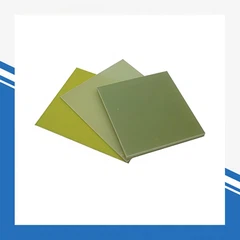


High-Density Insulation Pressboard
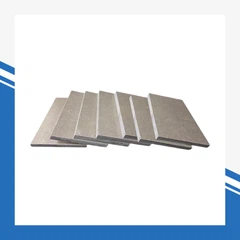
G4-ST high-density insulation pressboard is a premium cellulose-based insulating material engineered for high-voltage and heavy-duty electrical systems. Manufactured from imported electronic-grade 99.9% unbleached sulfate softwood pulp, it features zero impurities, no binders, and freedom from metallic, inorganic, and organic particulate contaminants, ensuring exceptional purity and consistent electrical performance-key advantages that make it an indispensable dielectric material in the oil-paper composite insulation structure of power transmission equipment. Below is a detailed introduction to its production process, advantages, applications, and frequently asked questions, combined with authoritative test data.
1. Production Process
The production of G4-ST high-density insulation pressboard adheres to the international standard IEC 60641-3-1:2008 and Chinese national standard GB/T 19264.3-2013 (Grade B.3.1A), with strict quality control at every stage to ensure the final product meets all performance indicators. The detailed process is as follows:
Raw Material Selection & Pretreatment: The core raw material is imported electronic-grade 99.9% unbleached sulfate softwood pulp, which is carefully selected to eliminate any impurities (metallic, inorganic, or organic particles). The pulp is first cleaned and filtered to remove contaminants, ensuring the purity of the base material-this directly contributes to the product's low ash content (test value: 0.62%, meeting the standard ≤0.7%) and excellent electrical performance.
Pulping & Dispersion: The pretreated pulp is put into a pulping machine, where it is fully decomposed into fine cellulose fibers under controlled temperature and pressure. No binders or additives are added during this process, maintaining the 100% pure cellulose composition. The fibers are uniformly dispersed to ensure consistent density and performance across the entire board (apparent density test value: 1.04 g/cm³, within the standard range of 0.95~1.15 g/cm³).
Forming & Pressing: The dispersed pulp is poured onto a forming mesh to form a wet sheet, which is then pressed by high-pressure equipment to remove excess water. The pressing pressure and temperature are precisely controlled to achieve the desired thickness (standard 1.0–9.0 mm, with thickness deviation test value: 2.1%, well within the ±7.5% standard) and high density. This step also ensures the board's flatness and flexibility, laying the foundation for excellent processability.
Drying & Stabilization: The pressed wet board is sent to a constant-temperature drying oven for low-temperature drying, reducing the moisture content to a standard level (test value: 5.7%, meeting the ≤6.0% requirement). Drying is carried out slowly to avoid warping or cracking, ensuring the board's structural stability and anti-aging performance. After drying, the board undergoes a stabilization treatment to maintain its physical and electrical properties under long-term use.
Quality Inspection & Customization: Each batch of finished boards undergoes comprehensive performance testing in accordance with IEC 60641-2:2004, including tensile strength, elongation, electrical strength, oil absorption, pH value, and conductivity of aqueous extract. Only products that pass all tests (such as electrical strength in oil: 40.3 kV/mm ≥40 kV/mm; oil absorption: 20.3% ≥13.0%) are allowed to leave the factory. Additionally, the boards can be cut into custom sizes according to client requirements, adapting to diverse application scenarios.
2. Key Advantages (Backed by Test Data)
G4-ST high-density insulation pressboard's superior performance is verified by authoritative test results, making it stand out in high-voltage insulation applications. Its core advantages are as follows:
Exceptional Purity & Safety: Made of 100% pure unbleached sulfate softwood pulp with no additives, binders, or contaminants. Test results show ash content is only 0.62% (≤0.7%), pH value of aqueous extract is 7.48 (6-9), and conductivity of aqueous extract is 4.7 mS/m (≤5.0 mS/m), ensuring no adverse impact on electrical equipment and safe operation in high-voltage environments.
Superior Electrical Performance: Boasts excellent dielectric strength-40.3 kV/mm in oil (≥40 kV/mm) and 12.4 kV/mm in air (≥12 kV/mm), effectively isolating high-voltage circuits and preventing electrical breakdown. The low moisture content (5.7%) and high purity further enhance its electrical insulation reliability.
Strong Mechanical Properties: Outstanding tensile strength (MD: 80.6 N/mm² ≥80 N/mm²; CMD: 47.3 N/mm² ≥45 N/mm²), good elongation (MD: 5.4% ≥3.0%; CMD: 6.8% ≥4.0%), and low shrinkage (MD: 0.55% ≤0.7%; CMD: 0.72% ≤1.0%). These properties enable it to withstand mechanical pressure and maintain structural integrity in equipment assembly and long-term operation.
Excellent Compatibility & Stability: High oil absorption (20.3% ≥13.0%) ensures full compatibility with transformer oil, forming a stable oil-paper composite insulation system. It also has strong heat resistance and anti-aging properties, maintaining performance stability under prolonged high-temperature conditions, which is crucial for the service life of power equipment.
Optimal Processability & Customization: The board has excellent flexibility, flatness, and machinability, allowing precise cutting, punching, and forming into complex components. Thickness deviation is only 2.1%, ensuring uniform dimensions. Custom cuts and sizes are available to meet the unique needs of different projects and equipment.
Strict Quality Compliance: Fully complies with IEC 60641-3-1:2008 international standard and GB/T 19264.3-2013 (Grade B.3.1A) national standard, with all test indicators meeting or exceeding the required standards, ensuring consistent quality and global market adaptability.
3. Main Applications
Leveraging its excellent comprehensive performance verified by test data, G4-ST high-density insulation pressboard is widely used in various high-voltage electrical and industrial fields, serving as a core insulation and structural component. Its specific applications are as follows:
Power Transformers & Reactors: As an essential part of oil-paper composite insulation, it is used as partitions, spacers, coamings, end rings, and insulation supports inside oil-immersed transformers and reactors. Its high oil compatibility (oil absorption: 20.3%) and electrical strength (40.3 kV/mm in oil) ensure effective isolation of high-voltage circuits, withstanding mechanical pressure and ensuring long-term stable operation of equipment.
High-Voltage Electrical Equipment: Applied in high-voltage switchgear, high-voltage distribution cabinets, large and medium-sized motors, and generators as insulation liners, separators, and structural insulation substrates. Its strong mechanical strength (tensile strength MD: 80.6 N/mm²) and electrical insulation performance prevent short circuits and ensure the safe operation of high-voltage components.
Rail Transit & Industrial Equipment: Used in insulation components of rail transit traction electrical systems and industrial high-voltage control equipment. Its low shrinkage (MD: 0.55%, CMD: 0.72%) and good flexibility enable it to adapt to the harsh operating environment of transportation and industrial sites, maintaining performance stability under vibration and temperature changes.
Emerging High-End Fields: Applied in new energy power generation supporting equipment (wind, solar), energy storage power conversion devices, aerospace on-board electrical insulation, and high-voltage wire and cable insulation reinforcement accessories. Its high purity (ash content: 0.62%) and excellent electrical-mechanical properties meet the high-standard insulation needs of emerging industries, ensuring the reliability of precision equipment.
4. Frequently Asked Questions (FAQ)
Below are the most common questions about G4-ST high-density insulation pressboard, answered in detail to help you better understand the product:
Q1: What standards does G4-ST high-density insulation pressboard comply with? Are the test results reliable?
A1: It fully complies with the international standard IEC 60641-3-1:2008 and Chinese national standard GB/T 19264.3-2013 (Grade B.3.1A). All products undergo strict testing in accordance with IEC 60641-2:2004, and the test results (such as electrical strength, tensile strength, and ash content) are all within the standard range, ensuring high reliability. A formal test certificate is provided for each batch of products.
Q2: Why is the product free of binders and impurities? What are the benefits?
A2: The product is made of 100% pure imported electronic-grade unbleached sulfate softwood pulp, with no binders or additives added during production. This ensures zero impurities (metallic, inorganic, organic particles), which directly reduces the ash content (test value: 0.62%) and improves electrical insulation performance. It also avoids adverse reactions with transformer oil, ensuring long-term stability of the oil-paper composite insulation system.
Q3: What is the thickness range of the product? Can it be customized?
A3: The standard thickness range is 1.0–9.0 mm, with a thickness deviation of only 2.1% (meeting the ±7.5% standard). We also provide custom cutting services according to client requirements, including non-standard thicknesses and sizes (such as special dimensions beyond the standard 2100×4200 mm, 3200×4200 mm, etc.), to adapt to different equipment assembly needs.
Q4: What is the electrical strength of the product, and is it suitable for oil-immersed insulation systems?
A4: The electrical strength of G4-ST pressboard is 40.3 kV/mm in oil (meets the standard ≥40 kV/mm) and 12.4 kV/mm in air (meets the standard ≥12 kV/mm), which is excellent for high-voltage insulation. Its oil absorption is 20.3% (≥13.0%), ensuring full compatibility with transformer oil, making it perfectly suitable for oil-immersed insulation systems such as transformers and reactors.
Q5: What is the moisture content of the product, and how does it affect performance?
A5: The test value of moisture content is 5.7%, which is within the standard range (≤6.0%). Low moisture content is crucial for maintaining electrical insulation performance-excessive moisture will reduce dielectric strength and cause electrical breakdown. Our strict drying process ensures that the moisture content is controlled at a reasonable level, ensuring long-term stable performance of the product.
Q6: What is the service life of G4-ST high-density insulation pressboard?
A6: Under normal operating conditions (complying with the standard operating environment of high-voltage equipment), the service life can reach 20–30 years. Its excellent anti-aging properties, low shrinkage, and high mechanical strength enable it to maintain structural and electrical stability under prolonged high-temperature and high-voltage conditions, reducing the frequency of equipment maintenance and replacement.
Q7: Can the product be used in aerospace and new energy fields? What advantages does it have?
A7: Yes, it is widely used in aerospace on-board electrical insulation and new energy equipment (wind, solar, energy storage). Its core advantages are high purity (no impurities), excellent electrical-mechanical performance, and stable performance under harsh environments. The low ash content (0.62%) and good flexibility ensure it meets the high-standard insulation requirements of precision equipment in these fields.