






Custom Molded Laminated Wood Parts for Electric Locomotives | Processing Technology
1. Introduction
Electric locomotives, especially their traction transformers and auxiliary electrical systems, have extremely strict requirements for custom molded insulation and structural parts-requiring not only excellent insulation performance and mechanical strength but also high dimensional precision and consistency to adapt to the harsh operating environment of locomotives (such as frequent vibration, temperature changes, and high-voltage load). Weshare, relying on a complete set of advanced CNC processing equipment and mature laminated wood processing technology, specializes in providing high-quality custom molded parts (such as pressure rings, spacer blocks, support brackets, etc.) for power transformers, traction transformers, and electric locomotive transformers. The following is a detailed expansion of the processing technology of our laminated wood custom molded parts, highlighting the precision, stability, and reliability of each link.

2. Core Processing Technology of Custom Molded Laminated Wood Parts
The processing of laminated wood custom molded parts for electric locomotives is a systematic project integrating material pretreatment, molding, precision machining, quality inspection, and post-processing. Each link is strictly controlled to ensure that the final product meets the technical standards of the railway industry and the personalized needs of customers. The entire process is divided into 7 key links, with detailed steps as follows:
2.1 Raw Material Selection & Pretreatment
The quality of raw materials determines the performance of the final custom parts. We only select high-grade hardwood veneers such as birch, maple, and ash-these woods have uniform texture, high fiber density, and excellent mechanical properties, which are the basis for manufacturing high-performance laminated wood parts. The pretreatment process is designed to eliminate internal defects of the wood and ensure the stability of the material, including three key steps:
Veneer Screening & Defect Repair: First, the selected raw wood is subjected to strict screening to remove logs with rot, insect holes, and serious knots. After rotary cutting into 0.8-1.2mm thick veneers, we use an automatic patching machine to scan and repair defects (such as small knots, cracks, and gaps) on the veneer surface. The patching material is the same type of wood veneer, ensuring that the density and texture of the patched area are consistent with the original veneer, avoiding uneven stress during subsequent pressing.
Cooking & Drying: The screened and patched veneers are put into a professional cooking tank for high-temperature cooking (temperature 80-90℃, time 2-3 hours), which can soften the wood fibers, remove impurities and residual moisture in the veneers, and improve the adhesion of the subsequent adhesive. After cooking, the veneers are sent to a constant-temperature drying room for low-temperature drying, controlling the moisture content of the veneers to 8-12%-this moisture content range can effectively prevent the laminated wood from warping, cracking, or delaminating due to moisture changes during use, ensuring the long-term stability of the parts.
Surface Polishing: The dried veneers are polished by a precision sanding machine to make the surface smooth and flat, with no burrs or unevenness. The surface roughness is controlled within Ra≤1.6μm, which can ensure full contact between the veneers and the adhesive, improve the bonding strength of the laminated wood, and lay a foundation for the precision of subsequent machining.
2.2 Adhesive Coating & Veneer Stacking
The adhesive is the key to ensuring the integrity and structural strength of the laminated wood. We use a special high-temperature resistant insulating adhesive developed for electric locomotive parts-this adhesive has excellent insulation performance, high bonding strength, good oil resistance, and can maintain stable performance at 105℃ for a long time, which is fully compatible with the working environment of transformer oil.
Precision Coating: The pretreated veneers are sent to an automatic adhesive coating machine for uniform coating. The coating thickness is precisely controlled at 0.15-0.2mm, and the coating amount is 180-220g/㎡. The automatic coating ensures that the adhesive is evenly distributed on the surface of the veneer, avoiding local excessive or insufficient adhesive (excessive adhesive will cause bubbles inside the laminated wood, and insufficient adhesive will reduce the bonding strength).
Directional Stacking: According to the structural requirements of the custom parts (such as the fiber direction of the pressure ring, the stress direction of the spacer block), we adopt directional stacking of veneers. For ordinary custom parts, the fiber direction of adjacent veneers is perpendicular to each other, which can improve the overall mechanical strength and dimensional stability of the laminated wood. For special parts such as X-type pressure rings, the veneers are stacked according to the X-shaped fiber direction designed in advance, ensuring that the radial bending strength of the pressure ring is uniform after molding. During stacking, a professional positioning tool is used to ensure that the edges of the veneers are aligned, and the stacking error is controlled within ±0.5mm.
2.3 Hot Press Forming (Key Molding Link)
Hot press forming is the core link to form the laminated wood blank, which directly affects the density, strength, and insulation performance of the product. We use large-scale precision hot pressing equipment with automatic temperature, pressure, and time control systems to ensure the consistency of each batch of blanks.
Press Mold Installation: According to the shape and size of the custom parts (such as circular blanks for pressure rings, rectangular blanks for spacer blocks), we install a special mold on the hot press. The mold is made of high-strength steel,经过 precision machining, with a surface finish of Ra≤0.8μm, ensuring that the surface of the pressed blank is smooth and the size is accurate. For complex-shaped parts, we use detachable combined molds to meet the molding needs of different structures.
Parameter Control: The hot pressing process adopts a three-stage temperature control mode: preheating (100-110℃, 10-15 minutes) to make the adhesive fully melt and penetrate the veneer fibers; heat preservation and pressure maintaining (130-140℃, pressure 1.2-1.5MPa, 30-60 minutes) to promote the curing of the adhesive and ensure the bonding strength between the veneers; cooling and pressure relief (cooling to 50℃ or below, pressure relief at a uniform speed) to avoid the blank from warping due to sudden temperature and pressure changes. The entire hot pressing process is controlled by a computer, and the parameters are recorded in real time, which can be traced back to ensure the stability of the process.
Blank Demolding & Trimming: After the hot pressing is completed, the mold is opened to take out the laminated wood blank. The blank is then sent to a trimming machine to remove the redundant edges and burrs around it, making the size of the blank consistent with the design requirements. The trimming precision is controlled within ±0.3mm, laying the foundation for subsequent precision machining.
2.4 CNC Precision Machining (Custom Shaping Core)
Electric locomotive custom molded parts have complex shapes and high dimensional precision requirements (tolerance up to ±0.1mm). We are equipped with a complete set of CNC processing equipment, including 5-axis CNC machining centers, CNC lathes, CNC milling machines, and CNC drilling machines, to realize one-stop precision machining of blanks, ensuring that the shape, size, and surface quality of the parts meet the customer's drawing requirements.
CNC Programming & Simulation: First, the engineering team imports the customer's 3D drawings into the CNC programming software, compiles the machining program according to the structural characteristics of the parts (such as the inner and outer diameter of the pressure ring, the hole position of the spacer block, and the curved surface of the support bracket), and simulates the machining process through the software to avoid machining errors caused by program mistakes. The programming adopts parametric programming, which can quickly adjust the program according to the size change of custom parts, improving the efficiency of custom processing.
Precision Machining: The trimmed blank is clamped on the CNC machine tool through a special fixture. The fixture is designed according to the shape of the part to ensure that the blank is clamped firmly and does not shift during machining. For flat parts such as insulating plates, CNC milling machines are used for surface finishing and slotting; for circular parts such as pressure rings, CNC lathes are used for turning the inner and outer diameters, and CNC drilling machines are used for precision drilling; for complex curved parts, 5-axis CNC machining centers are used for multi-angle and multi-directional machining, ensuring that the shape of the part is consistent with the drawing. During machining, the machine tool is equipped with a real-time detection system, which can monitor the machining size in real time and automatically correct the machining error, ensuring the precision of the part.
Surface Finishing: After the precision machining is completed, the parts are sent to a precision polishing machine for surface finishing. The surface burrs, tool marks, and scratches generated during machining are removed, making the surface of the part smooth and flat, with a surface roughness of Ra≤0.8μm. For parts that need to be in contact with transformer oil, a special surface treatment is carried out to enhance the oil resistance and insulation performance of the part surface.
2.5 Intermediate Quality Inspection
To ensure that each link meets the quality standards, we set up multiple inspection points in the processing process to carry out strict intermediate inspection, eliminating unqualified products in time and avoiding the waste of subsequent processes.
Material Inspection: After the veneer pretreatment, inspect the moisture content, surface quality, and patching effect of the veneer to ensure that it meets the raw material standards.
Blank Inspection: After hot pressing and trimming, inspect the density (≥1.1g/cm³), thickness, flatness, and bonding strength of the blank. The bonding strength is tested by a tensile testing machine, and the bonding surface shall not have delamination or detachment.
Machining Inspection: After CNC machining, use precision measuring tools (such as calipers, micrometers, coordinate measuring machines) to inspect the size, shape, and position tolerance of the parts. The coordinate measuring machine can realize full-scale detection of the parts, with a detection precision of ±0.01mm, ensuring that the parts meet the customer's drawing requirements.
2.6 Post-Processing & Finishing
After the parts pass the intermediate inspection, they need to go through post-processing to further improve the performance and service life of the parts, adapting to the harsh operating environment of electric locomotives.
Drying Treatment: The machined parts are sent to a constant-temperature drying room for secondary drying, controlling the moisture content to 6-10%, further eliminating the internal stress of the parts, and avoiding warping or deformation during use.
Insulation Coating (Optional): According to the customer's requirements, a layer of special insulating coating can be applied to the surface of the parts. The coating has excellent high-temperature resistance, oil resistance, and insulation performance, which can further enhance the insulation effect of the parts and extend the service life.
Cleaning & Rust Prevention: The parts are cleaned with a professional cleaning agent to remove oil stains, dust, and other impurities on the surface. For parts that need to be stored or transported for a long time, a rust-preventive film is wrapped on the surface to avoid rust or contamination.
2.7 Final Quality Inspection & Packaging
The final quality inspection is the last pass to ensure the quality of the products. We conduct a comprehensive inspection of the finished parts, including appearance, size, mechanical strength, insulation performance, and oil compatibility.
Final Inspection: The insulation performance is tested by a high-voltage insulation tester, ensuring that the insulation resistance meets the requirements of 110kV+ high-voltage environments; the mechanical strength is tested by a compression testing machine and a bending testing machine, ensuring that the compressive strength and bending strength meet the design standards; the oil compatibility test is carried out to ensure that the parts do not contaminate the transformer oil and have good stability in the oil.
Packaging: For the parts that pass the final inspection, we use export-grade packaging to ensure that the parts are not damaged during transportation. The packaging adopts fumigated wooden crates, with waterproof plastic wrapping and foam padding inside to prevent moisture, scratches, and mechanical damage. Each part is labeled with the product name, specification, batch number, and customer information for easy identification and tracing. For large-scale parts such as pressure rings, we use customized packaging fixtures to ensure the stability of the parts during transportation.

3. Processing Advantages of Weshare Custom Molded Parts
Full-Set CNC Equipment: Equipped with 5-axis CNC machining centers, automatic hot presses, and precision measuring equipment, realizing full-process automatic control, improving machining efficiency and precision, and reducing human errors.
Strict Process Control: Each processing link has clear parameter standards and inspection requirements, with real-time parameter recording and quality tracing, ensuring the consistency and stability of each batch of products.
Customization Capability: It can meet the personalized customization needs of different customers, including complex shapes, special sizes, and special performance requirements, and can quickly respond to customer drawing changes.
Railway-Grade Quality: The entire processing process complies with the railway industry standards, and the products have passed multiple performance tests, ensuring that they can adapt to the harsh operating environment of electric locomotives and have a long service life.


4. Application Scenario
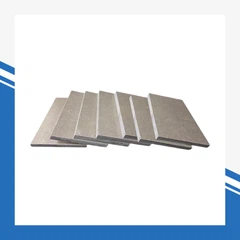
The custom molded laminated wood parts processed by the above technology are widely used in electric locomotive traction transformers, auxiliary transformers, and power transformers, including pressure rings for coil clamping, spacer blocks for core positioning, support brackets for lead wires, and insulating plates for phase separation. They replace traditional steel and epoxy glass cloth parts, reducing the weight of the locomotive while ensuring insulation and mechanical performance, and lowering the total lifecycle cost of the locomotive.
Weshare is committed to providing high-quality, high-precision custom molded laminated wood parts for the electric locomotive industry. With mature processing technology, advanced equipment, and strict quality control, we have become a reliable partner for many railway equipment manufacturers. If you have custom needs for electric locomotive laminated wood parts, please contact our engineering team, and we will provide you with a one-stop solution including process design, sample production, and mass production.