







Conductors, Semiconductors, and Insulators
You use many materials every day, and they allow electric current to flow in very different ways.Conductors let electricity pass easily.Semiconductors control the flow of current.Insulators block electricity almost completely.
These materials are essential in daily life:
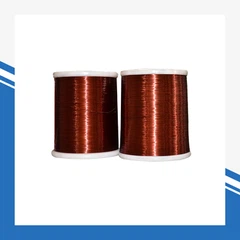
Conductors like copper and aluminum power your devices, light your home, and protect against lightning.
Semiconductors make LEDs shine, enable solar panels, and keep electronics fast and efficient.
Insulators protect you from electric shock and keep electrical systems safe.
Key Summary
Conductors (copper, aluminum) allow easy flow of electric current, used in wires and power components.
Semiconductors (silicon) control current flow, critical in smartphones, computers, and solar panels.
Insulators (plastic, glass) stop current, preventing shocks and protecting equipment.
Temperature effect: Conductors conduct worse when hot; semiconductors conduct better.
Each material has a unique role in electronics. Understanding them helps explain how devices work.

What Are Conductors?
Definition
A conductor is a material that allows electric current to flow freely.Conductors have many free electrons that can move easily between atoms. Metals such as copper are typical examples.
You use conductors when you turn on a light or charge your phone.Think of a conductor as a highway for electrons - they move quickly and smoothly.
Properties
Very low resistance to electric current
Large number of mobile free electrons
Valence and conduction bands overlap, so electrons flow freely
Most metals are excellent conductors; some liquids (e.g., mercury) also conduct
Conductivity = how easily current flows
Resistivity = how much a material resists current
Superconductors carry current with zero resistance at extremely low temperatures.
Common Examples
| Metal | Conductivity | Cost | Ductility | Heat Resistance |
|---|---|---|---|---|
| Copper | High | Affordable | High | High |
| Silver | Very high | Expensive | Medium | High |
| Gold | High | Very expensive | Low | Medium |
| Aluminum | Medium | Low cost | High | Medium |
Copper: most common in electrical wiring
Silver: best conductor but too costly for general use
Gold: corrosion-resistant, used in high-end electronics
Aluminum: lightweight and cheap, used in power lines

What Are Semiconductors?
Definition
A semiconductor has conductivity between conductors and insulators.Its conductivity can be changed by adding small amounts of other elements - a process called doping.This controllability makes semiconductors the foundation of modern electronics.
Properties
Conductivity changes with temperature or impurities (doping)
Behavior determined by band structure
Conductivity increases with heat (opposite of metals)
Higher temperature → more electrons jump from valence band to conduction band
Common Examples
| Material | Common Uses | Special Features |
|---|---|---|
| Silicon (Si) | Computer chips, smartphones | Abundant, reliable |
| Germanium (Ge) | High-speed devices, optics | Fast response |
| Gallium Arsenide | LEDs, solar cells | High-frequency, efficient |
| Silicon Carbide (SiC) | EVs, power systems | High power & temperature resistance |
| Indium Phosphide | Fiber-optic systems | High-speed data transmission |
What Are Insulators?
Definition
An insulator is a material that blocks or strongly resists the flow of electricity and heat.Electrons in insulators are tightly bound to atoms and cannot move freely.
Insulators:
Keep electricity inside wires
Prevent electric shock
Isolate conductors to avoid short circuits
Properties
Extremely high electrical resistance
Electrons are fixed in place
Stable against heat, moisture, and chemicals
Used for both electrical safety and thermal insulation
Common Examples
Fiberglass: fire-resistant, used in wall insulation
Cellulose: made from recycled paper, fills gaps
Polyurethane foam: energy-efficient thermal insulation
Mineral wool: heat-resistant, non-flammable
Polystyrene: water-resistant, used in exterior walls
Mica: excellent electrical and thermal insulator

Comparison of Conductors, Semiconductors & Insulators
Electrical Resistivity
| Material Type | Resistivity (Ω·cm) |
|---|---|
| Conductors | 10⁻⁸ – 10⁻⁴ |
| Semiconductors | 10⁻⁴ – 10⁸ |
| Insulators | 10⁸ – 10¹⁸ |
Typical Conductivity Values
| Material | Conductivity (S/m) |
|---|---|
| Copper | 5.96 × 10⁷ |
| Silicon | ~1.56 × 10⁻³ |
| Glass | 10⁻¹¹ – 10⁻¹⁶ |
Band Gap
The band gap is the energy required for electrons to move freely.
| Material Type | Band Gap (E₉) | Behavior |
|---|---|---|
| Conductors | 0 | Electrons flow freely |
| Semiconductors | Small | Electrons can jump with heat or doping |
| Insulators | Very large | Almost no electron movement |
Real Band Gap Examples
| Material | Band Gap (eV) | Type |
|---|---|---|
| Diamond | 5.5 | Insulator |
| Silicon | 1.14 | Semiconductor |
| Germanium | 0.67 | Semiconductor |
Applications
| Type | Property | Typical Uses |
|---|---|---|
| Conductors | Carry current easily | Wires, cables, electrical components |
| Semiconductors | Control current | Chips, transistors, LEDs, solar panels |
| Insulators | Block current | Wire coatings, safety covers, barriers |
Atomic Structure & Temperature Effects
Conductors: outer electrons are loosely held; conductivity decreases when hot (atomic vibration disrupts flow).
Semiconductors: electrons are tightly held at low temperatures; conductivity increases with heat.
Insulators: electrons are strongly bound; almost no conductivity even when heated.
Summary Table
| Property | Conductor | Semiconductor | Insulator |
|---|---|---|---|
| Conductivity | Very high | Medium | Very low |
| Band Gap | None | Small | Large |
| Electrons | Free to move | Some free electrons | Tightly bound |
| When heated | Conductivity decreases | Conductivity increases | Remains low |
| Main Uses | Wiring, power lines | Chips, transistors | Wire insulation, safety |
Frequently Asked Questions
What is the main difference between conductors and insulators?
Conductors allow free electron flow; insulators block it.Wires use conductors for power and insulators for safety.
Why do semiconductors work better when hot?
Heat gives electrons enough energy to cross the band gap, increasing conductivity.
Can water be a conductor?
Pure water is not conductive.But tap water contains minerals and salts, making it conductive and dangerous near electricity.
Where can semiconductors be found in daily life?
Smartphones, computers, TVs, LEDs, solar panels, and chargers.
How do insulators keep you safe?
They prevent direct contact with live current, protecting against electric shock and fires.