






Busbar Insulation Materials for Aluminum Smelters
Busbar insulation materials must perform exceptionally in aluminum smelters to guarantee safety and efficiency.
In 2026, aluminum smelters mainly use copper and aluminum busbars.Copper busbars offer the highest conductivity at 100% IACS, but are heavier and more expensive.Aluminum busbars have a conductivity of 61% IACS but are lighter and more cost‑effective.
Key Summary
Copper busbars have superior conductivity but are heavier and more costly than aluminum.
Porcelain insulators are best for aluminum smelters, with excellent resistance to high temperatures and chemicals.
Polymer blends and epoxy resins provide cost savings and sufficient insulation for simpler plant areas.
Choosing the right insulation material protects personnel, ensures smooth operation, and reduces maintenance costs in aluminum smelting.
Understanding market trends and regulations helps procurement teams make cost‑effective, informed decisions.

Busbar Insulation Materials in Aluminum Smelters
Key Types in 2026
Busbar insulation materials must withstand extreme conditions in aluminum smelters. The most widely used types in 2026 are:
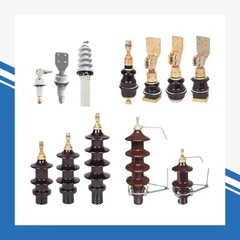
Porcelain
Epoxy resins
Advanced polymer blends
Each offers unique advantages for harsh smelting environments.
Rectifier Station Applications
Aluminum smelter rectifier stations use large low‑voltage busbars carrying currents exceeding 20,000 amps, with strong magnetic fields, high temperatures, and heavy alumina dust (which causes corrosion and conduction).
For this reason:
Oversized, high‑strength porcelain insulators are used.
Polymer materials, common in low‑voltage equipment, cannot withstand the extreme heat and chemical exposure.
Porcelain remains the top choice due to its thermal stability and chemical inertness.
Material Comparison
| Material | Heat Resistance | Chemical Resistance | Mechanical Strength |
|---|---|---|---|
| Porcelain | Excellent | Excellent | High |
| Epoxy Resin | Good | Moderate | Moderate |
| Polymer Blends | Moderate | Good | Moderate |

Market Trends & Innovations (2026)
Demand for more durable, low‑maintenance insulation materials is rising.
Many plants now use a combination of porcelain and advanced polymers for optimized performance.
Increased U.S. tariffs (enforced and strengthened by 2025) have shifted sourcing and manufacturing strategies, with buyers evaluating total cost of ownership more carefully.
Supply chain changes affect material availability; procurement teams monitor tariffs and trade rules to control costs.
Suppliers continue developing new materials to meet the extreme demands of aluminum smelting.
Busbar Material Comparison: Copper vs. Aluminum
Electrical & Thermal Properties
| Property | Copper Busbar | Aluminum Busbar |
|---|---|---|
| Conductivity | 100% IACS(5.96×10⁷ S/m) | 61% IACS(3.5×10⁷ S/m) |
| Density | 8.96 g/cm³ | 2.7 g/cm³ |
| Cost | $9.50 / kg | $2.50 / kg |
| Corrosion Resistance | High | Moderate (improved with coating) |
| Mechanical Strength | Very High | Moderate |
Weight, Cost & Installation
Copper: heavy, expensive, higher strength, longer service life
Aluminum: lightweight, low‑cost, easier to install, ideal for large‑scale projects
Selection depends on performance requirements and budget.
Selection Criteria for Insulation Materials
Electrical Insulation Performance
Materials must prevent current leakage, even under extremely high currents. Key requirements:
High dielectric strength
High electrical resistivity
Chemical inertness for long service life
Thermal & Chemical Resistance
Aluminum smelters involve high temperatures and corrosive chemicals.
Porcelain and alumina perform best under extreme heat.
Epoxy and polymer blends are suitable for milder areas but degrade faster in harsh chemical environments.
Durability & Maintenance
High‑quality insulation reduces maintenance and energy costs:
High‑performance insulation bricks: low thermal conductivity, high heat resistance
High‑performance aluminum refractory linings: minimize heat loss, prevent molten metal penetration

Performance in Smelter Environments
High Current & High Temperature
Materials must resist melting, cracking, and electrical breakdown under extreme heat and current.
Common reliable grades:
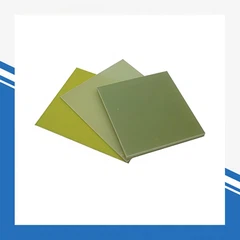
G‑12, EPGC 308
G‑10, EPGC 201
Mica M, Mica P (flame‑resistant)
GPO‑3, UPGM 203, Transite HT
G‑9, MFGC 201, G‑7, SIGC 202
Arboron, NAD‑11 (dimensional stability at high temperatures)
Harsh Environment Resistance
Aluminum smelting involves dust, corrosion, and vibration. Preferred materials:
Porcelain, GPO‑3, UPGM 203: chemically inert, non‑hygroscopic
Mica M, Mica P: heat and chemical resistant
Transite 1000, Transite HT: fireproof, thermally stable
Class C, CE, LE; PF CC, PF CP: high mechanical strength, vibration‑resistant
Many materials meet global electrical and fire safety standards and are easy to install and maintain.
Recommendations for Aluminum Smelters
Best for High Performance
Micro‑porous insulation & calcium silicate: very low thermal conductivity, excellent heat retention
Lightweight refractory bricks: long life, resistant to molten aluminum
Best for Cost Efficiency
Polymer blends: lightweight, low‑cost, easy to install
Epoxy resins: good chemical resistance, suitable for moderate temperatures
Best for Long‑Term Reliability
Porcelain & alumina‑based materials: extremely durable, low maintenance, ideal for critical systems
| Material | Reliability Rating | Maintenance Needs |
|---|---|---|
| Porcelain | Excellent | Low |
| Alumina | Excellent | Low |
| Polymer Blends | Moderate | Moderate |
| Epoxy Resin | Moderate | Moderate |
Frequently Asked Questions
What is the main purpose of busbar insulation in aluminum smelters?
It prevents current leakage, protects workers and equipment, avoids short circuits, and reduces accident risks.
Why are high heat‑resistant materials required?
Electrolysis in smelters produces extreme heat. Heat‑resistant materials prevent thermal damage, extend service life, and reduce costly repairs.
How does electrolysis affect insulation selection?
Electrolysis creates strong electrical and chemical stress. Insulation must withstand these conditions to ensure safe, stable operation.
What are the benefits of advanced polymers?
They are chemical‑resistant, easy to install, reduce maintenance frequency, and simplify upkeep during electrolytic operations.
How do insulation materials affect overall productivity?
Effective insulation reduces energy waste, ensures stable electrolysis, minimizes downtime, and lowers maintenance costs.