








Products Description
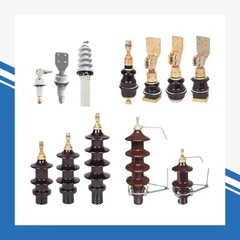
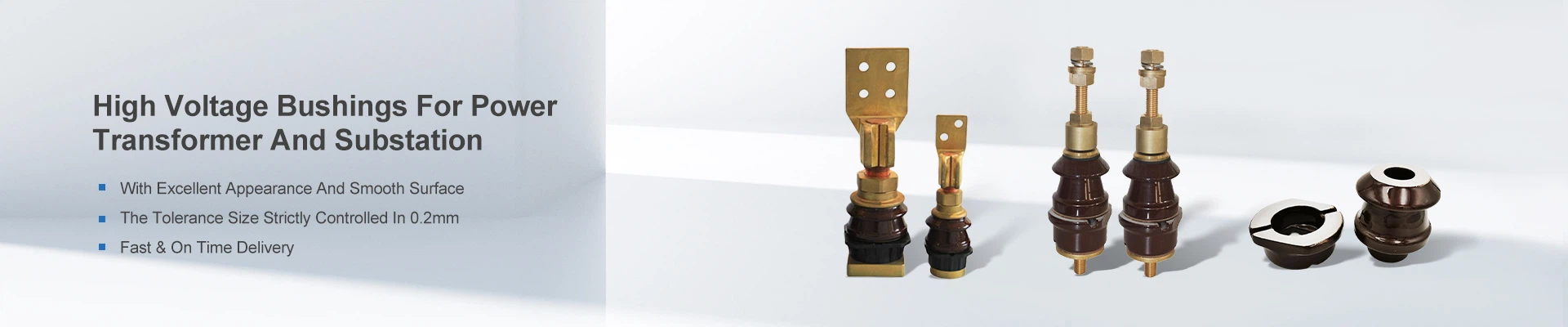
Name:Ceramic Bushing Insulators
Type:1kv/2000A
Every transformer has conductors that must enter or leave the tank. Because the transformer tank is grounded, the conductor cannot pass directly through the metal enclosure. A ceramic bushing insulator creates a safe insulated path while supporting the conductor and maintaining the required electrical clearance. Ceramic bushings remain one of the most widely used solutions for distribution transformers and electrical equipment due to their durability and long service life.
This is a low-voltage, high-current porcelain / composite bushing specially designed for the LV side of oil-immersed distribution transformers.
It provides safe power output, reliable insulation and sealing between the internal winding and external power grid. With high-purity copper conductor, it ensures stable current conduction at 2000A with low resistance and excellent heat dissipation.
Suitable for 1kV power systems, widely used in distribution transformers, switchgear and power stations.
Product parameters
| Parameter Item | Specification |
| Model | EN-1/2000 / DIN 42530-1kV/2000A |
| Nominal Voltage | 1 kV (1.2kV withstand) |
| Rated Current | 2000 A |
| Frequency | 50 / 60 Hz |
| Insulation Material | High-strength brown-glazed porcelain / silicone rubber composite |
| Conductor Material | 99.9% pure copper |
| Power-Frequency Withstand Voltage | 3 kV / 1 min |
| Creepage Distance | ≥ 160 mm |
| Net Weight (Porcelain Type) | Approx. 12 kg |
| Net Weight (Composite Type) | Approx. 6 kg |
| Mounting Type | Flange-mounted / threaded base |
| Standards | IEC 60137, DIN 42530, GB/T 4109 |
| Application | LV outlet of oil-immersed distribution transformers, switchgear, 1kV power systems |
Drawing


Production process


Note: The process shown is the production process for this type of porcelain insulator; the appearance is manufactured according to the drawings provided by the customer.
Why Do Ceramic Bushings Have Sheds?
Most ceramic bushings feature multiple weather sheds on the outer surface.
These sheds are not decorative.
They are designed to:
- Increase creepage distance
- Improve contamination performance
- Reduce leakage current
- Improve operation in humid environments
- Minimize flashover risk
- The longer the creepage path, the better the insulator performs in polluted or coastal environments.
Applications
(1) Distribution Transformers
1kV – 36kV transformer bushings.
(2) Pole Mounted Transformers
Low-voltage outgoing connections.
(3) Pad Mounted Transformers
Feedthrough insulation.
(4) Capacitor Banks
Electrical isolation of conductors.
(5) Switchgear Assemblies
Cable entry insulation.
(6) Power Distribution Equipment
Indoor and outdoor installations.
factory display


FAQ
1. Is ceramic bushing the same as porcelain bushing?
In most transformer applications, the terms ceramic bushing and porcelain bushing are used interchangeably because electrical porcelain is the ceramic material commonly used for manufacturing bushings.
2. Why are ceramic bushings still widely used?
Because they provide excellent insulation, weather resistance, mechanical strength, and long service life at a competitive cost.
3. What current ratings are available?
Common ratings range from 250A to 4000A depending on design requirements.
Hot Tags: ceramic bushing insulators, China ceramic bushing insulators suppliers, bushing insulator for earthing switches, bushing insulator for supporting electromagnetic conductors, bushing insulator for enhancing electromagnetic compatibility, bushing insulator for detecting electrical faults, bushing insulator for detecting electromagnetic faults, bushing insulator for increasing power efficiency