

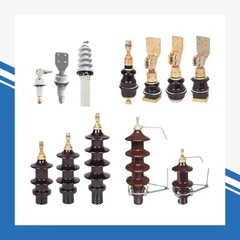
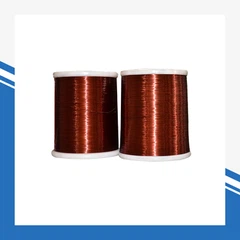

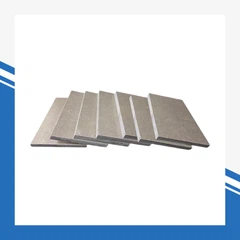
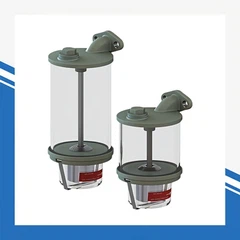





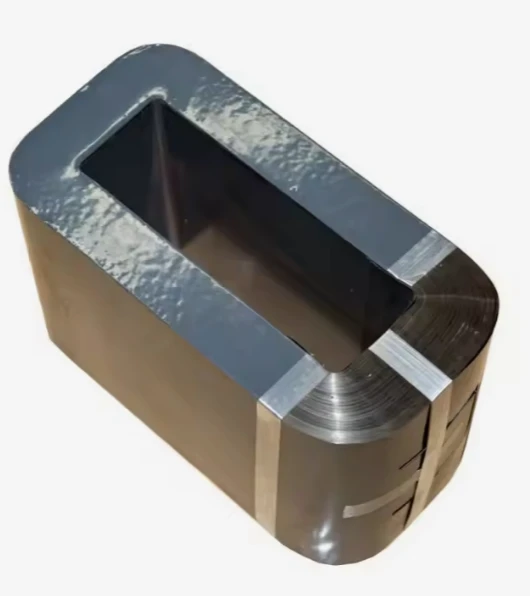
Products Description
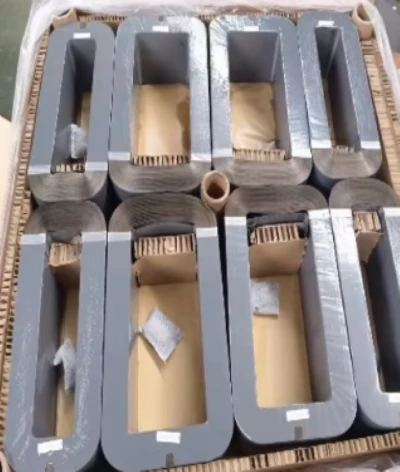
What Is Amorphous Alloy?
Amorphous alloy - also called "liquid metal" or "metal glass" - is an advanced soft magnetic material that usually contains iron, silicon, boron and other elements. Its main product form, amorphous ribbon, is made by rapid quenching: the molten alloy is solidified so fast (about 10⁶ °C per second) that its metal atoms never arrange into a crystal lattice. The atoms instead freeze in a long-range disordered arrangement - the defining physical state of amorphous alloy.
That disorder is what makes the material valuable. With no crystal grains and no grain boundaries to pin magnetic domains, amorphous ribbon delivers low coercivity, high permeability, high electrical resistance and high toughness - the exact combination a distribution transformer core needs to cut no-load loss.
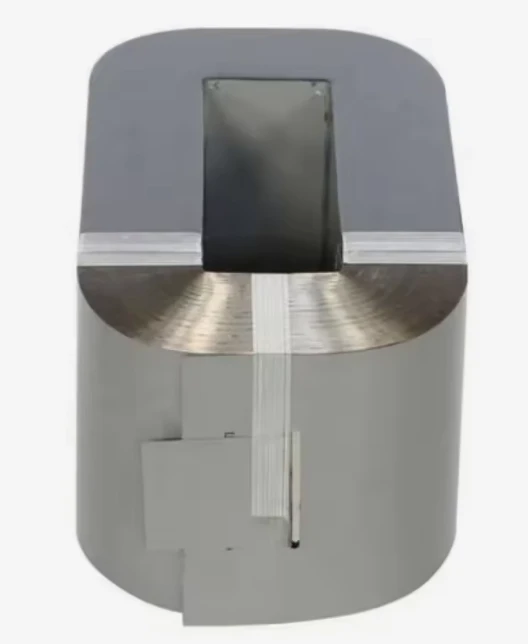
Amorphous alloy is the ribbon; wound into a core and built into a transformer, it becomes the amorphous metal distribution transformer that utilities now specify for efficiency.
How Amorphous Alloy Ribbon Is Made
Amorphous ribbon production requires a rapid quenching process fundamentally different from conventional steel metallurgy:
Melting - the alloy is melted and held above 1600 °C.
Rapid quenching - the molten alloy is cast onto a high-speed rotating crystallizer and cooled from over 1600 °C to below 200 °C, solidifying in less than 0.001 second at a cooling rate above 10⁶ °C/sec.
Ribbon forming - the result is a continuous strip just 25 μm thick, wound to width.
Because solidification and quality formation happen in an instant, the process demands extremely high-precision equipment and tight control. The full ribbon production line covers smelting, heat preservation, ribbon making, coiling, sub-rolling, co-rolling and packaging.
Amorphous Alloy vs. Silicon Steel
Amorphous alloy competes directly with grain-oriented silicon steel, the incumbent distribution-transformer core material. The advantage is not limited to operation - it runs across the whole life cycle.
| Amorphous Alloy | Silicon Steel | |
|---|---|---|
| Energy saving in manufacturing | Production line only ~10 m long; rapid-quenching, one-time molding; ~1 liter of petrol saved per 1 kg of ribbon produced instead of 1 kg of silicon steel | Production line up to ~1000 m long; traditional steel metallurgy with many intermediate steps; more energy consumed in manufacturing |
| Energy saving in operation | No-load loss reduced over 60%–80% vs a silicon steel transformer | Much higher no-load loss; more energy consumed in operation |
| Energy saving in recycling | Almost 100% recyclable; no waste or pollution during re-melting and recycling | Low recycling value; pollution risk |
The shorter, one-step amorphous route and the far lower no-load loss together are why amorphous alloy for distribution transformers is promoted as an energy-saving and carbon-reduction measure, not just a material swap.
Development of Transformer Core Material
Transformer no-load loss has fallen steadily for over a century, and each fall tracks a core-material innovation:
1880s–1890s - first transformers with iron wire and then carbon steel cores.
1900s–1910s - silicon steel invented in Britain; Germany built the first transformer with hot-rolled silicon steel.
1940s - cold-rolled steel adopted as transformer core material (USA, Japan, Britain and others).
1970s - Japan developed high-magnetism grain-oriented silicon steel.
1980s - America's GE launched the first transformer with an amorphous alloy core.
2010s–2020s - 3D amorphous transformer cores, a wound three-dimensional geometry that improves performance and reliability and addresses three-phase structure symmetry.
Two reference lines tell the story: the conventional GOES no-load-loss line (W1.7T/50Hz) and the amorphous core-loss line (W1.4T/50Hz). Amorphous alloy pulled transformer loss to a new historical low, steering development toward lower loss, energy saving and carbon neutrality.
A further field benefit: since the 1970s, harmonic-wave damage drew worldwide attention (China began research in the 1980s), and comparative testing certified that harmonic-wave damage in an amorphous core is significantly lower than in silicon steel.
Energy Saving and Environmental Protection
Worked example - 10 kV, 2500 kVA dry transformer
Compared with a traditional silicon steel transformer of the same rating:
| Saving | Value |
|---|---|
| No-load loss | 65% lower |
| Energy saved annually | 14,104 kWh |
| Energy saved over 25-year life | 352,600 kWh |
| CO₂ emission reduced over 25-year life | 350 t |
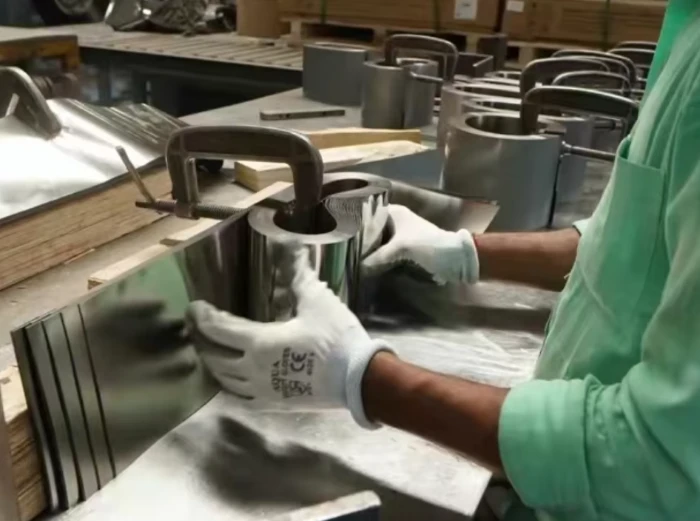
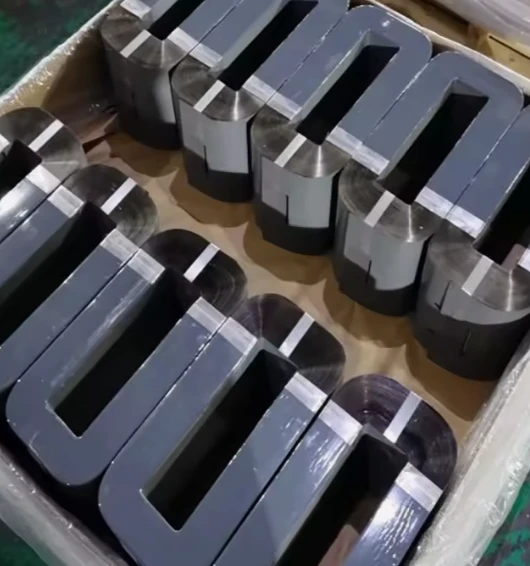
Typical-model energy-saving comparison
2500 kVA unit (loss at 30% load):
| No-load loss P0 (W) | Load loss Pk (W) | Total loss at 30% load (W) | |
|---|---|---|---|
| Silicon steel transformer | 2450 | 15445 | 3840 |
| Amorphous transformer | 840 (P0 −65%) | - | 2230 (P0 −65%; Pk) |
400 kVA unit (energy efficiency level 2):
| No-load loss P0 (W) | Load loss Pk (W) | Total loss reduction | Power saved by amorphous per year | |
|---|---|---|---|---|
| Silicon steel transformer | 410 | 4520 | - | - |
| Amorphous transformer | 160 (≈ P0 −61%) | - | 31% | 5475 kWh |
At network scale
Global transmission-and-transformation loss rates run between 2% and 20%. In China, transmission and distribution losses are about 6.6% of power generation, and distribution transformers account for 40–50% of that. With 2024 total generation of about 9.4 trillion kWh, distribution transformer loss reaches roughly 309 billion kWh - over three times the annual output of the Three Gorges Hydropower Station. No-load loss is itself 40–50% of distribution loss.
Amorphous core technology is therefore considered the most economical and effective way to reduce loss in power transmission and transformation. If China's annual new transformer installation (about 67,520 MVA) were 100% amorphous, roughly 370 million kWh could be saved per year and CO₂ emissions cut by about 354,885 tons.
Amorphous Alloy Basic Material Properties
Alloy specification
| Alloy | Average lamination factor (%) | Thickness (μm) | Standard available widths (mm) | Bs (T) | Tc (°C) | Tx (°C) |
|---|---|---|---|---|---|---|
| AYFA-N / AYFA-NE | ≥ 88 | 25 | 100–280 | 1.62 | 394 | 499 |
General properties and characteristics
Electromagnetic
| Saturation induction (T) | Electrical resistivity (μΩ·m) | Magnetostriction (×10⁻⁶) | Curie temperature (°C) |
|---|---|---|---|
| 1.62 | 1.25 (= 125 μΩ·cm) | 27 | 394 |
Physical
| Density (g/cm³) | Crystallization temperature (°C) | Tensile strength (GPa) | Young's modulus (GPa) | Vickers hardness (Hv-50g load) |
|---|---|---|---|---|
| 7.26 | 499 | 1.83 | 129 | 870 |
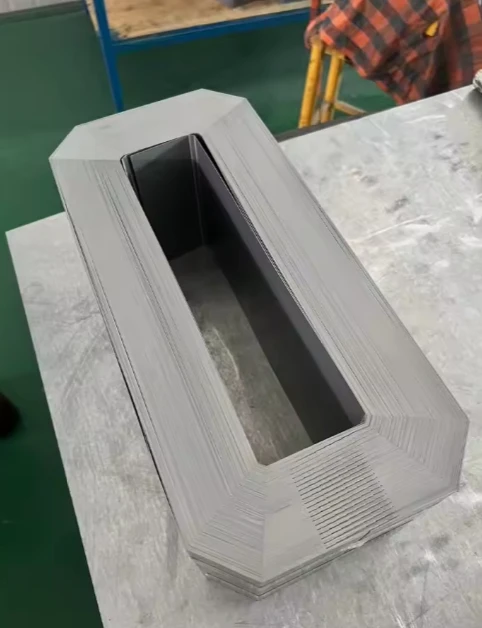
The material is supplied with permeability and magnetization curves for both AYFA-N and AYFA-NE, plus single-phase and three-phase core magnetic-characteristic curves, so the core performance can be read directly against the alloy data.
Applications of Amorphous Transformers
Beyond the traditional power grid, amorphous material now serves a wide range of sectors where efficiency and reliability carry a premium:
New energy generation - photovoltaic and wind power.
Data centers - high-efficiency, compact transformer cores.
Rail transit - traction and wayside distribution.
Large industrial and mining enterprises - on-site distribution.
Public buildings - commercial and institutional power distribution.
Aerospace - specialty magnetic applications.
We are a professional one-stop transformer parts manufacturer in China, please contact us to get free samples !

Why Specify Amorphous Alloy for Distribution Transformers?
Far lower no-load loss - over 60–80% below an equivalent silicon steel transformer.
Lower manufacturing energy - one-step rapid quenching on a ~10 m line vs a ~1000 m steel line.
High recyclability - almost 100% recyclable, no pollution during re-melting.
Better harmonics tolerance - lower harmonic-wave damage than silicon steel.
Proven lineage - a material history running from iron wire to 3D amorphous cores, now positioned at the low-loss, carbon-neutral end
FAQ
What is amorphous alloy in a distribution transformer?
It is the iron-based (Fe-Si-B) "metal glass" ribbon wound into the transformer's magnetic core. Its non-crystalline atomic structure gives low coercivity and high resistivity, so the core's no-load loss is much lower than silicon steel.
How much no-load loss does amorphous alloy save?
Over 60%–80% versus an equivalent silicon steel transformer. On a 10 kV / 2500 kVA dry transformer that works out to roughly 14,104 kWh saved per year.
Is amorphous alloy the same as silicon steel?
No. Silicon steel is a crystalline, grain-oriented steel; amorphous alloy solidifies too fast to crystallize. Their production processes, physical structure and loss behaviour all differ.
Can amorphous alloy be recycled?
Yes - it is almost 100% recyclable, with no waste or pollution during re-melting and recycling.
What thickness and widths are available?
Ribbon thickness is 25 μm, with standard available widths of 100–280 mm.
For core dimensions?
This page covers the material and its distribution-transformer benefits. The wound-core dimensional envelopes (single-phase, three-phase and 3D) are on our amorphous ribbon transformer cores page.
Hot Tags: amorphous alloy for distribution transformers, China amorphous alloy for distribution transformers suppliers, distribution transformer accessories, transformer bridges, transformer encoders, transformer home automation accessories, transformer mixers, transformer shafts