


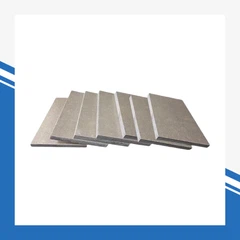






Silicon steel sheet, also known as electrical steel, is a crucial material in the electrical and electronics industries. It is widely used for manufacturing various electrical devices such as transformers, motors, and generators due to its excellent magnetic properties. One of the important physical properties of silicon steel sheet is its coefficient of thermal expansion (CTE). In this blog post, as a silicon steel sheet supplier, I will delve into what the coefficient of thermal expansion of silicon steel sheet is, its significance, and how it relates to the applications of silicon steel sheets.
Understanding the Coefficient of Thermal Expansion
The coefficient of thermal expansion is a measure of how a material expands or contracts when its temperature changes. It is defined as the fractional change in length or volume per unit change in temperature. There are two main types of CTE: the linear coefficient of thermal expansion (α), which describes the change in length, and the volumetric coefficient of thermal expansion (β), which describes the change in volume. For most materials, the volumetric coefficient is approximately three times the linear coefficient (β ≈ 3α) because volume is related to the cube of length.
The formula for the linear coefficient of thermal expansion is:
[ \alpha = \frac{\Delta L}{L_0 \Delta T} ]
where (\Delta L) is the change in length, (L_0) is the original length, and (\Delta T) is the change in temperature.


Coefficient of Thermal Expansion of Silicon Steel Sheet
The coefficient of thermal expansion of silicon steel sheet typically ranges from about (1.1 \times 10^{-5} /^{\circ}C) to (1.3 \times 10^{-5} /^{\circ}C) at room temperature. The exact value can vary depending on factors such as the silicon content in the steel, the manufacturing process, and the presence of other alloying elements.
Silicon plays a significant role in determining the CTE of silicon steel. As the silicon content increases, the coefficient of thermal expansion generally decreases. This is because silicon atoms have a relatively small atomic radius compared to iron atoms. When silicon is added to iron to form silicon steel, the silicon atoms fit into the crystal lattice of iron, reducing the overall free space between atoms. As a result, the material expands less when heated.
Significance of CTE in Silicon Steel Sheet Applications
Transformers
Transformers are one of the most common applications of silicon steel sheets. In a transformer, the silicon steel core experiences temperature changes during operation due to the heat generated by the electrical losses. The relatively low and stable coefficient of thermal expansion of silicon steel is important for maintaining the dimensional stability of the core. If the CTE is too high, the expansion and contraction of the core during temperature fluctuations can cause mechanical stress, which may lead to core deformation, noise, and even damage to the transformer.
For example, if the core expands significantly when heated and then contracts when cooled, it can cause the windings to loosen over time, affecting the performance and reliability of the transformer. Therefore, having a well - controlled CTE ensures that the transformer can operate efficiently and safely over a wide range of temperatures.
Motors
Motors also rely heavily on silicon steel sheets for their magnetic cores. Similar to transformers, motors generate heat during operation, and the temperature of the core can vary. A stable CTE is crucial for maintaining the precise air gap between the stator and the rotor. Any significant change in the dimensions of the core due to thermal expansion or contraction can disrupt the magnetic field distribution, reduce the motor's efficiency, and increase vibration and noise.
For high - performance motors, such as those used in electric vehicles or industrial automation, the tight control of the CTE of silicon steel is essential to meet the strict performance and reliability requirements. We offer EI Silicon Steel Plate For Motor that has excellent thermal stability and magnetic properties suitable for a wide range of motor applications.
Factors Affecting the CTE of Silicon Steel Sheet
Silicon Content
As mentioned earlier, silicon content is a major factor influencing the CTE of silicon steel. Higher silicon content generally results in a lower CTE. However, increasing the silicon content also has its limitations. When the silicon content exceeds about 6.5%, the steel becomes brittle and difficult to process. Therefore, most commercial silicon steel sheets have a silicon content in the range of 2% - 4.5%.
Manufacturing Process
The manufacturing process, including rolling and annealing, can also affect the CTE of silicon steel sheet. Proper heat treatment during the manufacturing process can optimize the crystal structure of the steel, leading to a more uniform and stable CTE. For example, annealing can relieve internal stresses in the steel and improve its magnetic and thermal properties.
Alloying Elements
The addition of other alloying elements, such as aluminum or nickel, can also influence the CTE of silicon steel. These elements can interact with silicon and iron atoms in the crystal lattice, either increasing or decreasing the CTE depending on the specific composition and amount of the alloying elements.
Comparing with Other Materials
When compared with other materials used in electrical applications, silicon steel has a relatively low CTE. For example, copper, which is commonly used for electrical conductors, has a linear coefficient of thermal expansion of about (1.7 \times 10^{-5} /^{\circ}C). This difference in CTE needs to be considered when designing electrical devices that combine silicon steel cores and copper windings.
Another comparison can be made with Toroidal Amorphous Core. Amorphous metals generally have lower CTEs compared to crystalline silicon steel. However, amorphous cores have their own set of advantages and disadvantages. While they offer lower core losses, they are more expensive to manufacture and have limited mechanical strength compared to silicon steel cores.
Quality Control and Testing for CTE
As a silicon steel sheet supplier, we have strict quality control measures in place to ensure that the CTE of our products meets the required specifications. We use advanced testing equipment to measure the CTE of the silicon steel sheets during the production process. One common method is dilatometry, which involves measuring the change in length of a sample as its temperature is increased or decreased at a controlled rate.
By accurately measuring the CTE, we can ensure that our customers receive high - quality silicon steel sheets that are suitable for their specific applications. We also provide detailed technical data sheets for our products, including information about the CTE, so that our customers can make informed decisions when selecting the right silicon steel sheet for their projects.
Our Product Range
We offer a wide range of silicon steel sheets, including Electrical Silicon Steels, Oil immersed transformer Silicon steel Plate, and EI Silicon Steel Sheet. Our products are characterized by their excellent magnetic properties, low core losses, and stable coefficient of thermal expansion.
Whether you are in the transformer manufacturing industry, motor production, or other electrical applications, we have the right silicon steel sheet for you. Our experienced technical team can also provide customized solutions based on your specific requirements, ensuring that you get the best performance and cost - effectiveness.
How to Contact Us for Purchase
If you are interested in our silicon steel sheet products and would like to discuss your procurement needs, we would be more than happy to engage in a detailed conversation. We understand that each project has unique requirements, and our team is dedicated to providing you with the most suitable solutions. Please feel free to reach out to us, and we will initiate further discussions to meet your specific needs and ensure a successful collaboration.
References
- Boyle, T. J. (2004). The Science and Engineering of Materials. Cengage Learning.
- Reed - Hill, R. E., & Abbaschian, R. (1994). Physical Metallurgy Principles. PWS Publishing.
- Groover, M. P. (2010). Fundamentals of Modern Manufacturing: Materials, Processes, and Systems. Wiley.